

Hex Nut: The Ultimate Guide
Introduction
Ever paused to wonder how something as humble as a hex nut can hold entire structures together? Hex nuts are the unsung heroes of fastening, quietly guaranteeing safety in bridges, automobiles, furniture, and even the gadgets in your home. If you’ve ever snapped together a piece of flat-pack furniture or tightened a bolt under your car’s hood, you’ve worked with hex nuts—though you probably didn’t give them much thought. They’re deceptively simple yet supremely critical. Ready to dive deep into the world of hex nuts? Let’s go.
Why Hex Nuts Matter

Picture this: you’re leaning on a balcony railing, and it feels rock solid. That confidence comes from fasteners—nuts and bolts—holding metal components securely. Hex nuts, named for their six-sided shape, distribute wrench force evenly, making them a go-to for high-stress applications. From aerospace to home gardening, hex nuts ensure components stay put under vibration, shear, and tensile stress. They’re small, but without them, modern machinery and everyday comforts would unravel.
What Is a Hex Nut?
Basic Definition
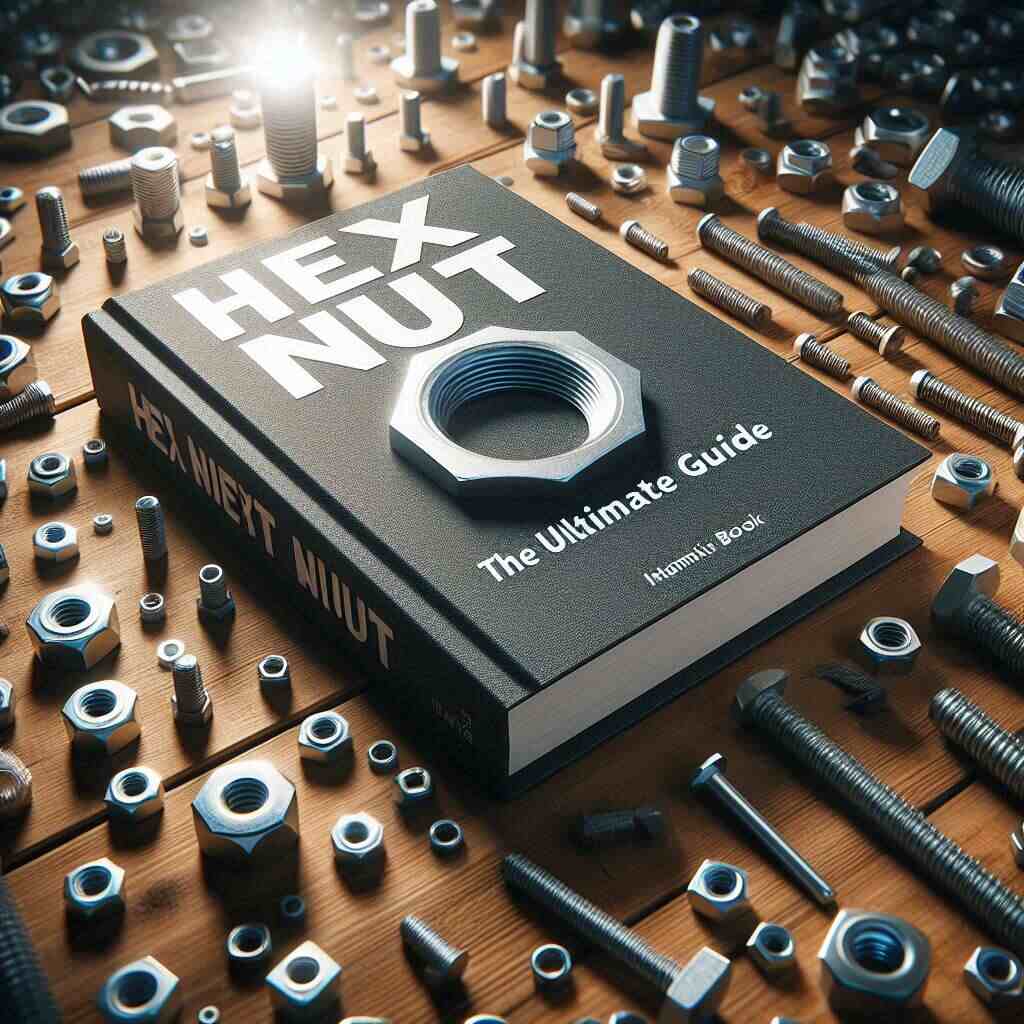
A hex nut is a six-sided fastener with an internally threaded hole designed to mate with a bolt or threaded rod. Unlike wing nuts that you can tighten by hand, hex nuts usually require tools—wrenches or sockets—for the proper torque. Their geometry makes them easy to grip, and the six faces ensure you don’t have to rotate the wrench far to catch the next edge.
Anatomy of a Hex Nut
Understanding a hex nut’s anatomy is like knowing the parts of your car’s engine—you appreciate its complexity. At its core is the bore: the threaded hole. The six flat faces form the outer shape. Then there are chamfered edges—slightly beveled perimeters that guide a bolt into the threads. The internal spiral threads often follow either a coarse or fine pitch, determining how many threads per inch (imperial) or millimeter (metric) you get.
History of Hex Nuts
Early Fasteners and Nuts
Fasteners date back thousands of years—Egyptians used wooden wedges to secure stones. But true nuts, with metal threads, only emerged in the early 19th century alongside industrialization. Early engineers literally carved threads by hand, and nuts were bulky and inconsistent. Imagine building a steam engine with mismatched threads!
Industrial Revolution and Standardization
Once factories adopted machines, thread cutting and nut forging became scalable. In 1841, British engineer Joseph Whitworth standardized thread profiles, spelling the birth of modern fastener standards. Across the Atlantic, William Sellers introduced U.S. unified threads in 1864. Standardization meant nuts from any maker would fit bolts from another—crucial for mass production.
Types of Hex Nuts
Standard Hex Nuts
The workhorse of the nut family, standard hex nuts pair with bolts of corresponding diameter and thread pitch. Use them where vibration is minimal and locking features aren’t necessary.
Lock Nuts
Lock nuts resist vibration loosening using nylon inserts (nyloc nuts), deformed threads (distorted thread locks), or metal-to-metal friction. Ever heard a rattling noise under your car seat? Lock nuts stop that by keeping assemblies tight under constant vibration.
Flange Nuts
Flange nuts sport a wide built-in washer face that spreads load pressure. This flange prevents damage to softer surfaces and reduces the chance of nut rotation under stress.
Cap Nuts
Cap nuts (acorn nuts) cover bolt ends with a dome cap, protecting threads and offering a finished look. You’ll find them on furniture, bicycles, and applications where open threads would be unsightly or pose safety risks.
Materials and Finishes
Steel Varieties
Plain carbon steel hex nuts reign supreme in general applications. Grades grade them: Grade 2 for low strength, Grade 5 for moderate, Grade 8 for high strength. Each grade meets different tensile strength specs.
Stainless Steel
Stainless steel hex nuts resist corrosion, making them perfect for outdoor, marine, and food-grade uses. Common grades include 304 (good general corrosion resistance) and 316 (enhanced resistance against chlorides).
Brass, Bronze, and Nylon
Non-ferrous materials excel in specialty applications. Brass nuts resist rust and have electrical conductivity, great for electrical terminals. Bronze can handle marine environments. Nylon inserts in lock nuts provide vibration resistance and corrosion barrier.
Common Surface Finishes
Even steel nuts get a makeover for durability and aesthetics. Zinc plating prevents rust, while black oxide adds mild corrosion resistance and a stealthy look. For heavy-duty outdoor use, hot-dip galvanizing gives a thicker zinc coating.
Sizes, Threads, and Standards
Metric Versus Imperial
Hex nuts come in metric (M-series) and imperial (inch-based) sizes. An M8 nut fits an 8 mm bolt; a 1/2″ nut fits a half-inch bolt. Know which system your project uses to avoid disastrous mismatches.
Thread Pitch: Coarse vs. Fine
Coarse threads (e.g., M8×1.25 mm) have fewer threads per length, making assembly quicker and more resistant to damage. Fine threads (e.g., M8×1 mm) offer greater tensile strength and adjustability. Automotive manufacturers often favor fine threads for precise torque control.
Industry Standards (ISO, ANSI, DIN)
To ensure global compatibility, standards bodies define dimensions. ISO 4032 covers hex nuts metric coarse. ANSI/ASME B18.2.2 covers inch-series hex nuts. Germany’s DIN 934 is another common reference. Always verify the spec sheet before ordering.
Manufacturing Process
Cold Forming vs. Machining
Most hex nuts are cold-formed: steel wire is cut, cold-pressed in a die to shape, then punched to create chamfers and an unthreaded core. This method is fast and cost-effective. Premium nuts may be machined: a hexagonal bar is turned and drilled, then tapped to exacting tolerances.
Heat Treatment and Quality Control
Post-forming, nuts often undergo heat treatment to achieve desired hardness. Quality control checks thread accuracy, face parallelism, and hardness. For critical aerospace or automotive parts, each batch gets tested for tensile strength, torque performance, and corrosion resistance.
Performance and Strength
Tensile Strength and Hardness
A nut’s tensile strength indicates the maximum load it can handle before fracturing. Grade 8 hex nuts boast tensile strengths up to 150 ksi (kilopound per square inch) in imperial, while metric 10.9 nuts hit 1040 MPa (megapascals). Hardness tests (Rockwell scale) ensure the nut won’t deform under load.
Torque Specifications
Applying the right torque is like finding that sweet spot: too little and the joint loosens, too much and you strip threads or break the bolt. Manufacturers provide torque charts—say, 23 ft-lb for a 1/2″ Grade 5 nut on a lubricated bolt—to guide installers.
Fatigue and Vibration Resistance
Fatigue failure creeps in when cyclic loads exceed a nut’s endurance limit. Lock nuts and flanged nuts help mitigate life-cycle fatigue by preventing micro-movements under vibration. In bridges, wind turbines, or industrial machinery, fatigue-resistant nuts keep things secure for decades.
Applications Across Industries
Automotive
From wheel hubs to engine blocks, hex nuts retain critical assemblies under extreme heat and vibration. Lock nuts atop struts stop suspension bolts from backing out miles down the road.
Construction
Steel beams, scaffolding, and structural frameworks lean on hex nuts to maintain integrity under wind and weight loads. Galvanized nuts resist rust in open-air construction sites.
Electronics and Appliances
Tiny M2 and M3 hex nuts secure circuit boards, panels, and brackets in computers, TVs, and home appliances. Stainless steel variants ensure longevity in humid kitchens.
DIY and Home Improvement
Whether you’re assembling a deck, hanging a swing, or tinkering in the garage, hex nuts are your weekend warrior’s best friend. Affordable hardware store packs come in mixed sizes, so you always have spares.
Installation and Best Practices
Proper Torque Techniques
Wrenches and torque wrenches let you apply consistent force. Hand-tightening isn’t enough for safety-critical joints. Use the manufacturer’s torque spec, accounting for lubrication. A drop of anti-seize compound can prevent galling on stainless nuts.
Lubrication and Thread Locking
Lubricants reduce friction, lowering the torque needed for a given preload. Conversely, thread-locking fluids (Loctite, for example) create a polymer barrier that resists loosening. Choose the right chemistry: some lock nuts want a medium-strength thread locker, while permanent joints may need high-strength formulas.
Recommended Tools
Invest in a quality torque wrench, impact drivers with nut sockets, and hex nut drivers for small sizes. For hard-to-reach spots, low-profile ratchets and swivel sockets keep you agile.
Common Issues and Troubleshooting
Over-tightening and Stripped Threads
Ever heard a crunch when tightening? That’s threads stripping. It weakens the joint and can render a nut useless. If you hit excessive resistance before reaching spec, back off, inspect, and start fresh with a new nut and bolt.
Corrosion and Galling
In harsh environments, corrosion fuses threads, making disassembly a nightmare. Stainless steel nuts, though corrosion-resistant, can gall when tightened dry. Anti-seize compounds or nylon-insert lock nuts help prevent cold welding.
Misalignment and Cross-Threading
If a nut doesn’t spin on smoothly, stop. Cross-threading damages threads irreparably. Back it off, realign visually and by finger-torque, then use a wrench once engaged properly.
Innovations and Future Trends
Smart Fasteners and IoT Integration
Imagine a hex nut that reports its own torque via Bluetooth. Smart fasteners embed sensors to monitor preload, temperature, and vibration in real time. Aircraft and wind farms are early adopters, turning maintenance from periodic checks into continuous health monitoring.
Sustainable Materials and Manufacturing
Eco-friendly fasteners use recycled steel or bio-based polymers for lock nuts. Additive manufacturing (3D printing) allows custom-geometry nuts with topology-optimized designs—less material, same strength.
Selecting the Right Hex Nut: A Buying Guide
Assessing Your Project Needs
Start by asking: What load? Environment? Assembly frequency? A stainless steel lock nut might be overkill for an indoor shelving unit, but indispensable on a boat deck.
Comparing Suppliers and Brands
Reputable fastener houses maintain traceability, certifications, and batch testing. Online marketplaces can undercut prices, but quality may vary. Look for ISO or ANSI compliance on packaging.
Balancing Cost and Quality
Bulk packs of low-grade nuts cost pennies, but a failure in a critical joint could cost thousands. For DIY, economy grade often suffices. In commercial or safety-critical builds, invest in higher grades and traceable lots.
Conclusion
Hex nuts may be small and simple, but they’re indispensable. They’ve evolved from hand-cut iron squares to precision-engineered, performance-tested fasteners that hold our world together. Whether you’re a seasoned engineer or a weekend tinkerer, understanding hex nuts—how they’re made, how they perform, and how to choose and install them—will make your projects safer and more reliable. Next time you pick up a six-sided nut, take a moment to appreciate the centuries of innovation behind that little piece of hardware.
FAQs
1. What does the “grade” on a hex nut mean? The grade indicates tensile strength and hardness. Higher grades (e.g., Grade 8 or metric 10.9) can handle greater loads without deforming.
2. Can I reuse hex nuts? Reusing nuts is possible if they’re undamaged and meet torque specs. Lock nuts with nylon inserts should generally be replaced after removal because the insert’s locking ability degrades.
3. Should I use coarse or fine threads? Coarse threads are faster to assemble and more resistant to damage; fine threads offer better tensile strength and finer preload control. Choose based on your need for adjustability versus speed.
4. How do I prevent galling on stainless steel nuts? Apply anti-seize lubricant or choose mixed-metal pairings (e.g., stainless nut on a carbon steel bolt) to minimize friction and cold welding.
5. Are flange nuts always better than standard hex nuts? Not always. Flange nuts distribute load and reduce the need for washers, but they’re bulkier and may not fit in tight spaces where a standard hex nut excels.
6. Can I overtighten a hex nut? Yes—overtightening can strip threads, break bolts, or warp components. Always use a torque wrench and the manufacturer’s recommended torque values.
7. What’s the difference between a lock nut and a standard nut? Lock nuts incorporate features (nylon inserts, distorted threads) to resist loosening under vibration, whereas standard nuts rely solely on friction from torque.
8. How do I choose between metric and imperial sizes? Use the system your other hardware employs. Converting from one to the other risks thread mismatch and weakened joints.
9. Are hex nuts recyclable? Steel and stainless steel hex nuts are highly recyclable. Remove any non-metal inserts (nylon) before recycling to avoid contamination.
10. What’s the purpose of chamfered edges on a hex nut? Chamfers guide the mating bolt into the nut’s threads, making hand engagement easier and reducing the chance of cross-threading.