
Wuthering Heights Summary: Complete Plot, Themes & Analysis
Introduction: A Love Story That Destroys Everything
What if love didn’t heal—but instead ruined lives across generations?
That haunting idea is the foundation of Wuthering Heights, one of the most intense novels ever written.
Unlike traditional romance novels, this book dives deep into obsession, emotional trauma, revenge, and social class. The story challenges readers to rethink love—not as something gentle, but as something wild, consuming, and dangerous.
This Wuthering Heights summary will guide you through the full plot, characters, major themes, and deeper meanings in a clear and structured way. Whether you’re a student, literature lover, or exam candidate, this guide will help you understand the novel completely.
About the Novel and Author
Wuthering Heights was published in 1847 under the pen name Ellis Bell. It was written by Emily Brontë, one of the famous Brontë sisters.
At the time of its release, the novel shocked readers due to its dark tone and morally complex characters. Today, it is considered a masterpiece of Gothic literature and psychological realism.
Setting and Narrative Structure
The Yorkshire Moors
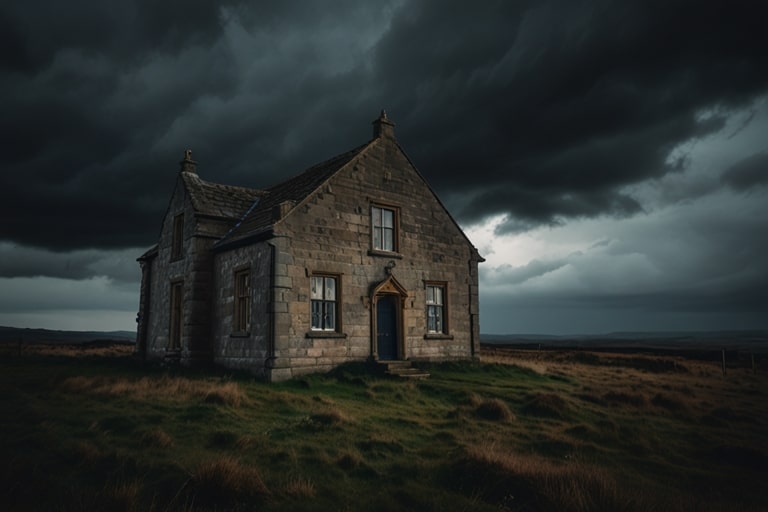
The novel is set in the harsh and isolated Yorkshire moors of England. The landscape is not just a background—it mirrors the emotional states of the characters.
- Wild weather reflects emotional chaos
- Isolation represents loneliness and obsession
- Nature contrasts with social rules
Multiple Narrators
The story is told mainly through:
- Mr. Lockwood (an outsider)
- Nelly Dean (a servant and insider)
This layered storytelling adds mystery and forces readers to question reliability.
Wuthering Heights Summary: Full Plot Breakdown
Part One – Arrival at Wuthering Heights
Mr. Lockwood rents Thrushcross Grange and visits his landlord, Heathcliff, at Wuthering Heights. He is disturbed by the strange behavior of the residents.
After a terrifying night, Lockwood falls ill. During his recovery, Nelly Dean begins narrating the history of the house.
Heathcliff’s Arrival and Childhood
Years earlier, Mr. Earnshaw brought home an orphan boy named Heathcliff. He raises him alongside his children, Hindley and Catherine.
- Catherine and Heathcliff form a deep emotional bond
- Hindley grows jealous and abusive
- Social inequality creates tension
When Mr. Earnshaw dies, Hindley takes control and reduces Heathcliff to a servant.
Catherine and Heathcliff’s Relationship
Catherine and Heathcliff’s love is intense but unhealthy. Catherine famously states that Heathcliff is her soul, yet she cannot marry him.
Why?
Heathcliff is poor, uneducated, and socially inferior.
This decision becomes the turning point of the novel.
Catherine Marries Edgar Linton
Catherine chooses Edgar Linton for comfort and social status. This marriage devastates Heathcliff, who disappears for three years.
This part of the Wuthering Heights summary highlights how class and pride destroy genuine emotion.
Heathcliff’s Return and Revenge
Heathcliff returns wealthy and determined to destroy those who hurt him.
His revenge includes:
- Ruining Hindley financially
- Manipulating Isabella Linton into marriage
- Emotionally tormenting Catherine
His love turns into cruelty.
Catherine’s Decline and Death
Catherine becomes mentally and physically ill due to emotional conflict. She dies shortly after giving birth to Cathy Linton.
Her death marks the emotional climax of the novel.
The Second Generation Begins
The story shifts to the next generation:
- Cathy Linton
- Linton Heathcliff
- Hareton Earnshaw
Heathcliff continues his revenge by controlling their lives.
Forced Marriages and Power Control
Heathcliff forces Cathy to marry his weak son, Linton. After Linton’s death, Heathcliff gains control of both estates.
This shows the destructive long-term effects of obsession.
Redemption and Ending
Over time, Heathcliff grows tired of revenge. He becomes obsessed with Catherine’s memory and eventually dies.
Cathy and Hareton fall in love, symbolizing healing and renewal. The novel ends with hope replacing hatred.
Major Characters Explained
Heathcliff
- Orphan turned tyrant
- Represents obsession and emotional trauma
- Both victim and villain
Catherine Earnshaw
- Passionate and conflicted
- Torn between love and social ambition
- Her choices drive the entire plot
Edgar Linton
- Calm, polite, and wealthy
- Represents social order and stability
Nelly Dean
- Storyteller and moral observer
- Influences events despite neutrality
Key Themes in Wuthering Heights
Obsessive Love
Love is portrayed as destructive rather than comforting. Heathcliff and Catherine’s bond consumes everyone around them.
Revenge
Heathcliff’s revenge spans decades and generations, proving that hatred outlives its original cause.
Social Class
Class differences influence marriage, power, and identity. Catherine’s tragic choice is rooted in social pressure.
Nature vs Civilization
- Wuthering Heights = chaos and passion
- Thrushcross Grange = order and refinement
Symbolism in the Novel
| Symbol | Meaning |
|---|---|
| Ghosts | Unresolved love and guilt |
| Weather | Emotional intensity |
| Windows | Separation and longing |
| Houses | Opposing worlds |
These symbols deepen the Wuthering Heights summary and help readers interpret hidden meanings.
Why Wuthering Heights Is Still Relevant
Modern psychology supports the novel’s themes:
- Childhood trauma shapes adult behavior
- Obsession leads to emotional destruction
- Healing requires breaking toxic cycles
That’s why this novel remains widely studied today.
Exam-Focused Insights (Actionable Tips)
- Focus on character psychology, not romance
- Compare the first and second generations
- Analyze the setting as emotional symbolism
- Quote Catherine’s “I am Heathcliff” speech
These strategies help students score higher in literature exams.
FAQs
What is Wuthering Heights mainly about?
Wuthering Heights is mainly about obsessive love, revenge, and emotional trauma. It shows how unresolved passion and social inequality can destroy lives and continue affecting future generations over many years.
Is Wuthering Heights a romance novel?
Although often labeled as romance, the novel is more accurately a dark psychological drama. It focuses on obsession, control, and emotional suffering rather than healthy love or traditional romantic relationships.
Why is Heathcliff considered a complex character?
Heathcliff is both a victim and a villain. His childhood abuse creates deep emotional scars, but his cruel revenge harms innocent people, making him one of literature’s most complex and morally challenging characters.
What role does social class play in the novel?
Social class strongly influences relationships and decisions. Catherine’s choice to marry Edgar instead of Heathcliff is driven by status, proving how class expectations can override genuine emotional connections and lead to tragic consequences.
Why is the setting important in Wuthering Heights?
The wild Yorkshire moors symbolize emotional intensity and freedom, while the contrasting houses represent chaos versus order. The setting mirrors the characters’ inner emotions and strengthens the novel’s dark and dramatic tone.
What does Catherine mean by saying “I am Heathcliff”?
This statement shows that Catherine sees Heathcliff as part of her identity. Their bond goes beyond romance, representing emotional dependence and obsession rather than healthy, individual love.
How does revenge drive the story forward?
Revenge motivates Heathcliff’s actions after Catherine’s marriage and death. His desire to punish others controls the plot and demonstrates how revenge can consume a person’s entire life and affect multiple generations.
What is the significance of the second generation?
The second generation represents healing and change. Through Cathy and Hareton, the novel shows that love, education, and forgiveness can break cycles of hatred created by the previous generation.
Why was Wuthering Heights controversial when published?
The novel shocked readers with its violent emotions, morally flawed characters, and lack of traditional heroes. Its raw portrayal of obsession and cruelty was unusual for its time and challenged Victorian values.
What lessons can modern readers learn from Wuthering Heights?
Modern readers learn that unresolved trauma and obsession can destroy relationships. The novel encourages emotional self-awareness, showing the importance of healing, forgiveness, and breaking toxic patterns before they harm others.
Conclusion: Final Thoughts on Wuthering Heights
Wuthering Heights is not an easy novel—but it is unforgettable. It explores how love, when mixed with pride and pain, can destroy lives across generations.
This Wuthering Heights summary shows why the novel remains powerful today. Its message is clear: unresolved emotions don’t disappear—they grow stronger.