
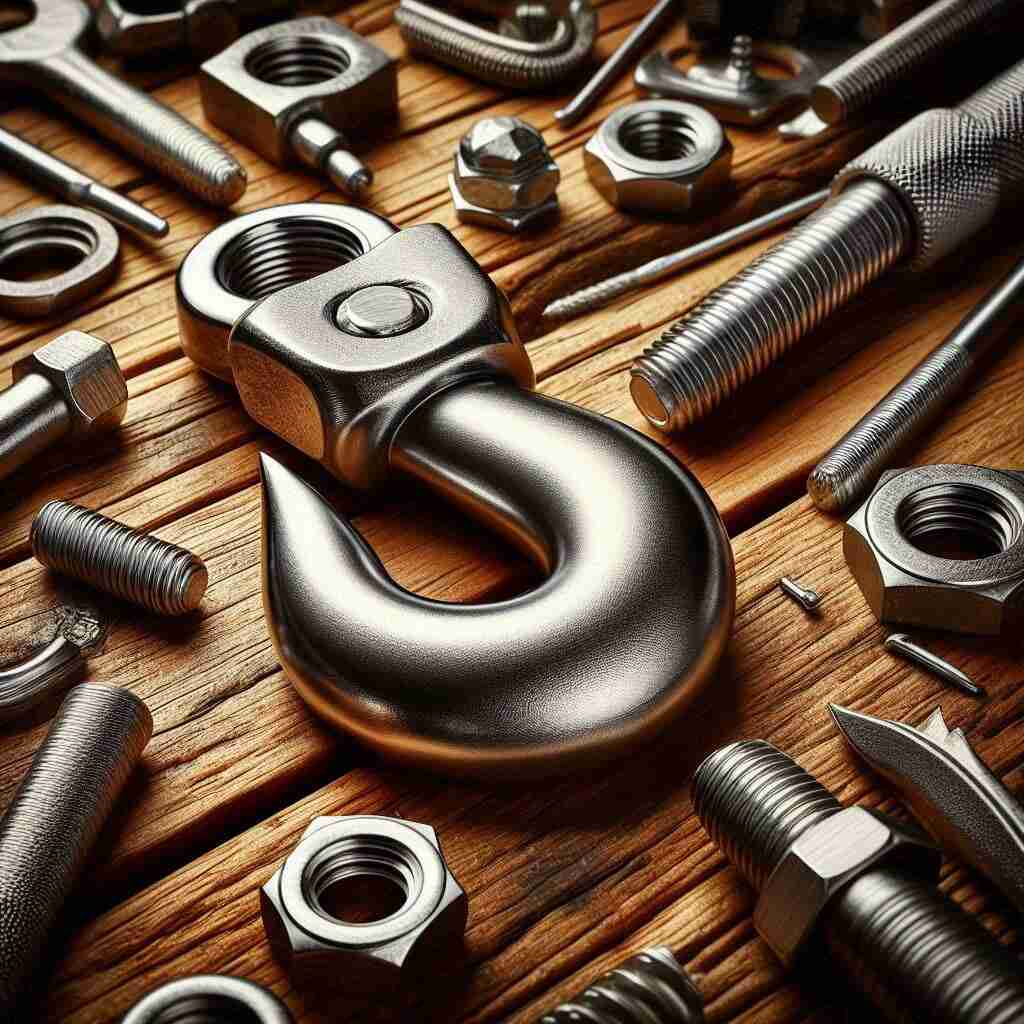
Hook with Bolt and Nut
Have you ever hung a heavy plant, rigged a temporary pulley, or anchored light hardware and wondered if the hook you used was up to the job? That small assembly — a hook secured with a bolt and nut — is deceptively important. It’s the tiny bridge between your load and whatever it’s connected to. Get it right and it’s invisible; get it wrong and you’ll have more than a bad day — you could have a safety incident.
In this article I’ll walk you through everything: what a hook bolt is, how it differs from similar fasteners, how to select, install, and maintain one safely, and the practical tips that pros use. Think of it as a field guide for anyone who hangs, pulls, secures, or suspends objects.
What Is a Hook Bolt?
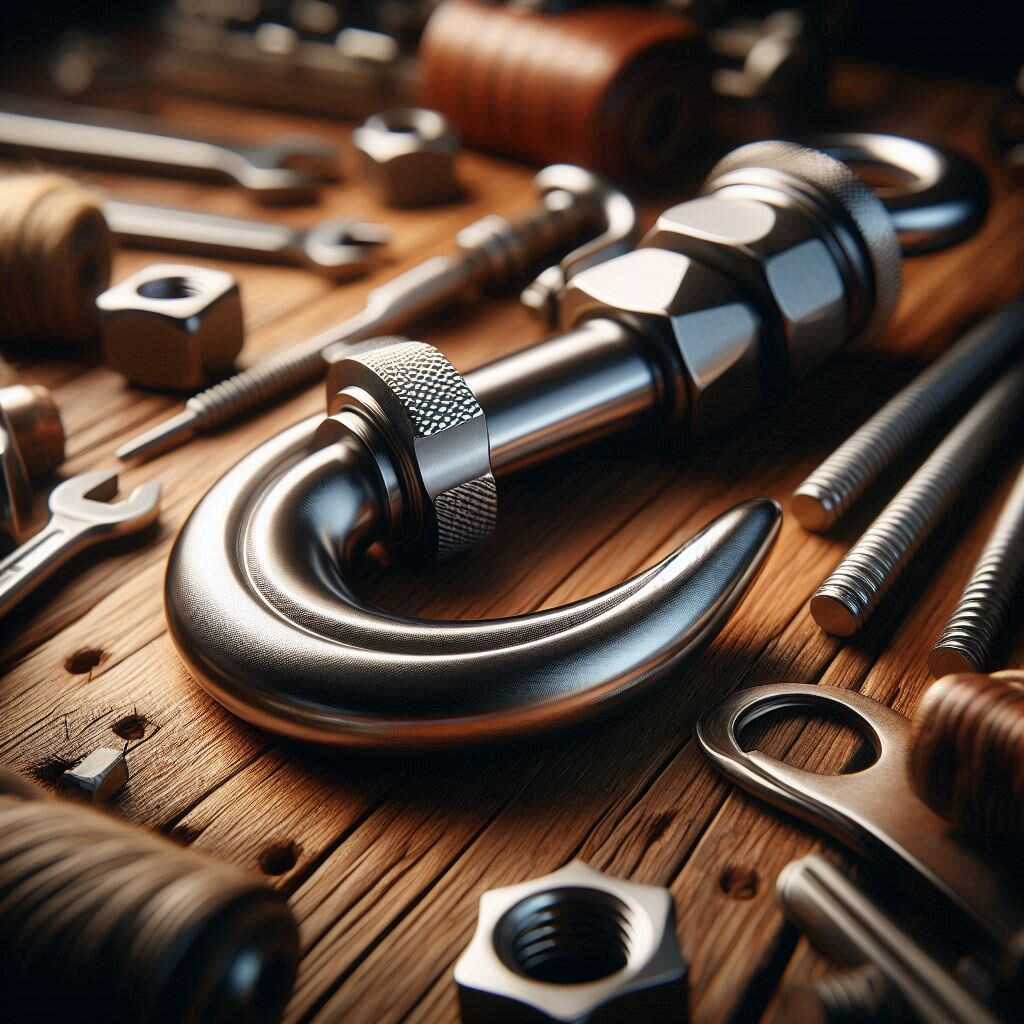
A hook bolt is a fastener that combines a threaded shank (bolt) with a curved or hooked end. The threaded part passes through a surface or anchor point and is secured by a nut (and often a washer). The hook portion provides a place to hang ropes, chains, cables, or other hardware.
Hook Bolt vs. Eye Bolt: Quick Comparison
Eye bolts form a closed loop; hook bolts have an open curve. Eyes are generally stronger for static, multi-directional loads; hooks are convenient for quick attachment and release. Which to use depends on whether you need a permanent loop (eye) or a temporary, accessible grab point (hook).
Common Types of Hook Bolts
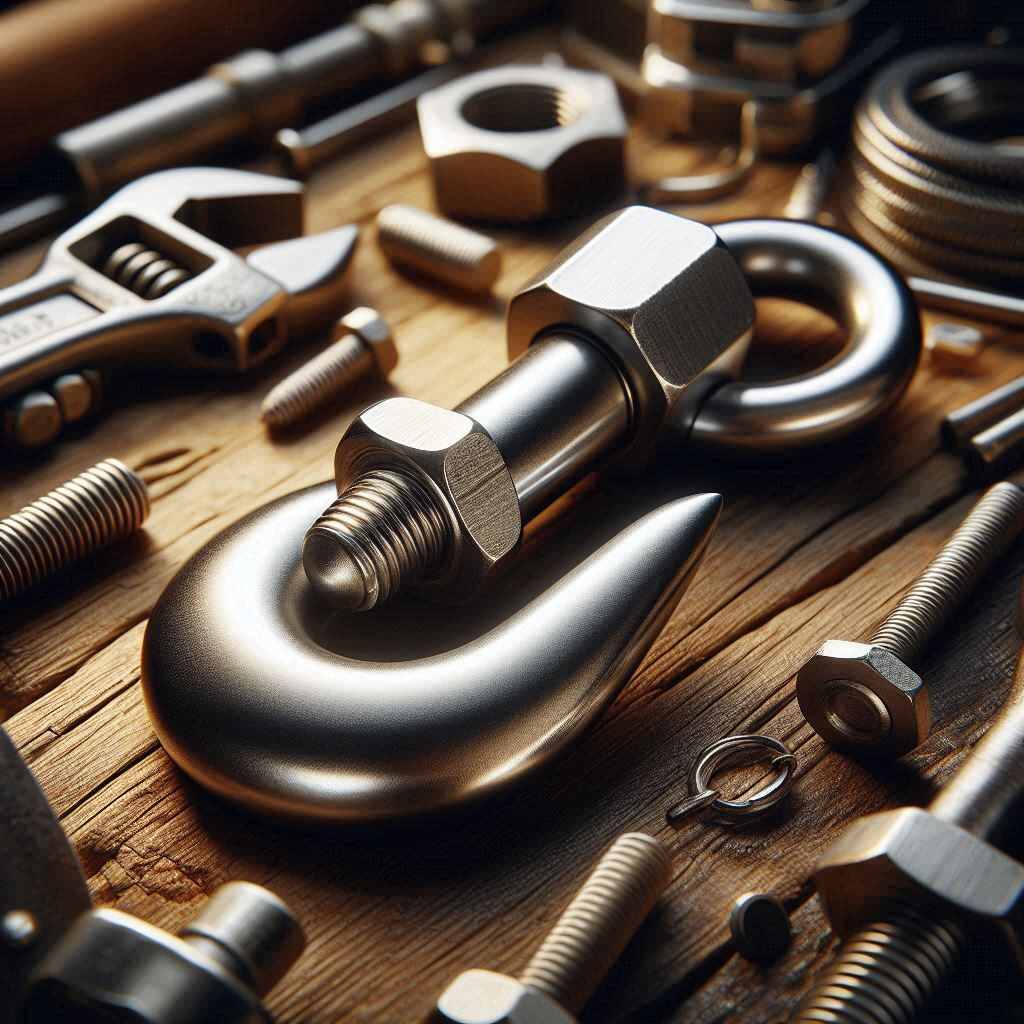
Hook bolts come in a range of shapes and purposes. Here are the common varieties:
J-Hook and L-Hook
J-hooks have a pronounced curve like the letter J — great for hanging cables or conduit. L-hooks are simpler, with a 90° bend, often used for shelves or light fixtures.
Swivel and Folding Hooks
Swivel hooks rotate, reducing twist on the attached line. Folding hooks collapse out of the way when not in use — helpful in tight spaces or multi-use hardware.
Parts: Bolt, Nut, Washer, and Hook Explained
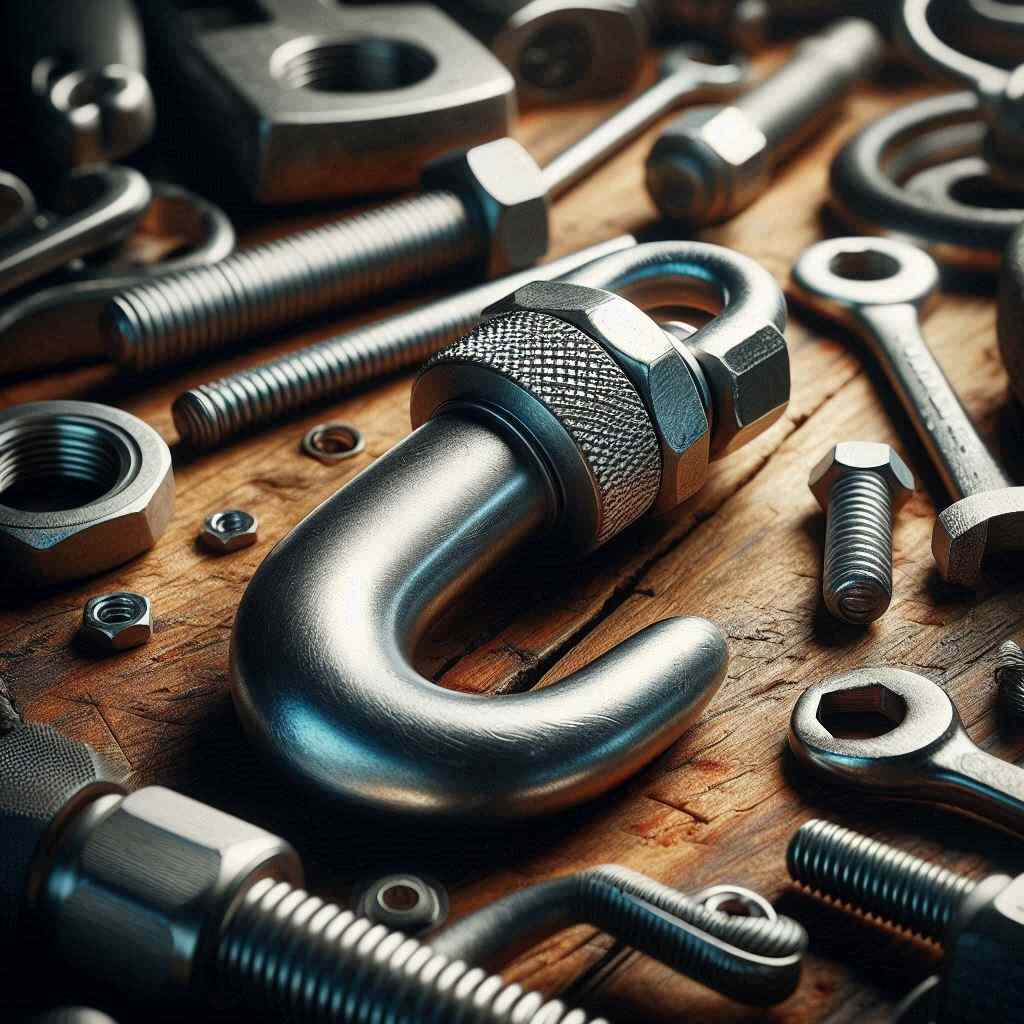
Think of a hook assembly as a team:
- Bolt (shank): The threaded rod that goes through the substrate. Its diameter and thread determine strength and compatibility.
- Nut: Secures the bolt; sometimes a locking nut or nylon-insert nut is used to resist loosening.
- Washer: Distributes load and protects the surface. Split lock washers or flat washers are common.
- Hook end: The curved portion that carries the load. Geometry matters — a narrow throat can concentrate stress.
Understanding each part helps you pick the right combo for safety and durability.
Materials and Finishes
Material choice affects strength, corrosion resistance, and cost.
Carbon Steel, Stainless Steel, Brass
- Carbon steel: Economical and very strong; requires protective finish outdoors.
- Stainless steel: Corrosion resistant — ideal for marine or humid environments.
- Brass: Low strength but excellent corrosion resistance and looks; used decoratively or in mild loads.
Galvanized and Coated Finishes
Hot-dip galvanizing and electroplating add zinc layers to protect steel. Powder coatings or polymer coatings add both protective and aesthetic layers. Choose finishes based on environment and expected lifespan.
Sizes, Threads, and Standards
Hook bolt strength and fit are defined by diameter, thread size, and standards.
Metric vs. Imperial Sizes
Metric threads (M6, M8, M10…) are common internationally; imperial sizes (1/4″-20, 3/8″-16…) are common in the U.S. Match the bolt, nut, and any tapped hole to the same standard.
Thread Pitch Basics
Thread pitch determines how far a nut moves per turn. Fine threads offer slightly higher tensile strength; coarse threads resist stripping in softer materials.
Design and Load Considerations
How much weight can a hook bolt safely carry? That depends.
Working Load Limit (WLL) vs. Breaking Strength
- Breaking strength is the maximum force that will cause failure.
- WLL is a safe operational number — usually the breaking strength divided by a safety factor (commonly 4:1 or 5:1 for many lifting applications). Always design around WLL, not breaking strength.
Safety Factors and Redundancy
Do you need redundancy? For critical lifts or overhead human safety, use redundant attachments and higher safety factors. Treat hook bolts like insurance: better to over-spec than to learn the hard way.
Installation: Step-by-Step Guide
Let’s install one the right way. Follow these steps to be safe and tidy.
Tools You’ll Need
- Drill (if drilling a hole)
- Wrenches or socket set sized to your nut
- Torque wrench (for critical applications)
- Locking washer or threadlocker (optional)
- Anchor (if fastening into hollow or masonry substrate)
Torque and Tightening Best Practices
- Prepare the hole or anchor: For wood, choose a pilot hole slightly smaller than the bolt shank. For masonry or concrete, use the recommended anchor.
- Insert the bolt: Slide the hook’s threaded shank through the hole or anchor.
- Add washer and nut: Place the washer first, then thread the nut hand-tight.
- Torque to spec: If the application has a torque spec, use a torque wrench. If not, tighten until snug and then apply a small additional turn — but don’t over-tighten and risk stripping.
- Lock it down: Use a lock washer, nylon lock nut, or threadlocker if vibration is expected.
Pro tip: mark the nut with paint after tightening as a quick visual for future checks.
Inspection and Maintenance Checklist
Inspect hook bolts periodically:
- Check for rust, pitting, or thinning metal.
- Look for deformations, especially at the bend of the hook.
- Confirm nuts are tight and not turning.
- Verify washers are present and not crushed.
- Replace any part showing wear — don’t try to repair a deformed hook.
Frequency? For critical loads, inspect before each use; for permanent fixtures, inspect quarterly or annually based on environment.
Common Applications: Where Hook Bolts Shine
Hook bolts are everywhere: hanging light fixtures, suspending plants, securing tarps, supporting cable trays, and in light rigging applications. They’re favored when you want a fast, accessible hanging point.
Troubleshooting Common Problems
Problem: hook deforms under load. Cause: overloaded or cyclical stress. Solution: choose higher grade steel or larger diameter, increase safety factor.
Problem: nut loosens over time. Cause: vibration or improper locking. Solution: use lock nuts, threadlocker, or nylock nuts.
Problem: corrosion in outdoor environment. Cause: wrong material/finish. Solution: upgrade to stainless or hot-dip galvanize and add sacrificial coatings.
How to Choose the Right Hook Bolt (Buying Guide)
Ask yourself:
- What’s the maximum load (static and dynamic)?
- Is it overhead or ground-level?
- What environment will it be in (indoor, outdoor, marine)?
- Do you need metric or imperial sizing?
Match the WLL to your load with a comfortable safety margin, choose a corrosion-resistant material for harsh environments, and buy from reputable suppliers with clear specs.
Environmental Concerns & Corrosion Prevention
Corrosion shortens life and reduces strength. Prevent it by:
- Choosing stainless steel for salty or humid environments.
- Using hot-dip galvanizing for buried or exposed installations.
- Applying paint or polymer coating for cosmetic and extra protection.
- Avoiding dissimilar metal contact that can create galvanic corrosion.
Conclusion
A hook with bolt and nut is a simple device with outsized importance. Selecting the right type, material, and size — installing it correctly, and inspecting it regularly — are the small steps that keep your gear working and people safe. Whether you’re hanging a lamp or building a temporary rig, treat your hook bolts like the safety-critical components they are: choose carefully, install intentionally, and inspect often.
FAQs
- What’s the difference between a hook bolt and a screw hook?
A hook bolt generally has a threaded shank meant to go through a substrate and be secured by a nut; a screw hook has spiraled threads to bite into wood or masonry directly. Use a hook bolt with a nut for secure, load-bearing applications. - Can I use a regular nut or should I use a lock nut with a hook bolt?
For most situations, especially where vibration or dynamic loads occur, use a lock nut or nylon-insert nut to prevent loosening. - How do I know the load capacity of a hook bolt?
Check the manufacturer’s Working Load Limit (WLL). If not provided, don’t guess — consult a supplier or engineer and apply a safety factor appropriate to your use. - Is stainless steel always the best choice?
Not always. Stainless is excellent for corrosion resistance but more expensive. For many indoor applications, galvanized carbon steel is adequate and cost-effective. - What torque should I use on the nut?
Use the manufacturer’s torque spec if given. For non-critical use, tighten until snug and then add a controlled additional quarter to half turn. For critical or rated lifts, always follow specified torque values. - Can I bend a hook bolt to shape on site?
No. Bending metal can introduce weak points and micro-cracks. Buy the correct geometry or replace the hook if shape change is needed. - How often should I inspect hook bolts?
For critical or overhead fixtures, inspect before each use. For fixed, low-risk installations, inspect at least quarterly and after any unusual event (e.g., overload or impact). - What should I do if I see corrosion starting?
Assess the extent. Surface rust can be grit-blasted and recoated in some cases, but for load-bearing hardware, replacement with a corrosion-resistant part is usually the safest choice. - Are there standards or certifications to look for?
Yes, look for products rated to relevant standards (ASTM, ISO, or regional equivalents) and suppliers that publish tensile, WLL, and material specifications. - Can hook bolts be used for lifting people or human loads?
For any load that could endanger people if it fails, use hardware specifically rated for lifting people and follow local codes and standards. Ordinary hook bolts without certified lifting ratings should not be used for human suspension.