Cold War Alliance NYT: Crossword Answer and the History Behind It
Introduction — Why This Clue Has Everyone Searching
If you’ve landed here because of the New York Times crossword puzzle, you’re in exactly the right place. The clue “Cold War alliance” is one of those deceptively simple-looking entries that can stop even experienced solvers cold (no pun intended). It looks like it should be obvious — and yet, when you’re staring at a grid with three or four letters to fill, “Cold War alliance” could point in several directions.
Here’s the short answer you came for: the most common NYT crossword response to “Cold War alliance” is NATO (four letters) or, in some puzzle contexts, SEATO (five letters) or WARSAW (as part of “Warsaw Pact”). The answer depends on your grid’s letter count and crossing entries. But once we’ve cleared that up, we’re going to do something more interesting — we’re going to explain why these alliances exist, what they meant, and why they still matter today. Because the best crossword solvers aren’t just looking up answers; they’re building the kind of knowledge base that means they never need to look them up again.
What the NYT Crossword Clue Is Really Asking
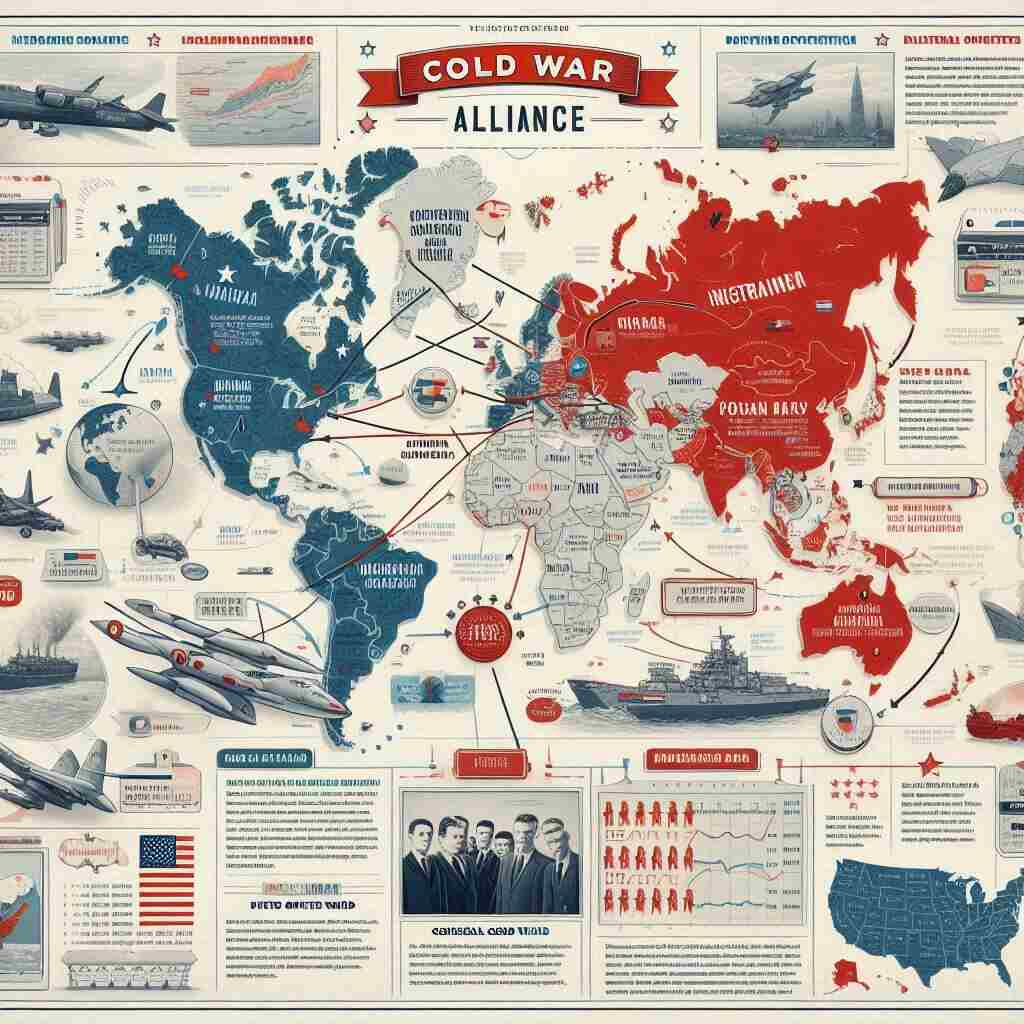
When the NYT crossword says “Cold War alliance,” it’s testing your knowledge of mid-20th-century geopolitics — specifically, the military and political pacts that divided the world into two opposing camps between roughly 1947 and 1991. The clue is factual and direct, which means the answer is fixed, not playful. There’s no wordplay or misdirection here. It’s asking: what do you actually know about the Cold War?
The Answer and Why It Fits
NATO — the North Atlantic Treaty Organization — is the four-letter answer that fits most cleanly into a standard crossword grid and is by far the most famous Cold War alliance. Founded in 1949, NATO was a collective defense pact among Western nations built to counter the growing power of the Soviet Union. It’s the answer the clue is pointing at in the vast majority of cases. Keep that in your mental Rolodex and you’ll breeze past this clue every time.
What Was the Cold War? A Quick but Essential Recap
Before we go deeper into the alliances themselves, let’s make sure we’re all on the same page about what the Cold War actually was — because “Cold War” is one of those phrases people use without always being sure what it means.
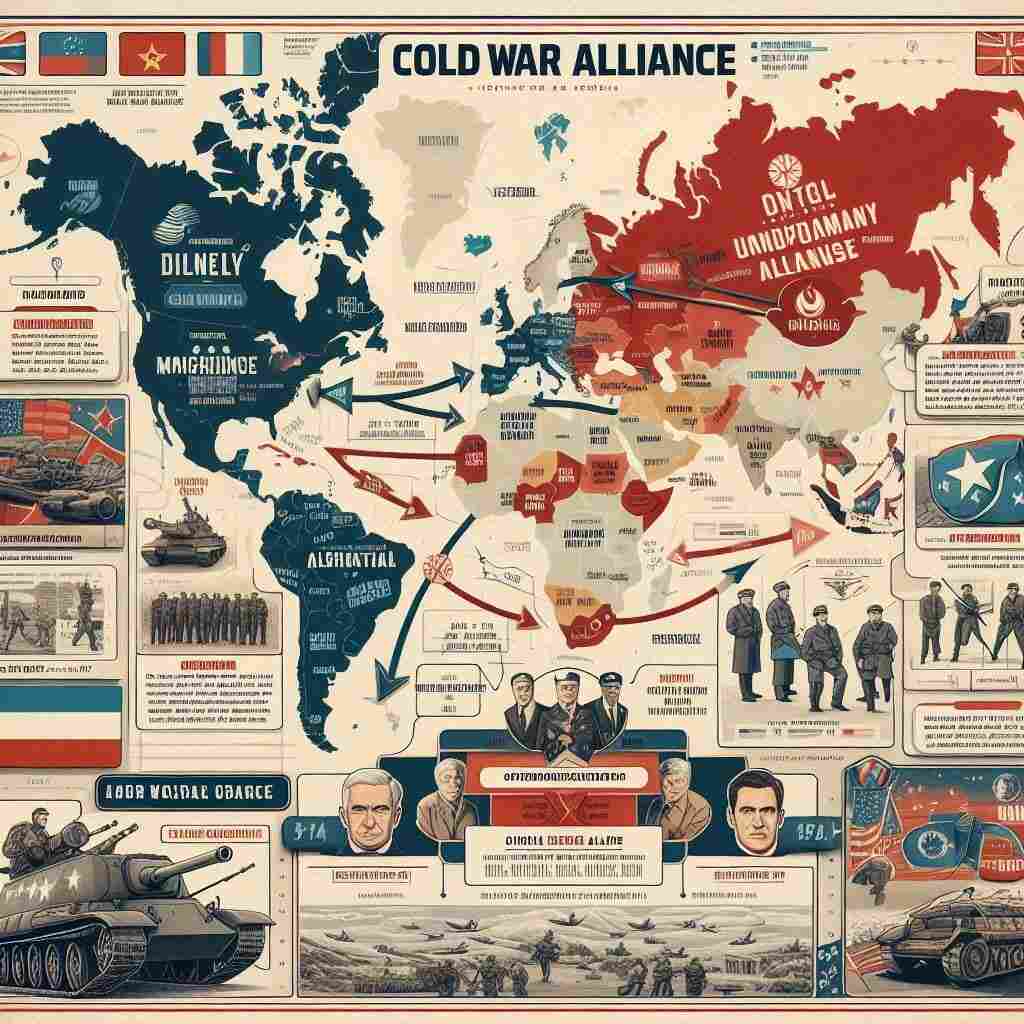
The Cold War was a prolonged state of geopolitical tension between the United States and the Soviet Union that lasted from approximately 1947 to 1991. It was “cold” because the two superpowers never directly fought each other in open warfare — unlike the hot, bloody conflicts of World War I and II. Instead, they competed through proxy wars, arms races, intelligence operations, propaganda campaigns, space exploration, and yes, military alliances. Think of it as the world’s most high-stakes staring contest, lasting nearly half a century.
How the World Split Into Two Opposing Blocs
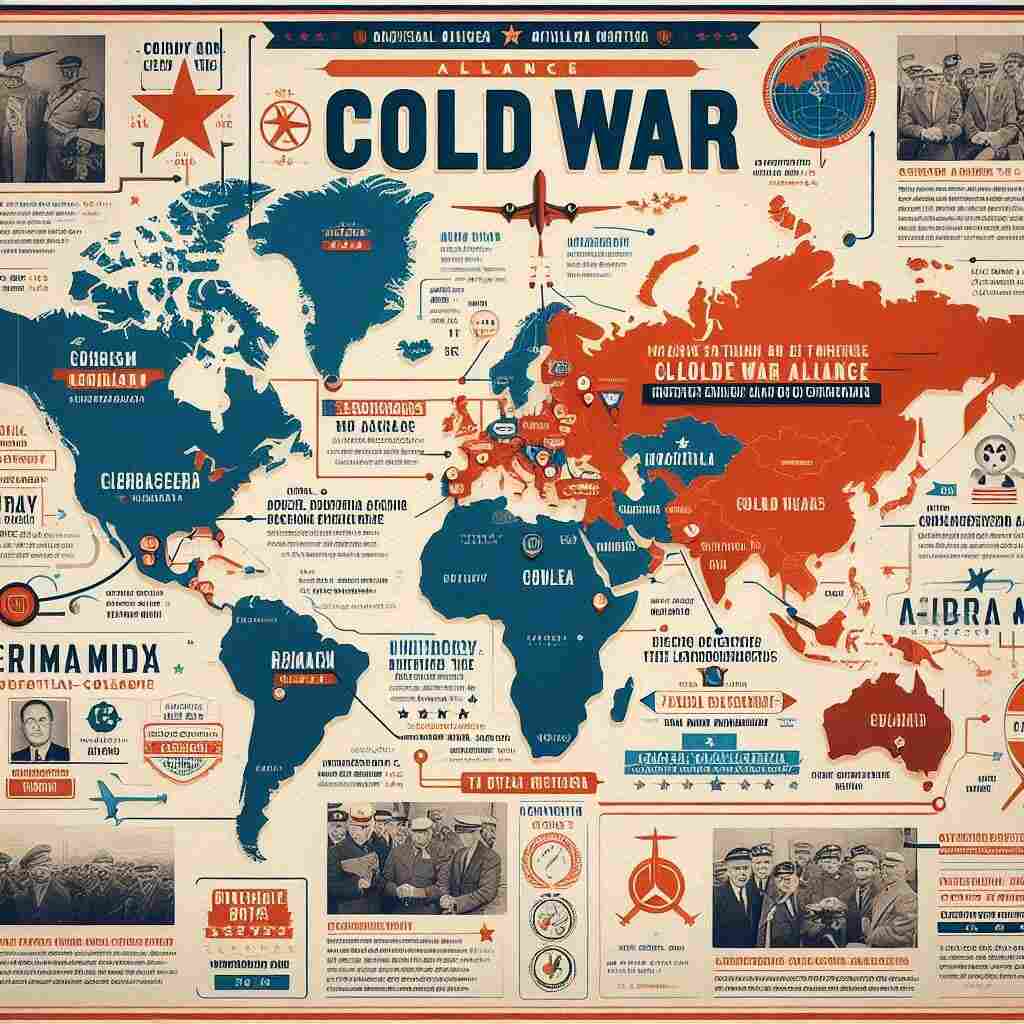
The end of World War II in 1945 left the world fundamentally restructured. Two superpowers emerged from the rubble: the United States, economically dominant and politically committed to liberal democracy and free markets, and the Soviet Union, ideologically committed to communism and militarily expansive across Eastern Europe. Every other nation on earth had to figure out which side it was on — or try to stay neutral, which was often easier said than done.
Western Europe, financially devastated by the war, aligned with the United States through the Marshall Plan (1948), which poured billions of dollars in reconstruction aid into countries like France, West Germany, and the United Kingdom. Eastern Europe fell under Soviet influence, with communist governments installed in Poland, Czechoslovakia, Hungary, Romania, and beyond. The line between these two worlds became known as the Iron Curtain — a phrase made famous by Winston Churchill in a 1946 speech.
The Ideology Gap — Capitalism vs. Communism
At its core, the Cold War was a clash of worldviews. The United States believed in individual liberty, private ownership, free markets, and representative democracy. The Soviet Union believed in collective ownership of the means of production, one-party governance, and the inevitable global triumph of communism over capitalism. These weren’t just political differences — they were incompatible visions of what human society should look like.
That ideological divide made the Cold War feel existential to people on both sides. It wasn’t just “we disagree about tax policy.” It was “our entire way of life is in conflict with yours.” And that’s the emotional and strategic backdrop against which all of the Cold War alliances were formed.
NATO: The Most Famous Cold War Alliance Explained
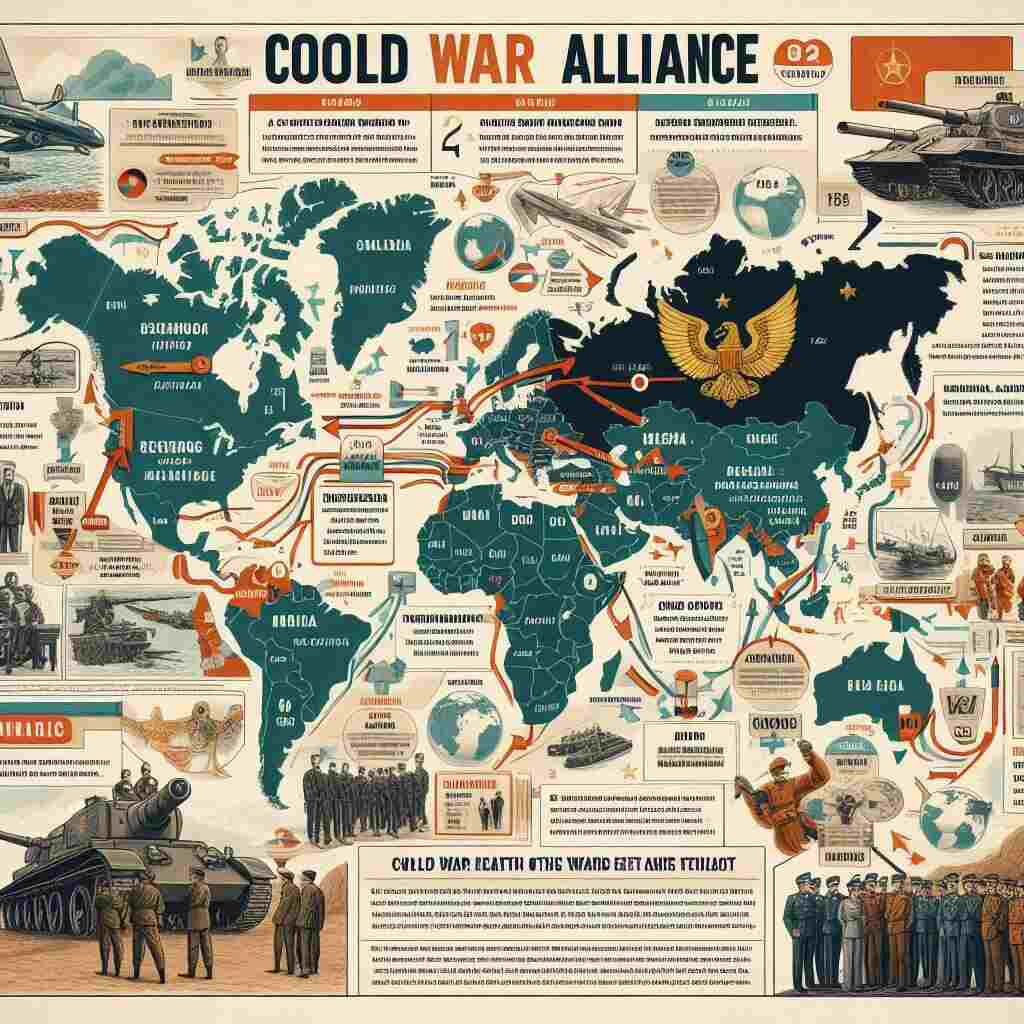
If there’s one Cold War alliance that every person alive today has heard of, it’s NATO. It’s in the news regularly, it’s involved in ongoing global conflicts, and it’s been at the center of international relations for more than seven decades. And it started as a direct response to Soviet expansionism in the years immediately following World War II.
How and Why NATO Was Formed in 1949
The North Atlantic Treaty was signed on April 4, 1949, in Washington, D.C. The founding members were twelve nations: the United States, Canada, the United Kingdom, France, Belgium, the Netherlands, Luxembourg, Denmark, Norway, Iceland, Italy, and Portugal. The core principle of the alliance is enshrined in Article 5 of the treaty — the principle of collective defense. Simply put: an attack on one member is an attack on all members.
Why did these nations need such a pact? Because by 1949, the Soviet Union had successfully tested its first nuclear weapon, communist forces had taken control of China, and Soviet-backed governments were consolidating power across Eastern Europe. Western leaders — particularly U.S. President Harry Truman — concluded that a formal military alliance was the only credible deterrent against Soviet aggression expanding westward into war-ravaged, vulnerable Western Europe.
NATO was, in essence, the institutionalization of the Truman Doctrine — the American commitment to containing the spread of communism. It gave that commitment military teeth.
Which Countries Joined NATO and When
NATO didn’t stay at twelve members for long. Greece and Turkey joined in 1952, West Germany in 1955 (a hugely significant moment — just a decade after being the enemy, Germany was now a partner), and Spain in 1982. After the Cold War ended and the Soviet Union collapsed, NATO expanded dramatically into former Warsaw Pact territory: Poland, Hungary, and the Czech Republic joined in 1999; the Baltic states of Estonia, Latvia, and Lithuania joined in 2004.
Today NATO has 32 members, and its expansion — particularly into Eastern Europe — remains one of the most geopolitically contentious issues of the 21st century, directly connected to Russian foreign policy and the ongoing conflict in Ukraine.
The Warsaw Pact — The Soviet Answer to NATO
If NATO was the West’s military umbrella, the Warsaw Pact was the East’s. Formally known as the Treaty of Friendship, Cooperation, and Mutual Assistance, it was signed on May 14, 1955, in Warsaw, Poland — hence the name.
Formation, Members, and Purpose of the Warsaw Pact
The Warsaw Pact was a direct Soviet response to West Germany joining NATO. Its founding members were the Soviet Union, Albania, Bulgaria, Czechoslovakia, East Germany, Hungary, Poland, and Romania. Like NATO, it was structured around the principle of collective defense — though in practice, it functioned far more as an instrument of Soviet political control over Eastern Europe than as a genuine mutual defense pact among equals.
The power dynamic within the Warsaw Pact was decidedly lopsided. The Soviet Union provided the military leadership, the nuclear umbrella, and the strategic direction. The Eastern European member states were, to varying degrees, expected to follow Moscow’s lead — politically, economically, and militarily. This wasn’t a partnership of equals; it was a coalition organized around Soviet hegemony.
How the Warsaw Pact Functioned in Practice
The Warsaw Pact’s most dramatic real-world application came not against NATO, but against its own members. In 1956, Soviet forces intervened militarily in Hungary to crush a popular uprising against communist rule. In 1968, Warsaw Pact forces invaded Czechoslovakia to end the reformist “Prague Spring” under Alexander Dubček — an event justified by the Soviet Union under what became known as the Brezhnev Doctrine, which asserted the right to intervene in any socialist state threatened by counter-revolution.
These interventions revealed the fundamental nature of the Warsaw Pact: it was a tool of Soviet control as much as a defensive alliance. The Eastern European member states weren’t free agents choosing mutual cooperation — many were, to varying degrees, satellite states operating within Moscow’s orbit.
Other Cold War Alliances You Should Know About
NATO and the Warsaw Pact get most of the attention — and most of the crossword clues — but they weren’t the only alliances the Cold War produced. The United States in particular pursued a global strategy of containment that required building networks of alliances well beyond the North Atlantic.
SEATO and CENTO — America’s Lesser-Known Pacts
SEATO — the Southeast Asia Treaty Organization — was formed in 1954 in the wake of the French defeat at Dien Bien Phu and the communist takeover of North Vietnam. It included the United States, the United Kingdom, France, Australia, New Zealand, Pakistan, the Philippines, and Thailand. SEATO was less coherent and less militarily integrated than NATO, and it never developed the same unified command structure. It was dissolved in 1977.
CENTO — the Central Treaty Organization, also known as the Baghdad Pact — was a Middle Eastern alliance formed in 1955, including Turkey, Iraq, Pakistan, Iran, and the United Kingdom, with the United States as an associate member. It was intended to create a defensive barrier against Soviet expansion southward into the Middle East. It too was relatively weak institutionally and dissolved in 1979 following the Iranian Revolution.
Both SEATO and CENTO occasionally appear in NYT crossword clues, particularly in longer entries. If you see a five-letter Cold War alliance clue, SEATO is your most likely answer.
The Truman Doctrine and the Containment Strategy
Understanding Cold War alliances is impossible without understanding the strategic doctrine that drove American foreign policy throughout this period: containment. The concept was articulated most influentially by diplomat George Kennan in his famous 1946 “Long Telegram” and his subsequent 1947 article in Foreign Affairs (published under the pseudonym “X”). Kennan argued that the Soviet Union was inherently expansionist but also pragmatic — it would probe for weaknesses, and where it found resistance, it would stop.
The logical response, then, was to build walls of resistance everywhere Soviet expansion might occur. That meant military alliances (NATO, SEATO, CENTO), economic aid (the Marshall Plan), and direct military intervention when necessary (Korea, Vietnam). President Harry Truman codified this approach in the Truman Doctrine of 1947, which committed the United States to supporting “free peoples who are resisting attempted subjugation by armed minorities or by outside pressures.” It was sweeping, ambitious, and enormously consequential.
Containment wasn’t without its critics. Some, like Kennan himself in later years, argued it was being applied too broadly and militaristically. Others argued it didn’t go far enough. But it was the organizing principle of American foreign policy for four decades, and the alliance system it spawned reshaped the entire world.
How Cold War Alliances Shaped Global Politics for Decades
The impact of Cold War alliances wasn’t limited to the years between 1947 and 1991. These pacts fundamentally rewired international relations in ways that are still playing out today. Here are three specific, lasting consequences worth understanding.
First, they institutionalized multilateral security cooperation in ways the world had never seen before. NATO in particular created a genuinely integrated military command structure, common standards, joint exercises, and a culture of shared defense planning that made Western Europe more secure — and arguably more stable — than at any point in its prior history. That model of collective security proved so durable that it survived the very threat it was designed to counter.
Second, Cold War alliances created the framework for today’s geopolitical tensions. Russia’s deep hostility to NATO expansion isn’t irrational from Moscow’s perspective — it’s a continuation of a security calculus that stretches back to the Soviet era. Understanding why Vladimir Putin views NATO’s eastward expansion as an existential threat requires understanding the Warsaw Pact world he grew up in. History doesn’t repeat itself exactly, but it rhymes loudly.
Third, Cold War alliances left a complex legacy in the developing world. Proxy conflicts in Korea, Vietnam, Angola, Afghanistan, Nicaragua, and dozens of other countries were shaped by the alliance systems of the superpowers. Nations that tried to remain non-aligned (the Non-Aligned Movement, founded in 1961) often found themselves pressured, destabilized, or invaded regardless. The human cost of Cold War alliance politics, measured in lives lost in proxy conflicts, runs into the millions.
The Collapse of Cold War Alliances and What Came After
The Warsaw Pact dissolved remarkably quickly once the Soviet Union began to collapse. Hungary opened its borders in 1989, triggering a cascade of events that brought down the Berlin Wall in November of that year. By 1991, the Warsaw Pact was formally dissolved (July 1), and the Soviet Union itself ceased to exist in December 1991. It was one of the most dramatic geopolitical transformations in modern history — happening largely without the large-scale war that everyone had feared for 40 years.
NATO, by contrast, not only survived the end of the Cold War but expanded. This is one of the great paradoxes of the post-Cold War world: the alliance formed to counter the Soviet Union outlasted the Soviet Union by more than three decades and continues to grow. Whether that’s a stabilizing force for global security or a provocative one — depending on your perspective and geography — is one of the defining geopolitical debates of our time.
Why the NYT Crossword Loves Cold War History Clues
The Cold War era is a goldmine for crossword constructors, and for good reason. It produced a remarkable number of short, vowel-rich, memorable acronyms and proper nouns: NATO, SEATO, CENTO, USSR, CIA, KGB, MAD (Mutually Assured Destruction). These are exactly the kinds of entries crossword grids love — clean letter combinations that cross well with other words.
Beyond the practical construction benefits, Cold War history sits in a sweet spot of cultural knowledge. It’s recent enough that many solvers have lived through part of it or learned about it in school, but distant enough to feel like “history” rather than current events. That makes it ideal for puzzles targeting educated adult solvers — which is precisely the NYT crossword’s core audience.
Tips for Solving Cold War and History Clues
Building a mental cheat sheet of Cold War terms will pay dividends in your solving career. Memorize the major alliances (NATO, Warsaw Pact, SEATO, CENTO), the key leaders (Truman, Eisenhower, Stalin, Khrushchev, Kennedy, Gorbachev), and the major events (Berlin Blockade, Korean War, Cuban Missile Crisis, Vietnam, fall of the Berlin Wall). Pay attention to letter count — a four-letter Cold War alliance is almost always NATO, while a five-letter one is usually SEATO. When in doubt, work your crossing letters first and let the grid guide you to the right answer.
Conclusion
The clue “Cold War alliance” in the NYT crossword is really two things at once: a quick vocabulary test for solvers who know their history, and an invitation to explore one of the most consequential chapters in modern geopolitics. The answer you need is most likely NATO — the North Atlantic Treaty Organization, founded in 1949 as the cornerstone of Western collective defense during the Cold War. But knowing the answer is just the beginning. Understanding why NATO exists, what the Warsaw Pact was, how containment shaped U.S. foreign policy, and why these Cold War alliances still echo through today’s headlines — that’s the knowledge that makes you not just a better crossword solver, but a more informed reader of the world. The Cold War may be over, but its alliances, its rivalries, and its legacy are very much still with us.
Frequently Asked Questions (FAQs)
1. What is the most common answer to the “Cold War alliance” NYT crossword clue? The most common answer is NATO (four letters), referring to the North Atlantic Treaty Organization founded in 1949. In some puzzles with five-letter entries, SEATO (Southeast Asia Treaty Organization) may be the intended answer.
2. When was NATO founded, and which countries were the original members? NATO was founded on April 4, 1949. The twelve original member nations were the United States, Canada, the United Kingdom, France, Belgium, the Netherlands, Luxembourg, Denmark, Norway, Iceland, Italy, and Portugal.
3. What was the Warsaw Pact, and how was it different from NATO? The Warsaw Pact (1955–1991) was the Soviet-led military alliance of Eastern European communist states, formed in direct response to West Germany joining NATO. Unlike NATO — a genuine multilateral alliance — the Warsaw Pact functioned largely as an instrument of Soviet political control over its Eastern European satellite states.
4. What does Article 5 of the NATO treaty mean? Article 5 is NATO’s collective defense clause — it states that an attack on any one NATO member is considered an attack on all members, obligating the alliance to respond collectively. It has been invoked only once in NATO’s history: following the September 11, 2001 terrorist attacks on the United States.
5. What was the Truman Doctrine, and how did it relate to Cold War alliances? The Truman Doctrine (1947) was a U.S. foreign policy commitment to support nations resisting communist takeover or Soviet pressure. It provided the ideological justification for NATO and other Cold War alliances by framing them as defensive shields for free peoples against authoritarian expansion.
6. Why did the Warsaw Pact dissolve but NATO continue after the Cold War? The Warsaw Pact dissolved because the Soviet Union collapsed and its Eastern European member states voluntarily abandoned communism and Soviet alignment. NATO continued because its member states chose to maintain it — and subsequently expanded it to include many former Warsaw Pact members, reflecting the changed security environment of post-Cold War Europe.
7. What is SEATO, and why does it sometimes appear as a crossword answer? SEATO (Southeast Asia Treaty Organization) was a U.S.-led Cold War alliance formed in 1954 to contain communist expansion in Southeast Asia. It had eight members and was dissolved in 1977. It appears in crosswords because its five-letter acronym fits neatly into grids where NATO’s four letters don’t work.
8. How did Cold War alliances contribute to proxy wars? Cold War alliances created a global chessboard on which the U.S. and Soviet Union competed for influence without directly fighting each other. This dynamic fueled proxy conflicts — wars in Korea, Vietnam, Angola, Afghanistan, and elsewhere where the superpowers backed opposing sides, often at enormous human cost to the nations involved.
9. Is NATO still relevant today, more than 30 years after the Cold War ended? Yes, significantly so. NATO has 32 members as of 2024, has conducted major military operations in the Balkans and Afghanistan, and is centrally involved in coordinating Western support for Ukraine following Russia’s 2022 invasion. Its relevance has, if anything, increased in recent years amid renewed tensions with Russia.
10. What other Cold War-era terms frequently appear in the NYT crossword? Common Cold War crossword entries include USSR, KGB, CIA, DÉTENTE, GLASNOST, PERESTROIKA, KREMLIN, BERLIN (as in the Berlin Wall), IRON (as in Iron Curtain), and ARMS (as in arms race). Building familiarity with these terms will significantly improve your performance on history-themed puzzle clues.