Remove Paint With Pressure Washer: The Complete Guide
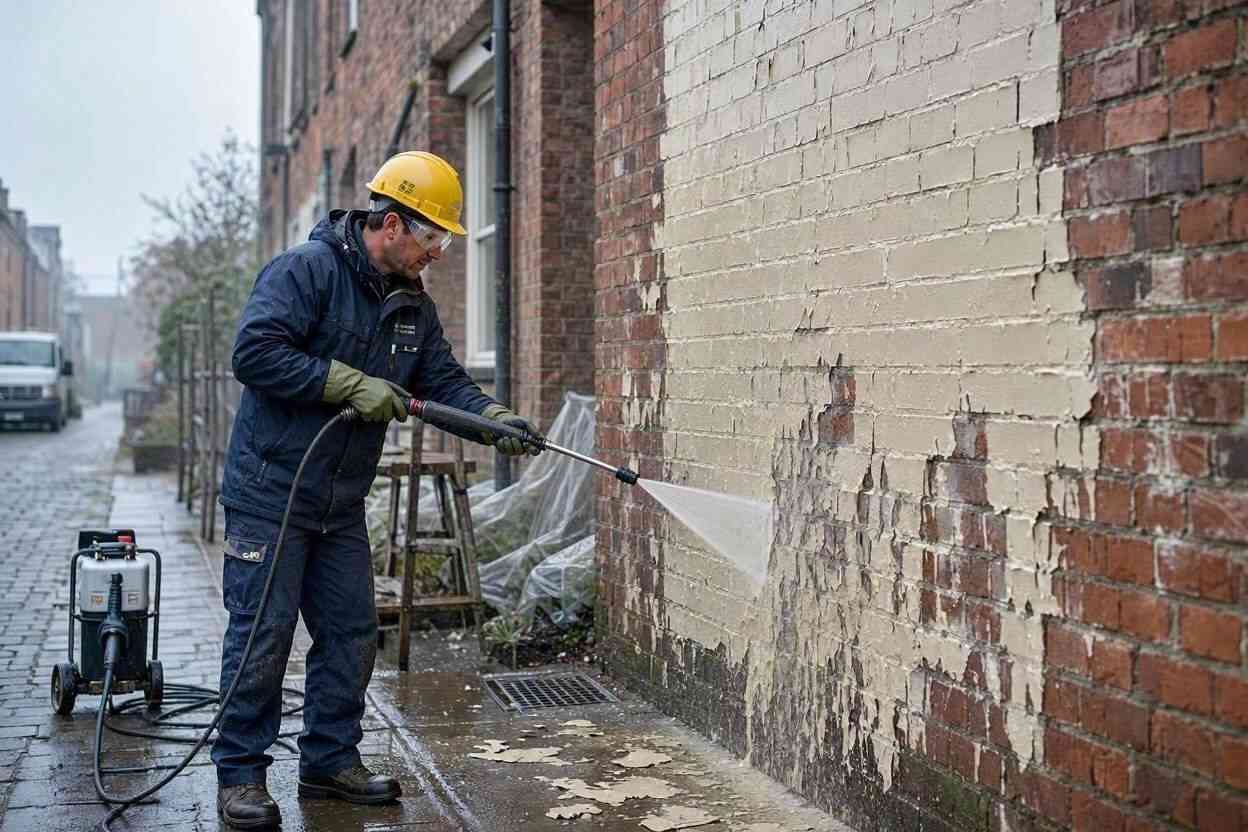
If you want to remove paint with a pressure washer, you are probably looking for a faster alternative to hours of scraping and sanding.
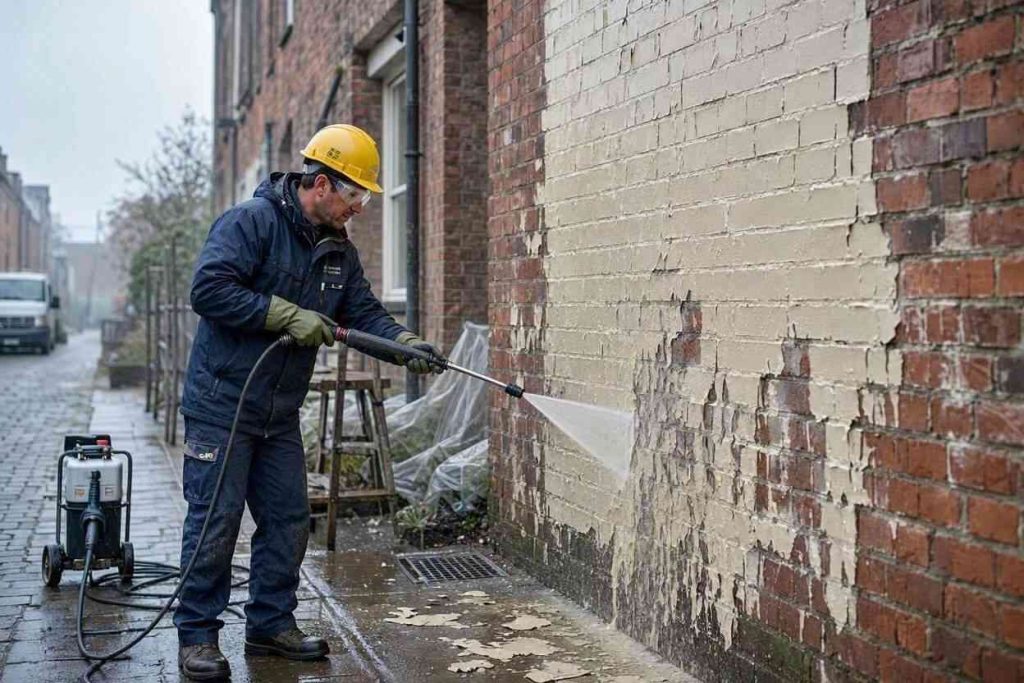
The good news is that pressure washing can be an effective way to remove loose, peeling, and weathered paint from the right surfaces. The bad news is that a pressure washer is powerful enough to damage the surface underneath if you use too much pressure or the wrong nozzle. The difference between a clean surface and an expensive repair often comes down to technique, pressure, distance, and knowing when to stop.
A pressure washer works by forcing water through a small nozzle at high speed. That concentrated stream can break the bond between old paint and the surface beneath it, allowing the coating to peel or wash away. This works particularly well on outdoor concrete, masonry, fences, decks, and other suitable exterior surfaces where paint has already started deteriorating. However, pressure washing is not a magic solution for every type of paint. Thick coatings, epoxy, industrial finishes, and firmly bonded paint may require scraping, sanding, grinding, or a chemical paint stripper.
The key is to think of pressure washing as a controlled paint-removal technique, not simply a matter of turning the machine up to maximum power. Start gently, test the surface, increase pressure only when necessary, and always protect the material underneath the paint.
Can You Remove Paint With a Pressure Washer?
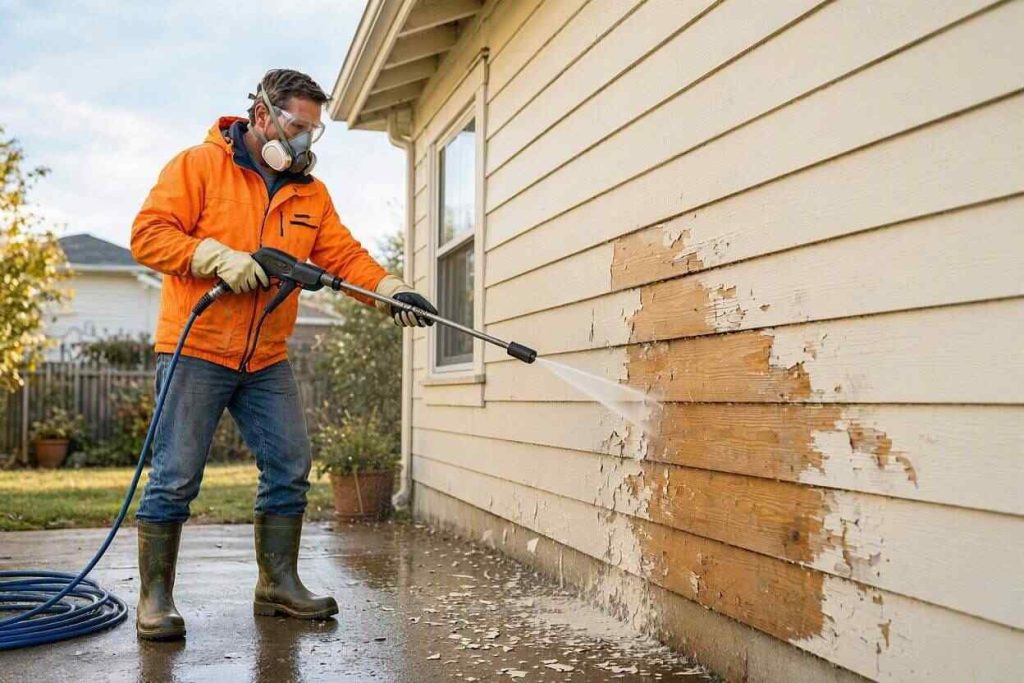
Yes, you can remove paint with a pressure washer, but how well it works depends on several factors. The condition of the paint is one of the most important. Old paint that is already peeling, blistering, cracking, chalking, or separating from the surface can often be removed relatively easily with water pressure. Paint that is strongly bonded and in good condition is much harder to remove and may require a completely different approach.
The surface also makes a major difference. Concrete and some masonry surfaces can tolerate significantly more pressure than soft wood. A pressure washer that works perfectly on a concrete driveway could easily damage a wooden fence or deck. This is why there is no single pressure setting that is appropriate for every paint-removal project.
Think of the pressure washer as a tool that gradually increases force. You want to find the lowest amount of pressure that gets the job done. Starting at maximum pressure might remove paint quickly, but it can also strip away wood fibers, damage mortar, create marks in concrete, or destroy a decorative surface.
Before beginning the entire project, test a small hidden section. Watch what happens to both the paint and the underlying material. If the paint comes away without damaging the substrate, you have found a workable combination of pressure, nozzle, and distance.
When Does Pressure Washing Work Best?
Pressure washing works best when the paint is already loose or deteriorating. Exterior surfaces exposed to years of rain, sunlight, freezing temperatures, and temperature changes often develop weak areas where paint begins separating from the substrate.
A pressure washer can exploit those weak points. Water gets underneath loose edges and pushes the coating away from the surface. Once the bond is broken, the water carries the paint fragments away.
This makes pressure washing particularly useful for surface preparation before repainting. You may not need to remove every microscopic trace of the previous coating. If the remaining paint is firmly attached, smooth, and compatible with the new coating, removing only the loose and damaged sections may be enough.
Trying to strip every square inch of paint simply because you have a pressure washer can create unnecessary work and increase the chance of damaging the surface.
What Surfaces Can You Pressure Wash to Remove Paint?
The surface underneath the paint should always determine your pressure-washing technique. Different materials respond very differently to concentrated water pressure.
Concrete is generally one of the easier surfaces to work with. Driveways, patios, garage floors, steps, and exterior slabs can often withstand relatively strong pressure, particularly when the concrete is in good condition. Even so, damaged or decorative concrete requires a lighter approach.
Masonry can also be pressure washed, but older brick, mortar, render, and painted walls require caution. The paint may be easier to remove than the mortar holding the structure together. A powerful concentrated stream can erode weak mortar joints or damage the surface of old bricks.
Wood requires the most care. Pressure washing can remove loose paint from fences, decks, siding, and other exterior timber, but excessive pressure can also remove the wood itself. If the pressure washer starts creating grooves or making the timber look fuzzy, you are using too much force.
Metal surfaces can sometimes be pressure washed effectively, especially when removing loose exterior paint. However, pressure washing may not remove firmly bonded coatings completely. Metal can also begin rusting if water gets into damaged areas and the surface is not dried and prepared properly afterward.
Concrete and Masonry
If you want to remove paint from concrete with a pressure washer, you have one of the more forgiving surfaces to work with. Concrete is considerably harder than wood and can tolerate stronger cleaning action when it is structurally sound.
Start by removing loose dirt, leaves, dust, and debris. This makes it easier to see exactly where the paint is located and prevents unnecessary contamination during the process.
Use a suitable spray pattern and begin at a moderate pressure. Work across the surface rather than concentrating on a single point. If the paint begins lifting, continue using the same technique rather than immediately increasing the pressure.
Older concrete can be more fragile than it looks. Excessive pressure can remove the top layer of the concrete or expose aggregate. You may also create visible cleaning lines if you move the nozzle unevenly.
Masonry requires similar caution. Avoid directing a concentrated spray directly at weak mortar joints for extended periods. If you are working on an older or historic building, aggressive pressure washing may not be appropriate at all.
Wood and Decking
Removing paint from wood with a pressure washer requires considerably more control.
Wood is relatively soft, and the pressure washer does not distinguish between unwanted paint and the wood underneath it. If the coating refuses to come off, increasing the pressure can result in damaged timber rather than cleaner timber.
Start farther away from the surface and use a wider spray pattern. Keep the nozzle moving continuously. Do not hold the wand over one spot while waiting for stubborn paint to disappear.
Pay attention to the appearance of the wood. If the grain begins lifting, the surface becomes fuzzy, or you see grooves developing, stop and reduce the pressure or increase your distance.
For stubborn sections, scraping is often a better option. A paint scraper gives you much more control and allows you to remove the coating without unnecessarily cutting into the timber.
After pressure washing, wood needs adequate time to dry before sanding, priming, or painting. Painting damp timber can create adhesion problems and shorten the life of the new coating.
What Pressure Washer Do You Need for Paint Removal?
The right pressure washer depends on the surface and the type of paint you are trying to remove.
Two specifications are especially important: PSI and GPM.
PSI stands for pounds per square inch and describes the pressure produced by the machine. GPM stands for gallons per minute and describes how much water the machine moves.
Higher pressure generally means greater impact, but higher pressure is not automatically better. A powerful machine can remove paint faster while simultaneously increasing the risk of surface damage.
For loose paint on durable exterior surfaces, a suitable medium- to heavy-duty pressure washer may provide enough power. For delicate surfaces such as wood, a lower-pressure approach is usually safer.
The condition of the paint matters as well. If the paint is already peeling, you may not need much force. If the coating is thick and strongly bonded, even a powerful pressure washer may struggle.
The best setup is therefore the one that removes the paint without damaging the substrate.
How Much PSI Do You Need to Remove Paint?
There is no universal PSI number for paint removal.
A pressure level that works well on concrete can be excessive for wood. A setting that safely cleans a painted fence may be too weak to remove a stubborn coating from a concrete floor.
Instead of choosing a PSI based solely on the paint, consider the material underneath it.
Start at a lower setting and test the surface. If the paint does not move, gradually increase the pressure. Stop increasing it once the paint begins coming away effectively.
This approach gives you a much larger safety margin than immediately using the highest pressure available.
Remember that effective cleaning is influenced by more than PSI. The nozzle angle, distance from the surface, water flow, movement speed, and condition of the paint all affect the result.
Which Pressure Washer Nozzle Is Best for Removing Paint?
The nozzle can dramatically change how aggressively a pressure washer interacts with a surface.
A wider spray distributes water over a larger area. A narrower spray concentrates the force into a smaller area and can remove material much more aggressively.
For paint removal, it is usually sensible to begin with a wider spray pattern and gradually increase the intensity if necessary.
Avoid automatically reaching for the most aggressive nozzle. A concentrated jet can damage surfaces surprisingly quickly, especially wood, soft masonry, painted trim, and deteriorated concrete.
The correct nozzle is the one that removes the unwanted coating while leaving the substrate intact.
Your technique matters just as much as the nozzle itself. Keep the wand moving steadily and maintain a consistent distance. Do not repeatedly blast one small section simply because the paint is stubborn.
If a particular patch refuses to come off while surrounding paint is removing easily, that may be a sign that the coating is more strongly bonded. Use a scraper or another removal method instead of simply increasing pressure.
How to Remove Paint With a Pressure Washer
The process becomes much easier when you approach it systematically.
First, inspect the surface. Determine what material is underneath the paint and whether it is strong enough to tolerate pressure washing. Look for cracks, rotten wood, deteriorated mortar, loose render, damaged concrete, and other weaknesses.
Next, prepare the work area. Remove furniture, vehicles, decorations, plants, and anything else that could be damaged by high-pressure water or flying paint chips.
Put on appropriate protective equipment, including eye protection and suitable footwear. Keep children, pets, and other people away from the work area.
Connect and operate the pressure washer according to its manufacturer’s instructions. Select a relatively conservative nozzle and pressure setting.
Test a small area.
Move the wand slowly across the surface and observe the result. If the paint begins lifting cleanly, continue using the same technique. If the substrate begins showing damage, stop immediately.
Work systematically across the surface rather than randomly moving the wand. Overlapping passes slightly can help create a more consistent finish.
Once the loose paint has been removed, inspect the surface again. Remaining stubborn paint may need scraping, sanding, grinding, or another suitable treatment.
Prepare the Work Area
Preparation can determine whether a paint-removal job goes smoothly or becomes a mess.
Pressure washing creates water spray, paint chips, dirt, and debris. Nearby windows, doors, vehicles, garden furniture, electrical equipment, and landscaping should be protected.
Pay particular attention to drains. You do not want large amounts of paint debris and contaminated water flowing uncontrolled into drainage systems or natural waterways.
If you are working on an older property where lead-based paint may be present, additional precautions and local regulations may apply. Do not treat old paint as ordinary household waste simply because it is being removed with water.
Also inspect the building before spraying. Close suitable windows and doors and avoid directing water toward openings, vents, electrical connections, damaged seals, or areas where water could penetrate the structure.
Test the Surface First
The test area is arguably the most important step in the entire process.
Choose a small section that is not immediately visible. Start with a relatively gentle setting and make several passes.
Look for three things:
- Is the paint coming off?
- Is the underlying material remaining intact?
- Does the resulting surface look acceptable?
If all three answers are yes, you can continue.
If the paint stays in place but the surface begins deteriorating, pressure washing is not the right solution for that particular section.
Testing also helps you determine how much paint actually needs to be removed. You may discover that loose areas disappear easily while firmly bonded paint remains. That tells you where additional manual preparation is required.
How to Remove Paint From Concrete With a Pressure Washer
Concrete is often an excellent candidate for pressure-washing paint removal.
Begin by cleaning the area so loose dirt does not interfere with the process. Identify the painted sections and check for cracks or areas of damaged concrete.
Start with moderate pressure and a suitable spray pattern. Work in overlapping passes while maintaining a consistent distance from the surface.
As the paint begins to loosen, you should see chips or strips separating from the concrete. Continue working across the surface rather than repeatedly attacking the same spot.
For stubborn paint, you may need a combination of methods. A suitable paint remover can soften certain coatings before pressure washing, while mechanical grinding may be more effective for extremely tough floor coatings.
Do not assume that a stronger pressure setting will always solve the problem. If the coating is chemically bonded or designed to resist abrasion, more water pressure may simply damage the concrete without completely removing the paint.
Once the paint has been removed, rinse the surface thoroughly and allow it to dry completely before applying another coating.
How to Remove Paint From Wood With a Pressure Washer
The safest approach to pressure washing painted wood is to use the least aggressive technique that works.
Begin at a greater distance from the surface. Use a wider spray pattern and make smooth, consistent passes.
Never hold the wand stationary while trying to remove stubborn paint.
If the paint starts coming away, continue at the same setting. There is no advantage to increasing the pressure once you have found a setting that works.
If the wood begins showing damage before the paint comes away, stop. Use a scraper or sanding tool for that section.
This is particularly important on old fences, decks, siding, and timber structures that have already been weakened by years of weather exposure.
Once the paint has been removed, let the wood dry thoroughly. Inspect it for raised grain, damaged fibers, rot, cracks, and areas requiring repair.
Sand the surface as needed before applying primer and paint. A smooth, dry, stable surface gives the new coating a much better chance of lasting.
Common Mistakes When Removing Paint With a Pressure Washer
The most common mistake is using too much pressure.
People often assume that if paint does not immediately disappear, they need a stronger setting. In reality, the coating may simply require scraping or another removal method.
The second mistake is getting too close to the surface. Reducing the distance concentrates the force dramatically. Even a relatively ordinary pressure washer can become aggressive when the nozzle is held very close.
Another mistake is staying in one place too long. Continuous movement distributes the force and reduces the risk of creating visible damage.
Using the wrong nozzle is another common problem. An unnecessarily narrow or aggressive spray can create grooves, strip wood fibers, damage mortar, or leave marks in concrete.
People also sometimes forget that paint removal is only part of the preparation process. After pressure washing, the surface may still require scraping, sanding, repairing, drying, priming, and cleaning.
Finally, never assume that every type of paint can be removed with water pressure. Some coatings are simply too strong or too deeply bonded.
Pressure Washer vs. Other Paint Removal Methods
Pressure washing is useful, but it is not always the best option.
Scraping is inexpensive and provides excellent control. It works particularly well for peeling paint on wood, trim, fences, and other smaller areas.
Sanding is useful for smoothing paint edges and preparing a surface for repainting. Its biggest disadvantage is the dust it produces.
Grinding is effective for stubborn coatings on durable surfaces such as concrete. However, it can remove part of the substrate if used too aggressively.
Chemical paint strippers can soften coatings that are resistant to pressure washing. They can be useful for thick or strongly bonded paint, but they require careful handling and appropriate disposal.
Pressure washing is strongest when dealing with loose exterior paint, surface preparation, and suitable durable materials.
| Paint Removal Method | Best For | Main Benefit | Main Drawback |
|---|---|---|---|
| Pressure washing | Loose exterior paint | Fast over large areas | Can damage surfaces |
| Scraping | Peeling paint | Excellent control | Time-consuming |
| Sanding | Surface preparation | Smooth finish | Creates dust |
| Grinding | Tough concrete coatings | Powerful removal | Can damage substrate |
| Chemical stripper | Strongly bonded coatings | Softens difficult paint | Requires careful handling |
| Heat removal | Certain paint types | Can loosen coatings | Not suitable for every surface |
In many projects, the best solution is a combination. Pressure washing can remove the loose material, scraping can deal with stubborn sections, and sanding can prepare the remaining surface for primer.
Can You Use Paint Stripper Before Pressure Washing?
Yes, in some situations, using a suitable paint stripper before pressure washing can make the job easier.
This approach can be particularly useful when dealing with coatings that are too strongly bonded for water pressure alone. The stripper softens or breaks down the coating, after which the loosened material can sometimes be removed more easily.
However, chemical products must be treated seriously. Follow the product instructions regarding application, dwell time, protective equipment, ventilation, surface compatibility, and disposal.
Never mix different chemical products in an attempt to create a stronger stripper. Chemical reactions can produce dangerous results.
Also consider whether pressure washing is appropriate after using the product. Some chemical strippers have specific requirements for rinsing or neutralization.
The objective is to make the paint easier to remove, not to introduce a second problem.
How to Deal With Old or Lead-Based Paint
Old paint deserves additional attention because some older coatings may contain lead.
If you are working on an older property and there is a possibility that the paint contains lead, avoid aggressive removal until you understand the appropriate safety and containment requirements.
Pressure washing can spread paint debris through water, meaning contamination can travel beyond the immediate work area if it is not properly controlled.
Do not allow paint-contaminated water or chips to spread into gardens, neighboring properties, storm drains, or waterways.
Lead paint is particularly concerning because disturbing it can create hazardous dust and debris. If the coating is old or its composition is uncertain, appropriate testing and professional advice may be necessary before large-scale removal.
The rules governing lead paint vary by country and location, so follow the regulations that apply to your project.
What Should You Do After Pressure Washing Paint?
Once the pressure washing is complete, allow the surface to dry thoroughly.
Do not immediately apply primer or paint while the material is still damp.
Inspect the entire surface carefully. Look for remaining loose paint, damaged areas, cracks, holes, rot, exposed aggregate, deteriorated mortar, and other defects.
The pressure washer may reveal problems that were previously hidden under the old paint.
On wood, you may need to sand raised fibers and smooth transitions between bare timber and remaining paint.
On concrete, stubborn paint may require additional mechanical or chemical removal.
On masonry, damaged mortar or other structural defects may need repair before painting.
Once the surface is clean, dry, and stable, apply the appropriate primer or preparation product for the material.
Do not assume that every remaining layer of old paint is compatible with your new paint. If substantial old coating remains, compatibility should be considered before applying the new system.
How Long Should You Wait to Paint After Pressure Washing?
The answer depends on the material, weather, temperature, humidity, and how much water the surface absorbed.
Concrete, masonry, and especially wood can retain moisture long after the surface appears dry.
Painting too soon can trap moisture beneath the coating and lead to poor adhesion, blistering, peeling, or premature failure.
The safest approach is to allow the surface to dry completely and follow the preparation requirements for the primer and paint you plan to use.
Do not judge dryness solely by touching the surface. Porous materials can remain damp internally even when they feel dry on top.
Good preparation may require more time than the actual pressure washing. That is normal. Rushing this stage can compromise the entire project.
Is Pressure Washing Better Than Scraping Paint?
It depends on the project.
For a large exterior surface covered with loose paint, pressure washing can save a significant amount of time compared with manually scraping every section.
For a small wooden window frame with stubborn paint, scraping may actually be faster and safer.
Pressure washing works particularly well when you need to remove large amounts of loose material. Scraping is better when you need precision.
The most efficient strategy is often to use both. Pressure wash the surface to remove loose coating, then scrape the sections that remain firmly attached.
This approach gives you speed without sacrificing control.
How Close Should You Hold a Pressure Washer to Remove Paint?
There is no universal distance because the correct distance depends on the pressure, nozzle, surface, and coating.
Starting farther away is generally safer.
Move gradually closer until the pressure becomes effective enough to remove the paint. Once you find the effective distance, maintain it consistently.
Getting extremely close can concentrate the water jet and dramatically increase the risk of damage.
If you are working on wood, begin farther away than you would on concrete. If the paint does not move, adjust gradually rather than immediately placing the nozzle close to the surface.
Can a Pressure Washer Remove Paint From a Fence?
Yes, a pressure washer can remove loose paint from a fence, particularly when the fence is made from durable exterior timber and the coating is already deteriorating.
However, fences can be surprisingly easy to damage.
Use a wider spray pattern, maintain a safe distance, and keep the wand moving. Pay particular attention to older boards that may already be soft or weakened.
If the pressure begins removing wood fibers rather than paint, stop and reduce the force.
For stubborn paint, scraping is often safer than increasing pressure.
After washing, allow the fence to dry completely before sanding, priming, and repainting.
Final Thoughts
Learning how to remove paint with a pressure washer is less about finding the most powerful machine and more about controlling the force you use.
Pressure washing can be extremely effective when the paint is loose and the surface is strong enough to withstand the treatment. Concrete, suitable masonry, fences, decks, and other outdoor surfaces can benefit from the method when it is performed correctly.
The most important rule is simple: use the minimum pressure necessary to remove the paint.
Start with a test area. Choose an appropriate nozzle. Keep the wand moving. Maintain a consistent distance. Watch the substrate as closely as you watch the paint.
If the paint comes away while the surface remains intact, continue. If the substrate begins showing damage, stop and change your approach.
For stubborn coatings, combine pressure washing with scraping, sanding, grinding, or an appropriate paint stripper rather than continually increasing water pressure.
And when dealing with old paint, particularly coatings that may contain lead, treat containment and disposal as seriously as the removal itself.
A pressure washer is a powerful tool, but the best results come from using controlled power rather than maximum power. Done correctly, it can turn a slow and frustrating paint-preparation job into a much faster process while leaving the underlying surface ready for its next finish.
Frequently Asked Questions
1. Can you remove paint with a pressure washer?
Yes. Pressure washers can remove loose, peeling, and weathered paint from suitable outdoor surfaces. They are particularly useful for concrete, masonry, fences, decks, and other materials that can tolerate water pressure. Firmly bonded coatings may require scraping, sanding, grinding, or chemical stripping.
2. What pressure is best for removing paint?
There is no single pressure setting that works for every surface. Start with a lower setting and increase it gradually while testing an inconspicuous area. The correct pressure is the lowest setting that removes the paint without damaging the surface underneath.
3. Can a pressure washer remove paint from wood?
Yes, but wood requires extra care. Too much pressure can remove wood fibers, raise the grain, and create grooves. Use a wider spray pattern, maintain a safe distance, keep the wand moving, and use manual scraping for stubborn areas.
4. What is the best pressure washer nozzle for paint removal?
The best nozzle depends on the surface and paint. A wider spray pattern is generally safer for starting the job because it spreads the force over a larger area. More concentrated nozzles can provide stronger removal but increase the risk of surface damage.
5. Can pressure washing remove old paint from concrete?
Yes, particularly when the paint is loose or deteriorating. Strongly bonded coatings may require additional methods such as chemical stripping or grinding. Test the concrete first to ensure the pressure is not damaging its surface.
6. Should you pressure wash before painting?
Pressure washing can be an excellent preparation step when the existing paint is dirty, loose, peeling, or deteriorated. However, the surface must be allowed to dry completely and any remaining loose coating should be removed before applying primer and new paint.
7. Can pressure washing damage concrete?
Yes. Excessive pressure can damage weak or deteriorated concrete, remove the surface layer, expose aggregate, or leave visible marks. Start with moderate pressure and increase it only when necessary.
8. How long should wood dry after pressure washing before painting?
Wood should be completely dry before painting or staining. The required drying time depends on the weather, humidity, temperature, wood type, and how much water was absorbed. Do not rely solely on the surface feeling dry; porous timber can retain moisture internally.
9. Is pressure washing better than scraping paint?
For large areas with loose paint, pressure washing is usually faster. For small areas or stubborn paint on delicate surfaces, scraping provides better control. Combining both methods is often the most practical solution.
10. What is the safest way to remove paint with a pressure washer?
Start with a low or moderate pressure setting, use an appropriate nozzle, test a small area, maintain a safe distance, keep the wand moving, and increase pressure only when necessary. Protect surrounding property and properly control paint debris and wastewater. When old or potentially lead-based paint is involved, follow the applicable safety and environmental requirements.