
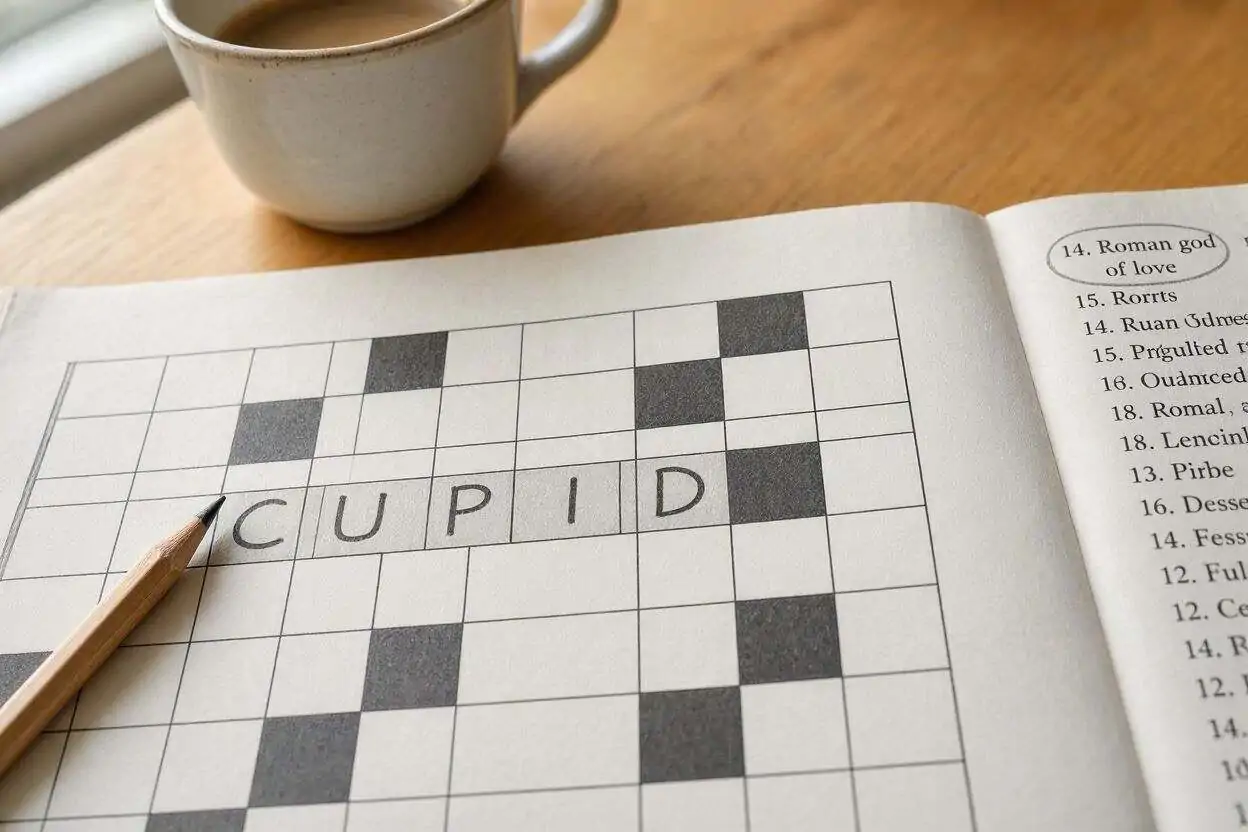
Roman God of Love NYT Crossword Clue
Crossword clues can feel deceptively simple until you hit one that suddenly freezes your progress.
The phrase “Roman god of love NYT crossword clue” is one of those classic entries that regularly appears in crossword puzzles, especially in the The New York Times crossword. Many solvers recognize the mythology reference instantly, while others spend several minutes trying to remember ancient Roman gods from school.
Here’s the good news: the answer is usually straightforward once you understand the clue pattern and the common crossword conventions behind it. Whether you’re solving the Mini, the standard daily crossword, or another puzzle publication inspired by NYT-style clues, this guide will help you solve it faster and improve your crossword-solving skills overall.
You’ll learn the exact answer, why constructors love mythology clues, alternative variations that appear in puzzles, solving strategies, and expert tips for recognizing similar clues in the future.
Roman God of Love NYT Crossword Clue: Quick Answer
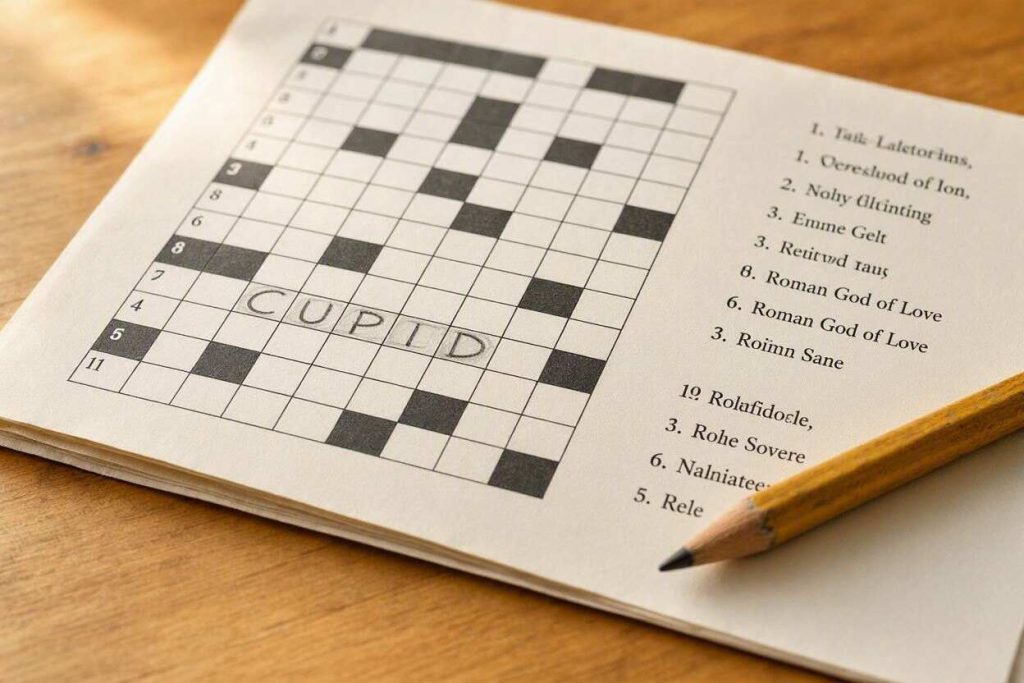
The most common answer to the Roman god of love NYT crossword clue is:
| Clue | Most Common Answer | Letters |
|---|---|---|
| Roman god of love | EROS or CUPID | 4 or 5 |
| Roman god of love (Roman mythology) | CUPID | 5 |
| God of love | EROS | 4 |
In Roman mythology, Cupid is the god of love and desire. In Greek mythology, the equivalent figure is Eros. Crossword constructors often alternate between the two depending on letter count and puzzle layout.
🔑 Key Takeaway: If the clue specifically says “Roman god of love,” try CUPID first. If the puzzle requires four letters, the answer is often EROS.
What Does the Roman God of Love Clue Mean?
Crossword clues based on mythology rely heavily on general knowledge. Puzzle creators love these clues because they’re short, recognizable, and flexible for different grid layouts. The phrase “Roman god of love” directly references Cupid, one of the most famous mythological figures in Roman culture.
Cupid is traditionally depicted as:
- A winged boy carrying a bow and arrows
- A symbol of romance and attraction
- The son of Venus, the Roman goddess of love
The moment Cupid shoots someone with one of his magical arrows, they supposedly fall in love instantly. Sound familiar? That imagery still appears everywhere today—from Valentine’s Day cards to movies and advertisements.
📊 Did You Know? The image of Cupid dates back over 2,000 years and remains one of the most recognizable mythological symbols in modern culture.
Crossword puzzles frequently reuse mythology because it creates a balance between challenge and familiarity. Even casual solvers often recognize names like Zeus, Hera, Cupid, Apollo, and Eros.
As you continue solving crosswords, you’ll notice that mythology clues appear almost like old friends returning again and again.
Who Is Cupid in Roman Mythology?
Cupid occupies an important place in Roman mythology. While many people think of him only as a Valentine’s Day mascot, the original mythology paints a much richer picture.
Cupid’s Role in Ancient Rome
Cupid represented:
- Desire
- Romantic attraction
- Passion
- Emotional longing
Roman writers described him as mischievous and powerful. His arrows could make gods and humans fall hopelessly in love. In some myths, even mighty deities struggled against his influence.
Cupid and Venus
Cupid is commonly identified as the son of Venus, the Roman goddess of beauty and love. Their relationship appears in countless ancient stories and artworks.
💡 Pro Tip: Crossword clues sometimes mention “son of Venus” instead of “Roman god of love.” The answer is still often CUPID.
Cupid vs. Eros
This is where many crossword solvers get confused.
| Roman Name | Greek Name | Meaning |
|---|---|---|
| Cupid | Eros | God of love |
| Venus | Aphrodite | Goddess of love |
| Mars | Ares | God of war |
Greek and Roman mythology overlap heavily, and crossword creators regularly switch between Roman and Greek references depending on the required number of letters.
🔑 Key Takeaway: Always check the clue wording carefully. “Roman” points toward Cupid, while “Greek” usually points toward Eros.
Why the NYT Crossword Uses Mythology Clues So Often
Have you noticed how mythology keeps appearing in crossword puzzles? There’s a reason for that.
Mythological names work perfectly in crossword construction because they:
- Use vowel-heavy combinations
- Fit small spaces easily
- Are widely recognized
- Connect to educational knowledge
- Allow flexible clue wording
Words like EROS, ARES, EOS, and HERA appear repeatedly because constructors can fit them into tight grid patterns.
Think of crossword grids like puzzle engineering. Constructors need words that interlock smoothly. Mythological names function almost like LEGO blocks for crossword design.
Short Mythology Answers Frequently Seen in Crosswords
| Answer | Typical Clue |
|---|---|
| EROS | Greek god of love |
| ARES | Greek god of war |
| EOS | Goddess of dawn |
| HERA | Queen of the gods |
| ODIN | Norse god |
| RA | Egyptian sun god |
⚠️ Common Mistake: Many solvers assume every “god of love” clue means Cupid. Always count the spaces first.
That single strategy can save you several frustrating minutes during tougher puzzles.
Most Common Variations of the Clue
Crossword editors rarely repeat clues exactly. Instead, they create slight wording variations that test your flexibility as a solver.
Common Variations You May See
| Clue Variation | Likely Answer |
|---|---|
| Roman god of love | Cupid |
| Greek god of love | Eros |
| Winged god of love | Cupid |
| Love god | Eros |
| Son of Venus | Cupid |
| Archer of mythology | Cupid |
| Valentine symbol | Cupid |
One tricky thing about NYT-style crosswords is misdirection. Sometimes the clue appears straightforward, but the answer length changes everything.
For example:
- 4 letters → EROS
- 5 letters → CUPID
Here’s the thing: crossword solving often becomes less about pure knowledge and more about pattern recognition.
The more clues you see repeatedly, the faster your brain identifies them automatically.
How to Solve Mythology Crossword Clues Faster
Want to improve your crossword speed dramatically? Start building recognition patterns.
Step 1: Count the Letters
This sounds obvious, but many solvers skip it. Letter count narrows possibilities instantly.
Example:
- 4 spaces = EROS
- 5 spaces = CUPID
Step 2: Identify the Mythology Type
Crossword clues often specify:
- Roman
- Greek
- Norse
- Egyptian
That single word changes everything.
Step 3: Use Crossing Letters
Crossword experts rarely solve clues in isolation. They use intersecting answers to confirm possibilities.
Imagine you already have:
- C _ P _ D
The answer becomes obvious immediately.
Step 4: Learn Repeated Crossword Words
Certain words appear constantly in NYT-style puzzles:
- Oreo
- Erie
- Eros
- Etna
- Oona
- Ares
Why? Because their vowel patterns fit grids beautifully.
💡 Pro Tip: Create a personal notebook of repeated crossword answers. Experienced solvers often recognize common entries instantly.
Roman God of Love Crossword Clue Compared to Similar Clues
Many mythology clues look nearly identical. Understanding the differences gives you a huge advantage.
| Clue Type | Answer | Mythology |
|---|---|---|
| Roman god of love | Cupid | Roman |
| Greek god of love | Eros | Greek |
| Roman goddess of love | Venus | Roman |
| Greek goddess of love | Aphrodite | Greek |
| God of war | Ares/Mars | Greek/Roman |
This comparison matters because crossword creators intentionally test your attention to detail.
A single word like “Roman” versus “Greek” changes the correct answer completely.
🔑 Key Takeaway: Crossword puzzles reward precision. Tiny wording differences often determine the entire solution.
Why Crossword Solvers Love NYT Mythology Clues
The The New York Times crossword has built a reputation for intelligent but fair clue construction. Mythology clues strike that perfect balance.
They:
- Feel educational without being obscure
- Reward memory and pattern recognition
- Help connect difficult sections of the grid
- Add variety to puzzle themes
Many veteran solvers actually enjoy seeing clues like “Roman god of love” because they provide a quick confidence boost during difficult puzzles.
It’s almost like spotting a familiar landmark while driving through a complicated city.
Mini Crosswords vs. Full NYT Puzzles
The clue may appear differently depending on puzzle type.
| Puzzle Type | Difficulty Level |
|---|---|
| NYT Mini Crossword | Easier, direct clues |
| Daily Crossword | More wordplay |
| Sunday Crossword | Trickier themes |
| Themed Puzzle | Possible puns or twists |
📚 Source: Crossword construction guides, mythology reference books, and NYT puzzle solving conventions.
People Also Ask: Roman God of Love Questions Answered
What is the answer to Roman god of love in NYT crossword?
The most common answer is Cupid. However, some puzzles may use Eros if the crossword requires four letters instead of five. Always check the puzzle grid and crossing answers before finalizing your guess.
Is Cupid Greek or Roman?
Cupid belongs to Roman mythology. The Greek equivalent is Eros. Crossword clues usually specify the mythology type, but sometimes constructors intentionally leave it vague to increase difficulty.
Why does Eros appear in crossword puzzles so often?
Eros appears frequently because it contains useful vowels and fits well into crossword grids. Constructors favor short mythology-based words because they help connect complicated puzzle sections efficiently.
What does Cupid symbolize?
Cupid symbolizes romantic attraction, desire, affection, and emotional connection. He is commonly portrayed carrying a bow and arrows that inspire love between people.
How can I get better at mythology crossword clues?
Practice recognizing recurring names from Greek and Roman mythology. Learning common crossword entries like Eros, Ares, Hera, and Zeus improves solving speed significantly over time.
Expert Crossword Strategies for NYT Puzzle Solvers
Crossword experts rarely rely on memory alone. They use systems and solving habits.
Focus on Fill-in-the-Blank Clues First
These clues often provide easy entries that help unlock harder sections.
Look for Repeated Crossword Vocabulary
Some words appear constantly because they fit grids well:
- Oreo
- Erie
- Eros
- Aloe
- Etui
Build a Mental Database
The best solvers gradually memorize:
- Mythology names
- Common abbreviations
- Short foreign words
- Crossword-specific vocabulary
⚠️ Common Mistake: New solvers often overthink straightforward clues. Sometimes the simplest answer really is correct.
Understand Constructor Psychology
Puzzle creators balance:
- Difficulty
- Fairness
- Creativity
- Grid structure
Once you understand that balance, clues become easier to predict.
👉 Related Reading: Best Strategies for Solving NYT Mini Crosswords Faster
👉 Related Reading: Most Common Mythology Answers in Crossword Puzzles
Advanced Insight: Why Cupid and Eros Dominate Crossword Culture
Crossword puzzles depend heavily on letter efficiency. Names like Cupid and Eros solve multiple construction problems at once.
Why does this matter?
Because crossword design resembles architecture. Constructors must balance symmetry, word quality, difficulty, and flow simultaneously.
Words containing:
- Multiple vowels
- Common consonants
- Flexible placements
become incredibly valuable.
That’s why EROS appears repeatedly across countless crossword publications—not just the The New York Times puzzle.
📊 Did You Know? Four-letter mythology entries are among the most reused answers in modern crossword construction due to their grid flexibility.
Crossword Solving Is Pattern Recognition
At advanced levels, crossword solving becomes less about trivia and more about recognizing structures.
Expert solvers immediately associate:
- “Roman love god” → Cupid
- “Greek love god” → Eros
- “Dawn goddess” → Eos
The process becomes almost automatic with enough exposure.
💡 Pro Tip: Solving one crossword daily improves recognition speed far more effectively than studying word lists occasionally.
Conclusion
Crossword clues like Roman god of love NYT crossword clue may seem tiny, but they reveal how cleverly crossword puzzles combine language, mythology, memory, and pattern recognition into a single challenge. The most common answer is usually Cupid, though Eros often appears when the puzzle requires four letters instead of five.
The real secret to becoming a stronger crossword solver isn’t memorizing endless trivia. It’s learning how crossword constructors think. Once you recognize recurring clue styles, mythology references, and common word patterns, puzzles become dramatically easier—and much more enjoyable.
🔑 Key Takeaway: Always check the mythology type, count the letters carefully, and use crossing clues before locking in your answer.
The next time you encounter a mythology clue in the NYT crossword, you probably won’t hesitate for long.
Frequently Asked Questions
FAQ 1: What is the most common answer for Roman god of love crossword clue?
The most common answer is Cupid, especially when the crossword clue specifically mentions Roman mythology. However, some crossword puzzles use Eros, which is the Greek equivalent of Cupid. The correct answer usually depends on the number of letters required in the puzzle grid. If the answer space contains five letters, Cupid is likely correct. If it contains four letters, Eros is often the intended solution. Checking crossing letters can quickly confirm which option fits the puzzle best.
FAQ 2: Why does the NYT crossword use mythology clues so frequently?
The The New York Times crossword frequently uses mythology clues because they provide recognizable vocabulary that fits crossword grids efficiently. Names like Eros, Ares, Hera, and Eos contain useful vowel combinations and short letter patterns that constructors can place easily into complex puzzle layouts. Mythology clues also balance education and entertainment, giving solvers a satisfying challenge without making puzzles feel unfair or impossible to complete.
FAQ 3: Is Cupid the same as Eros in mythology?
Yes, Cupid and Eros represent the same mythological figure in different cultures. Cupid belongs to Roman mythology, while Eros comes from Greek mythology. Both figures symbolize love, desire, and attraction, and both are commonly shown carrying bows and arrows that inspire romantic feelings. Crossword puzzles often alternate between these names depending on clue wording and required letter count. Understanding this relationship helps solvers answer mythology clues much faster during crossword sessions.
FAQ 4: How can beginners solve crossword mythology clues more easily?
Beginners can improve by learning the most common mythology names used in crossword puzzles. Focus first on short recurring answers like Eros, Ares, Hera, Odin, and Eos because constructors use them frequently. Solving mini crosswords daily also builds familiarity with clue styles and repeated vocabulary. Many experienced solvers keep personal lists of common crossword answers, which helps train pattern recognition and speeds up solving time significantly over the long term.
FAQ 5: What does Cupid symbolize in Roman mythology?
Cupid symbolizes romantic attraction, emotional desire, affection, and passion in Roman mythology. Ancient Roman stories describe him as a winged figure who carries magical arrows capable of making gods and humans fall deeply in love. Over time, Cupid became one of the world’s most recognizable symbols of romance. Today, his image appears widely in Valentine’s Day decorations, greeting cards, advertisements, literature, and modern pop culture connected to relationships and love.
FAQ 6: Why is Eros such a common crossword answer?
Eros appears frequently because crossword constructors value short words with balanced vowels and consonants. Four-letter entries like Eros fit easily into grids and connect smoothly with surrounding answers. Beyond construction benefits, Eros is also widely recognizable due to mythology education and popular culture references. Many crossword solvers quickly memorize Eros because it repeatedly appears in NYT-style puzzles, mini crosswords, and syndicated crossword publications around the world.
FAQ 7: What are other common mythology answers used in crossword puzzles?
Crossword puzzles regularly include mythology-based answers such as Ares, Hera, Zeus, Odin, Ra, Apollo, Venus, and Eos. Constructors favor these names because they are short, recognizable, and useful for puzzle structure. Some mythology clues also appear in disguised forms using phrases like “god of war,” “queen of Olympus,” or “sun deity.” Learning these repeated entries can dramatically improve crossword-solving confidence and help players complete tougher puzzle sections more efficiently.
FAQ 8: How do I know whether the clue wants Cupid or Eros?
The easiest way to decide is by checking the clue wording and answer length. If the clue says “Roman god of love,” Cupid is usually correct. If it mentions “Greek god of love,” Eros becomes the expected answer. Letter count matters equally. Four spaces generally indicate Eros, while five spaces suggest Cupid. Crossing answers from nearby clues provide additional confirmation and reduce the chances of entering the wrong mythology figure.
FAQ 9: Are mythology clues considered difficult in crossword puzzles?
Mythology clues are usually considered medium difficulty rather than extremely hard. Experienced solvers often recognize them instantly because the same names appear repeatedly across different puzzle publications. Beginners may initially struggle with unfamiliar mythological figures, but repeated exposure quickly improves recognition. Over time, mythology clues become some of the easiest entries to solve because they rely heavily on repetition and predictable crossword vocabulary patterns used by constructors.
FAQ 10: Do all love god crossword clues refer to Cupid?
No, not every love god crossword clue points to Cupid. Some clues refer to Eros, while others may involve entirely different mythological figures depending on cultural context or puzzle themes. Crossword constructors sometimes use vague wording intentionally to create ambiguity and increase challenge. That’s why experienced solvers always rely on letter count, crossing answers, and clue wording together instead of assuming the first possible answer automatically fits the puzzle correctly.