
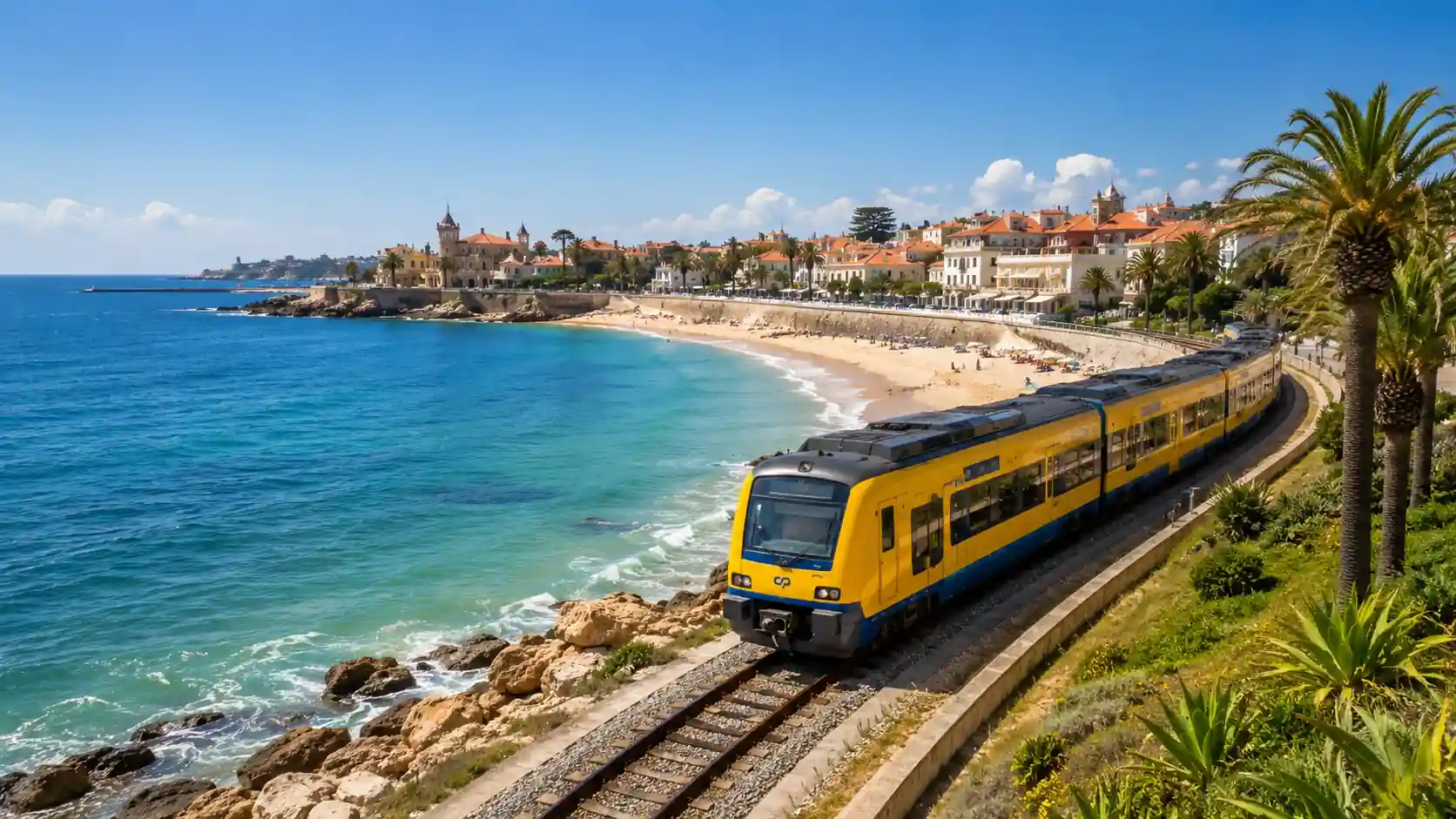
Lisbon To Cascais Train: Tickets, Times And Complete Travel Guide
Travel from Lisbon to Cascais by train with confidence. This guide covers current fares, journey times, the Navegante card, airport transfers, station facilities, and practical tips so you can plan a smooth trip along Portugal’s Atlantic coast.
Lisbon to Cascais Train: Complete Travel Guide
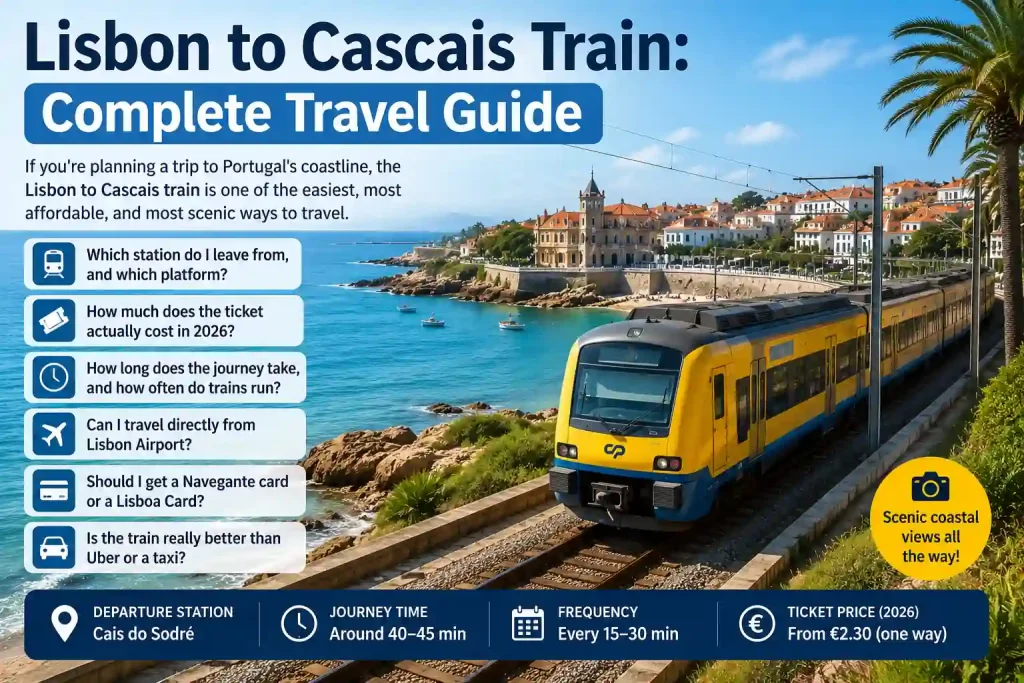
If you’re planning a trip to Portugal’s coastline, the Lisbon to Cascais train is one of the easiest, most affordable, and most scenic ways to travel. Whether you’re heading to Cascais for a beach day, exploring its historic center, or using it as a base for the wider Estoril coast, the train connects you from central Lisbon in well under an hour, without the hassle of driving or parking.
Most first-time visitors have the same questions:
- Which station do I leave from, and which platform?
- How much does the ticket actually cost in 2026?
- How long does the journey take, and how often do trains run?
- Can I travel directly from Lisbon Airport?
- Should I get a Navegante card or a Lisboa Card?
- Is the train really better than Uber or a taxi?
This guide answers all of them in one place, walking you through the whole journey — from choosing the right transport option and finding your platform, to arriving at Cascais Station and making the most of your day.
Train fares, timetables, and transport card policies can change. Always confirm current details with CP (Comboios de Portugal) at cp.pt and with the Lisbon Metropolitan Transport Authority before you travel.
Quick Facts
| Detail | Information |
| Operator | CP (Comboios de Portugal), Linha de Cascais |
| Departure station | Cais do Sodré Station, Lisbon |
| Arrival station | Cascais Station |
| Journey time | About 35–40 minutes (up to ~50–60 min on the busiest peak services) |
| Frequency | Every 20 minutes for most of the day; up to every 10–15 minutes at peak times |
| Adult single fare (2026) | €2.55 (4-zone Navegante fare) |
| Child single fare | €1.30 |
| Return fare | Two singles loaded on the same card (€5.10 adult / €2.60 child) |
| Lisboa Card | Includes free travel on this route |
| First/last trains | Services generally run from around 05:30 to roughly 01:00–01:30, with the very last connections sometimes replaced by a bus between Cascais and Oeiras |
| Airport connection | Yes — Metro red line to Alameda, then green line to Cais do Sodré, then the Cascais train |
| Distance | About 24 km by rail, roughly 30 km by road |
| Best for | Day trips, budget travelers, families, solo travelers, photographers |
Quick Answer: Is the Train the Best Way to Travel from Lisbon to Cascais?
Yes — for most travelers, the train is the best way to get from Lisbon to Cascais.
It combines low cost, punctual timing, and beautiful coastal scenery in a journey that typically takes 35–40 minutes and costs around €2.55 one way. Trains depart from Cais do Sodré Station, one of Lisbon’s main railway terminals, and arrive directly at Cascais Station, a short walk from the town’s beaches, marina, restaurants, and historic center.
Unlike driving, you won’t need to worry about traffic, tolls, or parking. Compared with taxis or Uber (typically €35–€55 one way depending on traffic and demand), the train is dramatically cheaper for solo travelers, couples, and small groups, particularly during busy periods when road traffic can significantly increase travel times.
At a Glance
Choose the train if you:
- Want the cheapest reliable option (from €2.55)
- Are staying in central Lisbon, near the Metro or Cais do Sodré
- Enjoy scenic coastal views
- Are planning a day trip
- Prefer avoiding traffic and parking
Consider Uber or a taxi if you:
- Are traveling very late at night, after the last train
- Have several large suitcases
- Are traveling with someone who needs door-to-door service
- Are staying far from Lisbon’s public transport network
For most visitors, the train offers the best balance of cost, reliability, and convenience.
Why the Train Is So Popular
The Linha de Cascais, operated by CP (Comboios de Portugal), has connected Lisbon with Cascais since 1889 and remains the preferred choice for both commuters and tourists.
Frequent Departures
Trains run roughly every 20 minutes for most of the day, with extra services at peak commuting times. This means you rarely need to plan your day around a single departure — if you miss one train, another usually follows shortly after.
Affordable Travel
At €2.55 for an adult single fare, the train is by far the cheapest way to make the trip. It costs a fraction of an Uber or taxi fare, and if you’re using Lisbon’s public transport throughout your stay, a Navegante card or, for sightseeing-heavy visits, a Lisboa Card can add further value.
A Scenic Coastal Journey
One of the highlights of the route is the scenery itself. After leaving central Lisbon, the railway hugs the Atlantic coastline, passing riverside districts before continuing through Estoril, where you’ll often see beaches, marinas, sailing boats, and the ocean right outside the window.
Many visitors consider the train ride part of the sightseeing experience rather than simply transportation.
Easy Arrival
Unlike many destinations where the railway station sits outside the town center, Cascais Station is within easy walking distance of the main attractions. Within minutes of leaving the station, you can reach the historic center, Cascais Marina, local cafés, shopping streets, several beaches, and tourist information services.
Train vs. Other Transportation Options
| Option | Typical Cost | Best For | Advantages | Possible Drawbacks |
| Train | €2.55 single | Most visitors | Cheap, scenic, reliable timing | Fixed timetable, no door-to-door |
| Uber | €35–55 | Small groups, late arrivals | Door-to-door service | Traffic and surge pricing |
| Taxi | €40–60 | Heavy luggage | Convenient, widely available | Most expensive on a per-trip basis |
| Rental car | Varies + tolls/parking | Exploring beyond Cascais | Maximum flexibility | Parking, tolls, traffic, navigation |
For the majority of travelers visiting Cascais as a day trip, the train remains the simplest, cheapest, and most practical choice.
Practical Tips Before You Leave
- Arrive at Cais do Sodré a little earlier if you’re unfamiliar with the station — it can get crowded, especially on summer mornings.
- Double-check the departure board shows “Cascais” as the final destination before boarding.
- Tap your Navegante card at the validators on the platform before boarding, and again when leaving Cascais Station.
- Keep your ticket or card until you’ve completed your journey — spot checks do happen.
- Allow extra time on weekends and in summer, when trains and ticket queues are busier.
If you’re visiting Portugal for the first time, don’t worry if station names seem unfamiliar. Departure boards at Cais do Sodré display the train’s final destination and platform number clearly, in Portuguese and usually with English signage as well.
How Far Is Cascais from Lisbon?
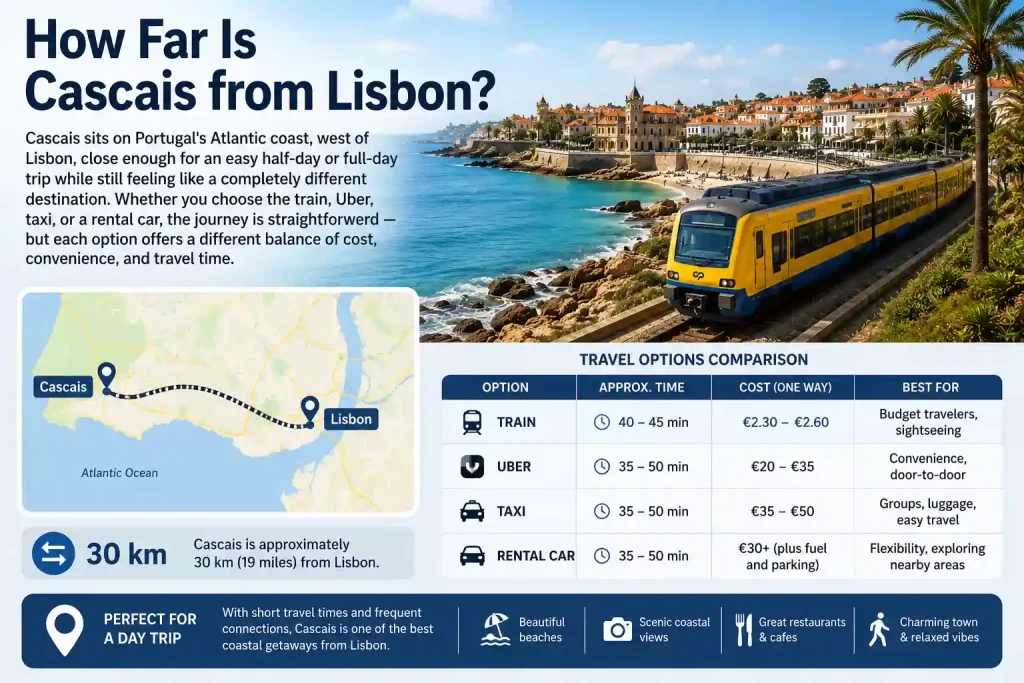
Cascais sits on Portugal’s Atlantic coast, west of Lisbon, close enough for an easy half-day or full-day trip while still feeling like a completely different destination. Whether you choose the train, Uber, taxi, or a rental car, the journey is straightforward — but each option offers a different balance of cost, convenience, and travel time.
Distance by Train
The railway distance between Cais do Sodré and Cascais is about 24 kilometers (15 miles), and the journey typically takes 35–40 minutes on a direct service, without any transfers.
A typical journey looks like this:
- Lisbon (Cais do Sodré)
- Alcântara
- Belém
- Algés
- Oeiras
- Carcavelos
- Estoril
- Cascais
One advantage of the train is that you don’t have to worry about traffic delays, parking, or navigation — you simply board and relax.
Distance by Road
By car, taxi, or Uber, the driving distance between Lisbon and Cascais is approximately 25–30 kilometers (16–19 miles), depending on your starting point in Lisbon and the route taken (the A5 motorway or the coastal Marginal road).
Outside busy periods the drive can be quick, but traffic can significantly increase travel times during morning and evening rush hours, summer weekends, public holidays, and sunny beach days. Road travel also involves parking availability, parking fees, tolls on the A5, and fuel costs.
Typical Travel Times
| Transport option | Typical journey time | Notes |
| Train | 35–40 minutes | Consistent; up to 50–60 minutes on the slowest peak-hour services |
| Uber | 35–70 minutes | Increases during peak traffic or surge periods |
| Taxi | 35–70 minutes | Similar travel time to Uber |
| Rental car | 35–60 minutes | Depends on traffic, parking, and route chosen |
During quiet periods a taxi or Uber may be slightly quicker door-to-door. During rush hour, the train is usually the more predictable option because it isn’t affected by road congestion. If reliability matters more than door-to-door convenience, the train is generally the safer bet.
How to Get from Lisbon to Cascais
The best choice depends on your budget, where you’re staying, whether you’re arriving from Lisbon Airport, how much luggage you have, and the time of day.
| Transport | Cost | Travel time | Scenic | Airport friendly | Best for |
| Train | €2.55 | 35–40 min | Excellent | Good (via Metro) | Most travelers |
| Uber | €35–55 | Traffic dependent | Limited | Excellent | Families, heavy luggage |
| Taxi | €40–60 | Traffic dependent | Limited | Excellent | Door-to-door convenience |
| Rental car | Highest overall | Traffic dependent | Good | Good | Multi-day road trips |
Train
For most visitors, the Lisbon to Cascais train offers the best overall experience: it’s affordable, runs every 20 minutes throughout the day, uses comfortable suburban trains, follows beautiful coastal scenery, requires no parking, and arrives right in central Cascais.
It’s especially suitable for first-time visitors, solo travelers, couples, families, budget-conscious travelers, and day trips. Once you’re at Cais do Sodré, you simply board the train heading toward Cascais and stay on until the final stop — there’s no complicated transfer when starting from central Lisbon.
If you’re traveling in summer, take a slightly earlier morning train. You’ll usually find fewer crowds and more time to enjoy Cascais before the busiest part of the day.
Uber
Uber is widely available in Lisbon and offers door-to-door transportation for around €35–55 depending on time and demand. It can be worthwhile if you’re staying far from a Metro station, carrying several large suitcases, traveling very early or late, or splitting the fare with several people. Travel times can increase considerably in traffic, and you’ll miss the coastal railway views.
Taxi
Traditional taxis are easy to find throughout Lisbon, especially at hotels, transport hubs, and the airport, and typically cost slightly more than Uber for this route. A taxi is worthwhile if you prefer direct transportation, are traveling with elderly passengers or limited mobility, or have bulky luggage.
Rental Car
Renting a car offers maximum flexibility, particularly if you plan to continue beyond Cascais to Sintra or elsewhere on the coast. For a simple day trip, though, a rental car often creates more work than convenience once you factor in tolls, parking fees, and navigating unfamiliar streets.
Bus
Bus services exist in the region but are not generally the first choice for travel directly between central Lisbon and Cascais, since they typically involve longer journey times or additional transfers compared with the direct train.
Why Most Travelers Choose the Train
For most visitors, the Lisbon to Cascais train offers the best combination of affordability, reliability, and scenery. You won’t need to think about traffic, tolls, or parking — instead, you board at Cais do Sodré, enjoy the ride along the Atlantic coastline, and arrive minutes from Cascais’ main attractions.
Advantages
Reliable Journey Times
Road traffic in Lisbon varies significantly by time of day, but train journey times stay relatively predictable at 35–40 minutes, making it easier to plan around restaurant reservations or tours in Cascais.
Frequent Departures
With trains roughly every 20 minutes for most of the day (and more often at peak times), you’re never tied to a single departure and can return whenever you’re ready.
Budget-Friendly
At €2.55 per adult single, the train is usually far cheaper than an Uber or taxi, especially for solo travelers and couples. Visitors using Lisbon’s public transport throughout the day may also benefit from loading extra Navegante credit.
Comfortable Travel
The suburban trains on the Linha de Cascais suit both commuters and visitors. Outside peak hours you’ll usually find comfortable seating and plenty of space.
Beautiful Coastal Scenery
The railway gradually follows Portugal’s Atlantic coastline, passing through neighborhoods and seaside towns including Estoril, with views of sandy beaches, marinas, sailing boats, coastal promenades, and the ocean itself.
No Parking Stress
Parking can be limited during weekends and summer. The train eliminates the need to find a space, pay fees, or navigate unfamiliar streets — you arrive within walking distance of Cascais’ historic center.
Disadvantages
Crowded During Peak Hours
Weekday mornings and late afternoons are popular commuting times, and trains can get busy between Lisbon and the surrounding suburbs. If you have flexibility, mid-morning or early afternoon travel is more relaxed.
Limited Space for Large Luggage
The train suits normal travel bags and backpacks, but visitors with several large suitcases, especially when transferring from the airport, may find a taxi or Uber more convenient.
Fixed Departure Times
Unlike a taxi, trains follow a timetable. Missing one isn’t usually a major problem since another follows within about 20 minutes, but it can matter if you’re on a tight schedule.
No Door-to-Door Service
You’ll need to reach Cais do Sodré before boarding and walk from Cascais Station after arriving. For most visitors this walk is short and pleasant, but travelers with mobility concerns may prefer direct transportation.
Who Should Take the Train?
| Traveler type | Recommended? | Why |
| Solo traveler | Highly recommended | Cheapest, simplest, reliable |
| Couple | Highly recommended | Cost-effective and scenic |
| Family | Recommended | Easy with moderate luggage |
| Budget traveler | Best choice | Lowest cost by far |
| Senior traveler | Recommended | Comfortable, minimal walking from the station |
| Digital nomad | Recommended | Predictable travel time for planning |
| Business traveler | Often recommended | No traffic delays |
| Heavy-luggage traveler | Consider Uber or taxi | Door-to-door service may be easier |
Where to Catch the Lisbon to Cascais Train
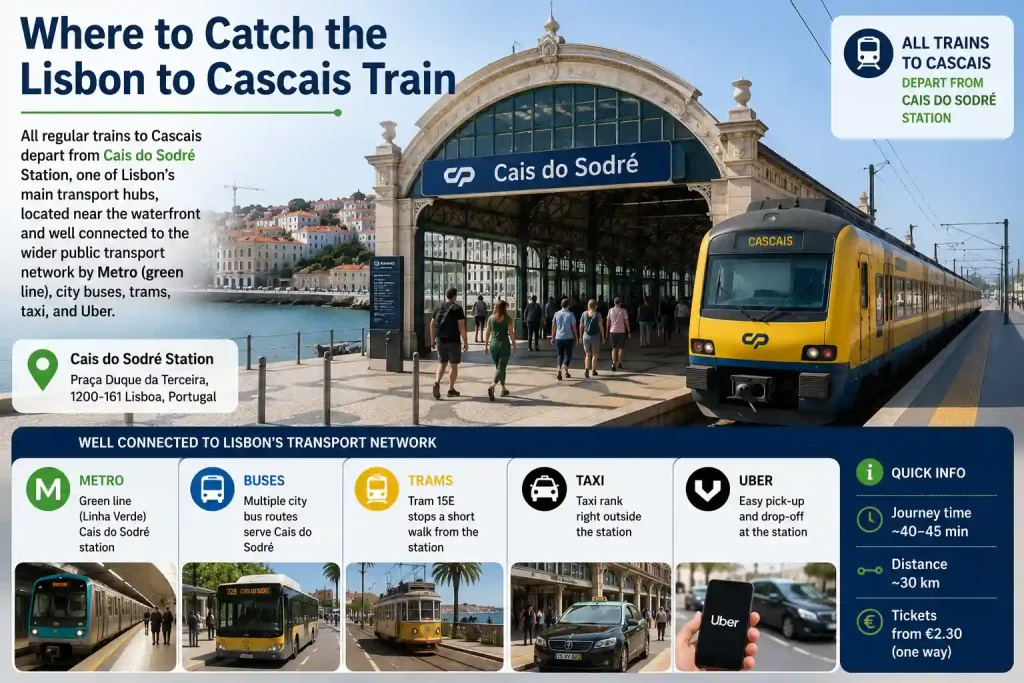
All regular trains to Cascais depart from Cais do Sodré Station, one of Lisbon’s main transport hubs, located near the waterfront and well connected to the wider public transport network by Metro (green line), city buses, trams, taxi, and Uber.
If you’re arriving from Lisbon Airport (Humberto Delgado Airport), you’ll typically reach Cais do Sodré by Metro — taking the red line to Alameda, then transferring to the green line — before boarding the Cascais-bound train.
Finding the Correct Platform
- Enter Cais do Sodré Station.
- Check the electronic departure boards for the next service to Cascais.
- Confirm the platform number shown.
- Walk to the correct platform and wait behind the yellow line.
- Board once arriving passengers have exited.
- Keep your ticket or validated Navegante card available for the whole journey.
Always rely on the electronic departure boards rather than following crowds — multiple services may depart from nearby platforms around the same time.
Station Facilities
Ticket Machines
Self-service ticket machines at Cais do Sodré offer multiple language options, card payment, and (availability permitting) cash payment, plus printed receipts. If you’re unfamiliar with the process, allow a few extra minutes before departure, especially in summer when queues form.
Restrooms and Accessibility
Public restrooms are available within the station. Accessibility features may include elevators and step-free access in key areas; travelers requiring assistance should check current accessibility information with CP before traveling.
Before Boarding: A Quick Checklist
- You’re at Cais do Sodré Station.
- You’re boarding a train bound for Cascais.
- Your ticket or Navegante card is ready and validated.
- You’ve checked the departure board for platform and time.
- You have everything you need for the journey.
Tickets, Prices, and Transport Cards
The Lisbon to Cascais railway is operated by CP (Comboios de Portugal), but ticketing integrates with Lisbon’s wider public transport system through the reusable Navegante card (the successor to the older Viva Viagem card).
Ticket prices, transport card validity, and fare policies can change. Always verify current fares with CP (cp.pt) and Lisbon’s official transport authorities before traveling.
Single and Return Tickets
A single adult fare from Lisbon to Cascais costs €2.55 (a four-zone Navegante fare), and €1.30 for children. For a return trip, two single fares are simply loaded onto the same Navegante card — there’s no dedicated “return ticket” product on this line, since it’s an urban commuter service rather than a long-distance route with reserved seating.
Best for one-day visitors, travelers making only one return journey, and visitors who aren’t using public transport elsewhere in Lisbon.
Navegante Card
The Navegante Card is the reusable public transport card used throughout the Lisbon metropolitan area, replacing the older green Viva Viagem card. Rather than buying disposable tickets each time, you load it with travel credit (informally called “zapping”) or specific fare products.
The card itself typically costs around €0.50 the first time you buy one, and you then add credit or fares as needed at ticket machines, ticket offices, or Metro stations. It’s a good option if you plan to use the Metro, buses, trams, or the Cascais train more than once during your stay.
Where to Buy and Reload It
Depending on availability, you can usually obtain and reload a Navegante Card at railway stations, Metro stations, and selected ticket offices. Some locations may charge a small fee for the reusable card itself. Once you have the card, you can top it up with additional credit whenever needed, which is generally faster than buying a new paper ticket each time.
Keep your Navegante card safe throughout your visit — losing it means buying a new one before your return journey, since balances aren’t always transferable.
Lisboa Card
The Lisboa Card is a sightseeing pass that combines free public transportation, including the Lisbon–Cascais train, with free or discounted admission to many attractions across the city and, in some cases, the wider region. It’s available in 24-, 48-, and 72-hour versions.
If your only goal is a single day trip to Cascais, a standard €2.55 ticket or a Navegante card may be the simpler and cheaper option. But if you’re also planning to visit several museums or use Lisbon’s public transport extensively, the Lisboa Card can offer good overall value — just confirm current coverage before relying on it for this specific route.
Buying Tickets
Ticket Machines
Self-service machines are usually the quickest option, offering multiple languages, card and (where available) cash payment, and contactless options. Arrive a little early during busy tourist seasons to avoid queues.
Ticket Offices
Staffed counters are the best choice if you’re unsure which product to buy — staff can help you choose the right fare, explain transport cards, and offer general travel advice.
Mobile and Online Options
Digital ticketing options continue to evolve. Before relying on a mobile ticket, confirm whether it’s accepted for your specific journey, whether activation is required before boarding, and whether you’ll need an internet connection while traveling.
Which Ticket Should You Choose?
| Ticket option | Cost | Best for | Notes |
| Single ticket | €2.55 adult / €1.30 child | One return journey | Simplest option for one-day visitors |
| Navegante Card | €0.50 card + credit loaded | Multiple public transport trips | Good value for several journeys |
| Lisboa Card | From ~€27 (24-hour) | Sightseeing plus transport | Verify current train coverage before travel |
Lisbon to Cascais Train Journey
Once you’ve boarded, the hardest part is over. The Linha de Cascais isn’t just a way to get from one place to another — large sections of the railway run alongside the Atlantic coastline, making the journey itself one of the highlights of visiting Cascais.
Journey Time and Stops
The train from Cais do Sodré to Cascais typically takes 35–40 minutes, with slower peak-hour services taking closer to 50–60 minutes depending on how many stops are served. As a suburban commuter train, it makes regular stops (including Alcântara, Belém, Algés, Oeiras, Carcavelos, and Estoril) rather than running as an express service — which is actually an advantage, since it gives easy access to several attractive coastal towns along the way.
Train Frequency
Trains run about every 20 minutes for most of the day, with additional services during weekday peak hours, and a reduced but still regular frequency in the evening. Frequency can differ by day of the week and public holidays, so it’s worth checking the latest CP timetable before you leave your accommodation.
If you have restaurant reservations or booked activities in Cascais, choose a train that gives you a comfortable buffer rather than arriving at the last minute.
Best Time to Travel
| Time | Crowds | Scenic experience | Recommended? |
| Early morning | Moderate (commuters) | Excellent morning light | Good |
| Mid-morning | Light | Excellent | Highly recommended |
| Early afternoon | Moderate | Excellent | Good |
| Late afternoon | Busy | Beautiful coastal views | Good |
| Evening rush hour | Heavy | Limited sightseeing | Less ideal |
For most tourists, mid-morning offers the best balance — you’ll generally avoid the busiest commuter trains while still arriving with plenty of time to explore. During summer, trains get busier with beachgoers, so traveling earlier in the day usually means a more comfortable journey. Expect higher passenger numbers on national holidays and long weekends too.
Scenic Views
Many visitors describe this as one of the most beautiful commuter train journeys in Portugal. After leaving central Lisbon, the railway gradually follows the coastline, offering frequent views of the Atlantic Ocean, sandy beaches, sailing boats, coastal promenades, small marinas, and the seaside town of Estoril.
For the best sea views, sit on the right-hand side of the train when heading from Lisbon toward Cascais, and keep your camera ready once the train starts running alongside the water.
Traveling from Lisbon Airport to Cascais
There is no direct train from Lisbon Airport (Humberto Delgado Airport) to Cascais, so reaching Cascais by public transport requires one connection.
Metro + Train (Recommended Public Transport Option)
For travelers without excessive luggage, this is generally the most economical way to reach Cascais. The route works as follows:
- Take the red Metro line from the airport toward the city.
- Change at Alameda station onto the green Metro line.
- Ride the green line to Cais do Sodré, the final stop.
- Purchase or top up your Navegante card and validate it for the train.
- Board the next train bound for Cascais.
- Ride to Cascais Station, the end of the line.
A single Metro ticket costs around €1.90, and the Navegante card itself costs about €0.50 the first time you buy one. Including the connection and walk at Alameda (roughly 300 meters with some stairs or escalators), total travel time from the airport to Cascais by Metro and train is typically 60–90 minutes.
If you’re carrying several large suitcases after a long flight, weigh the roughly €35–55 cost of an Uber against the time and effort saved by skipping the Metro transfer.
Taxi from Lisbon Airport to Cascais
A taxi takes you directly to your hotel or destination in Cascais without transfers, and is particularly suitable for travelers arriving after a long flight, families with young children, those with multiple large suitcases, and late-night arrivals. It’s usually the most expensive option and, like Uber, is subject to traffic conditions.
Uber from Lisbon Airport to Cascais
Uber is widely available and combines private transportation with app-based booking and cashless payment, typically costing around €35–55 depending on time of day and demand. Prices can rise during airport rush periods, high-demand events, poor weather, and late evenings. If predictable travel time matters more than door-to-door convenience, the train remains the more reliable choice.
Private Transfer
A pre-booked private transfer offers the highest level of convenience, with a driver meeting you at the airport and taking you directly to your destination in Cascais. It’s generally the most expensive option but requires the least effort after a long flight, and suits luxury travelers, business travelers, large families, and those with extensive luggage.
Airport Transportation Comparison
| Option | Typical travel time | Approx. cost | Best for |
| Metro + train | 60–90 minutes | ~€5 total | Budget travelers |
| Uber | Traffic dependent | €35–55 | Families, luggage |
| Taxi | Traffic dependent | €40–60 | Door-to-door travel |
| Private transfer | Traffic dependent | €60+ | Premium convenience |
Arriving at Cascais Station
After roughly 35–40 minutes on the train, you’ll arrive at Cascais Station, the final stop on the line. Unlike many railway stations located outside city centers, Cascais Station sits within walking distance of the town’s most popular attractions, so you can start exploring almost immediately.
Station Facilities
Cascais Station is relatively compact but provides the essentials: ticket machines, waiting areas, public restrooms, a taxi rank nearby, tourist information within walking distance, accessibility features, and local bus connections.
Walking to Major Attractions
| Attraction | Approximate walking time |
| Historic center | 5 minutes |
| Praia da Rainha | 6 minutes |
| Ribeira Beach | 8 minutes |
| Cascais Marina | 10–15 minutes |
| Local restaurants and cafés | 5–10 minutes |
Because everything is close together, most visitors comfortably explore Cascais entirely on foot — comfortable walking shoes are worth packing, since you’ll likely spend several hours exploring the town.
What to Do First After Arriving
- Exit Cascais Station.
- Walk toward the historic center.
- Stop at a nearby café for breakfast or coffee.
- Continue to the waterfront promenade.
- Explore the beaches, marina, and local streets at your own pace.
Returning from Cascais to Lisbon
Since Cascais Station is the final station on the Linha de Cascais, all regular departures head back toward Cais do Sodré — there’s no risk of boarding the wrong train. The return journey usually takes 35–40 minutes.
Return Tickets
If you loaded two single fares onto your Navegante card, you can simply use the second one for your return journey. Before heading to the platform, check that your card has sufficient balance, whether validation is required, and the departure time of your preferred train.
Keep your ticket or Navegante card in a safe place throughout the day — many travelers misplace it after a trip to the beach or a long lunch.
Evening Travel Tips
Late afternoon and evening are among the busiest times for trains returning to Lisbon, especially in summer, on weekends, on public holidays, and after local events. If you prefer a quieter journey, leave Cascais a little earlier than the busiest departure window. Be aware that the very last services of the night are sometimes replaced by a bus between Cascais and Oeiras, so check the current timetable if you’re planning to travel late.
Common Mistakes First-Time Visitors Should Avoid
Buying the Wrong Ticket
Before buying anything, consider whether you’re making just one return journey or will also use the Metro and buses — a reusable Navegante card may be more convenient if you’ll be using public transport more than once.
Going to the Wrong Station
Not every Lisbon railway station serves every destination. For Cascais, you specifically need Cais do Sodré Station. Checking your departure station before leaving your accommodation prevents unnecessary detours.
Traveling During Rush Hour Without Planning
During weekday rush hours you may find limited seating, longer queues, and busier platforms. If your schedule is flexible, mid-morning or early afternoon travel is more relaxed.
Underestimating Airport Transfer Time
If arriving directly from the airport, factor in time to reach the Metro, transfer at Alameda, buy or top up your Navegante card, and find the correct platform at Cais do Sodré. Allow extra time, especially after an international flight.
Forgetting to Validate Your Transport Card
Tap your Navegante card at the validators before boarding — skipping this step can cause problems if there’s a ticket inspection during your journey.
Waiting for the Last Train
Unexpected delays or crowding could make a very late departure less comfortable, and the final services of the night are sometimes replaced by buses. Whenever possible, choose an earlier return train rather than relying on the last one.
Packing More Than You Need
Cascais is easy to explore on foot. A practical day-trip bag might include a water bottle, sunscreen, phone charger or power bank, sunglasses, a light jacket outside summer, a beach towel if swimming, and a camera — large suitcases are unnecessary unless you’re staying overnight.
Mistake Prevention Checklist
- You’re departing from Cais do Sodré Station.
- You have the correct ticket or a topped-up Navegante card.
- Your card has been validated at the platform.
- You’ve checked the latest timetable.
- You’ve packed only what you need.
- You’ve reviewed the weather forecast.
- You know your planned return time.
Lisbon to Cascais Transport Comparison
| Feature | Train | Uber | Taxi | Rental car |
| Average cost | Lowest (€2.55) | Medium–high | High | Highest overall |
| Travel time reliability | Excellent | Traffic dependent | Traffic dependent | Traffic dependent |
| Door-to-door service | No | Yes | Yes | Yes |
| Scenic journey | Excellent | Moderate | Moderate | Good |
| Parking required | No | No | No | Yes |
| Suitable for day trips | Excellent | Good | Good | Fair |
| Family friendly | Very good | Excellent | Excellent | Good |
| Heavy luggage | Fair | Excellent | Excellent | Excellent |
Is Cascais Worth a Day Trip?
Absolutely. Cascais is one of the best day trips from Lisbon, combining beautiful beaches, a charming historic center, excellent restaurants, scenic coastal walks, and a relaxed atmosphere — all under 40 minutes away by train.
You can leave Lisbon after breakfast and be walking along the waterfront before mid-morning, without needing to rent a car or plan complicated transfers.
Suggested Day Trip Itinerary
| Time | Suggested activity |
| 9:00 AM | Depart Lisbon from Cais do Sodré Station |
| 9:40 AM | Arrive at Cascais Station |
| 10:00 AM | Explore the historic center |
| 11:00 AM | Walk along the waterfront promenade |
| 12:30 PM | Lunch at a local seafood restaurant |
| 2:00 PM | Visit the marina or relax on the beach |
| 4:00 PM | Coffee or dessert in the town center |
| 5:00–6:00 PM | Return train to Lisbon |
This itinerary is only an example — adjust it based on your interests and available time. Half a day is enough to see the highlights, while a full day allows time to relax on the beach and enjoy a leisurely lunch. Photographers and history enthusiasts will likely want the entire day.
Frequently Asked Questions
Is the Lisbon to Cascais train the best way to travel?
For most visitors, yes. The train combines low cost, punctual timing, and a scenic Atlantic coastline route, avoiding road traffic entirely.
How long does the train take?
The journey typically takes 35–40 minutes, though peak-hour services with more stops can take closer to 50–60 minutes.
Which station in Lisbon goes to Cascais?
Regular trains to Cascais depart from Cais do Sodré Station in central Lisbon, the final stop on the green Metro line.
How much does the train ticket cost?
An adult single fare costs €2.55 and a child single costs €1.30, charged onto a reusable Navegante card. Prices are periodically reviewed, so confirm the current fare with CP before traveling.
Is there a direct train from Lisbon Airport to Cascais?
No. Travelers arriving at the airport generally take the Metro (red line to Alameda, then green line) to Cais do Sodré, where they transfer to the Cascais-bound train.
Can I buy train tickets online?
Ticket purchasing options continue to evolve. Check the latest information from CP (Comboios de Portugal) to see which online or mobile ticketing options are currently available.
Can I use the Lisboa Card?
Yes — the Lisboa Card includes free travel on the Lisbon–Cascais train alongside free or discounted admission to many attractions, though it’s best suited to visitors doing significant sightseeing rather than a single train trip.
What is the Navegante Card?
The Navegante Card is the reusable public transport card used across Lisbon’s Metro, bus, tram, and train network, replacing the older Viva Viagem card. It costs about €0.50 to purchase and can then be loaded with credit or specific fares.
Can I pay with a credit card?
Major stations generally accept card payments at ticket machines and ticket offices, although available payment methods can vary by machine. Carrying an alternative payment method is always recommended.
Can I bring luggage on the train?
Yes, normal travel bags and suitcases are generally allowed, although large luggage can be less convenient during busy commuter periods.
Is the train wheelchair accessible?
Accessibility features are available on many services and at stations, but facilities can vary. Travelers requiring assistance should check the latest accessibility information with CP before traveling.
Are bicycles and pets allowed?
Policies vary depending on current railway regulations and service conditions. Check the latest guidance from CP before your journey if you plan to travel with either.
Which side of the train has the best sea views?
Sit on the right-hand side when traveling from Lisbon to Cascais for the best coastal and ocean views, especially once the train passes Oeiras and runs alongside the water.
What should I do if I miss my train?
There’s no need to worry — trains run roughly every 20 minutes throughout most of the day. Simply check the departure board for the next available service.
What time does the last train run?
Services generally continue until around 01:00–01:30, though frequency drops significantly in the evening and the very last connections may be replaced by a bus between Cascais and Oeiras. Always check the current CP timetable if you’re planning a late return.
Conclusion
Traveling from Lisbon to Cascais is one of the easiest and most rewarding journeys you can make in Portugal. For most visitors, the train offers the ideal combination of low cost, reliability, comfort, and beautiful coastal scenery — a single adult fare costs just €2.55 and the ride takes around 35–40 minutes.
From departing Cais do Sodré Station to arriving just steps from Cascais’ beaches and historic center, the journey is straightforward even on your first visit to Portugal. By understanding which ticket to buy, how to reach the station, what to expect during the trip, and how to avoid common mistakes, you can travel with confidence and spend more time enjoying everything Cascais has to offer.
Whether you’re planning a relaxing beach day, exploring charming streets, or simply looking for one of the best day trips from Lisbon, the Lisbon to Cascais train remains the smartest and most convenient way to get there.
Before you travel, check the latest train schedules, fares, and Navegante card information at cp.pt or through Lisbon’s official transport authorities so you have the most current details for your journey.