Budget Travel Tips for Expensive Cities USA: The Complete Insider Playbook
Every year, millions of travelers remove New York, San Francisco, Boston, Chicago, Los Angeles, and other high-cost American destinations from their travel plans before comparing actual costs.
They assume the trip will be too expensive.
The hotels look overpriced.
The attractions appear unaffordable.
The daily budget seems impossible to control.
At first glance, that assumption feels reasonable.
Yet it is often wrong.
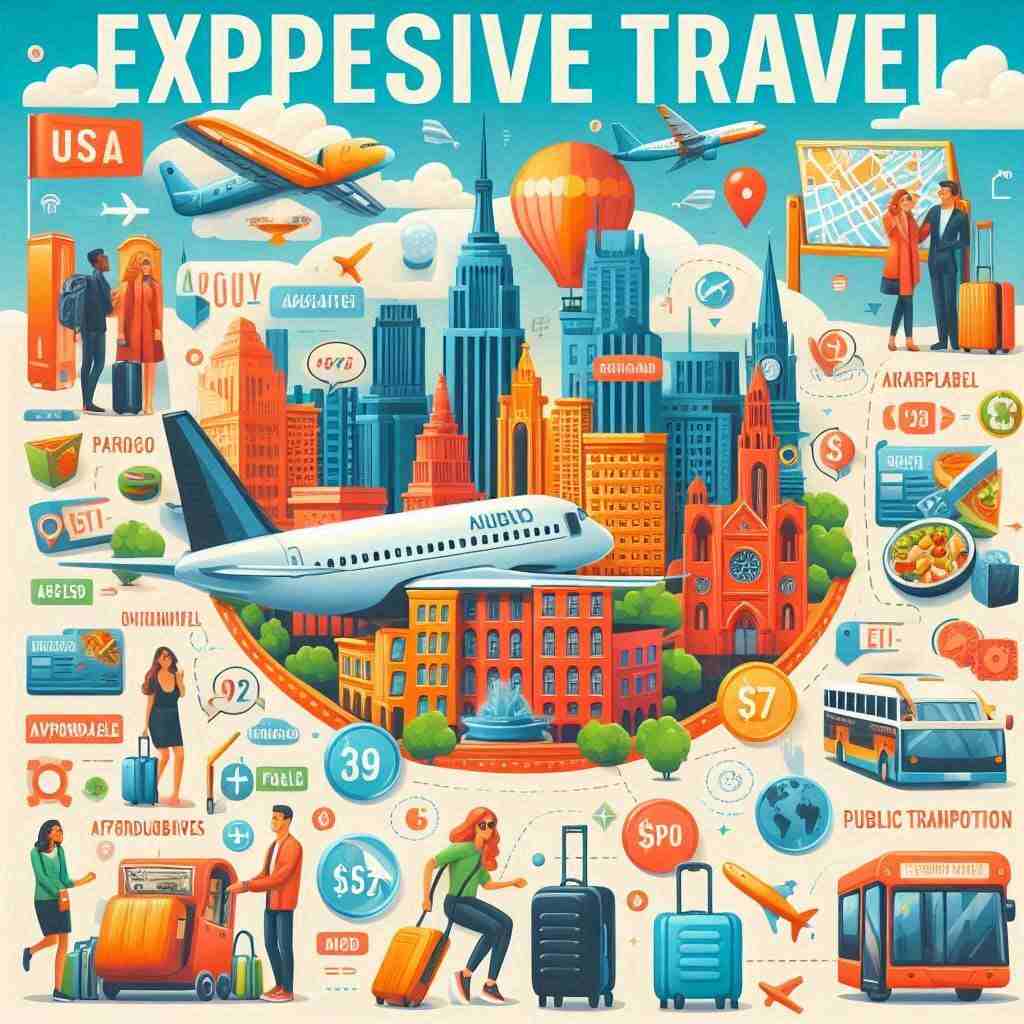
The truth is that expensive cities are not expensive in the same way for every traveler. They are expensive for travelers who unknowingly purchase the most expensive version of every decision. They stay in premium tourist districts, rely heavily on rideshares, eat near major landmarks, pay full attraction prices, travel during peak demand periods, and book flights without understanding how modern pricing systems work.
Locals rarely behave this way.
A New Yorker may spend less on transportation in an entire week than a tourist spends in two days. A Chicago resident can enjoy outstanding food at prices far below what visitors pay near popular attractions. A San Francisco local can spend an entire weekend exploring viewpoints, neighborhoods, parks, and waterfronts without spending anything at all.
The difference between an expensive trip and an affordable one is rarely sacrifice.
More often, it is information.
This guide is built around a principle that experienced travelers understand instinctively:
Budget travel in expensive American cities is not about doing less. It is about spending intentionally.
That distinction changes everything.
Instead of focusing on extreme frugality, this guide teaches how to:
- Build realistic travel budgets before booking
- Reduce accommodation costs without sacrificing safety
- Use public transportation strategically
- Find excellent food at local prices
- Avoid hidden travel expenses
- Plan attractions for maximum value
- Move between cities efficiently
- Evaluate attraction passes intelligently
- Build travel systems that work for solo travelers, couples, families, students, and backpackers
Most importantly, you will learn how experienced budget travelers think differently from average tourists.
The goal is not to spend the least amount of money.
The goal is to create the highest possible experience-per-dollar ratio.
That is the foundation of affordable travel in expensive cities.
What Budget Travel Really Means in Expensive U.S. Cities
Many people misunderstand budget travel.
They imagine:
- Cheap hotels
- Fast food meals
- Skipping attractions
- Constant compromises
That version of budget travel exists.
It is also one of the least effective ways to travel.
A more useful definition is:
Budget travel is maximizing value while minimizing unnecessary spending.
This distinction matters because cost reduction and value optimization are not the same thing.
Consider two travelers visiting New York City.
Traveler A chooses the absolute cheapest accommodation available. The hotel is poorly connected to public transportation, located far from planned attractions, and requires long daily commutes.
Traveler B pays slightly more for a transit-connected property outside Manhattan’s tourist core.
Traveler B spends more on accommodation.
Yet Traveler B may spend less overall because transportation costs, commuting time, and daily friction decrease dramatically.
This is the central principle behind successful budget travel.
Smart budget travelers optimize systems.
Unsuccessful budget travelers optimize individual prices.
The difference becomes enormous over the course of a trip.
Cheap vs Smart Budget Decisions
| Category | Cheap Choice | Smart Budget Choice |
|---|---|---|
| Accommodation | Lowest room rate | Best location-to-price ratio |
| Food | Cheapest possible meals | Mix of local specialties and value meals |
| Transportation | Walk everywhere regardless of distance | Use the optimal mix of walking and transit |
| Attractions | Skip all paid experiences | Select high-value paid experiences |
| Flights | Lowest ticket price | Lowest total trip cost |
Experienced travelers understand that the cheapest option is not always the most affordable option.
The objective is not minimizing spending.
The objective is maximizing return on spending.
The Real Cost of Visiting Expensive American Cities
One of the biggest travel misconceptions involves confusing cost of living with cost of visiting.
A city can be extremely expensive to live in while remaining surprisingly affordable for visitors.
The reason is simple.
Residents must pay for housing, utilities, healthcare, taxes, commuting, groceries, and long-term living expenses.
Visitors only pay for a temporary experience.
This distinction creates opportunities.
New York may rank among the world’s most expensive cities for residents, yet visitors can:
- Walk across the Brooklyn Bridge for free
- Spend hours in Central Park without spending money
- Visit world-famous neighborhoods on foot
- Ride one of the world’s most extensive transit systems
- Eat inexpensive local specialties throughout the city
The same pattern appears elsewhere.
Washington D.C. offers one of the strongest value propositions in America because many of its most famous attractions are permanently free.
Chicago combines excellent public transportation, walkability, architecture, and waterfront access.
Boston delivers a remarkable amount of history through self-guided exploration.
San Francisco provides iconic scenery that costs nothing to experience.
The cities themselves are not always expensive.
Specific decisions are.
Understanding those decisions is where most travel savings originate.
The Five Cost Drivers That Determine Your Entire Travel Budget
Most travel expenses ultimately trace back to five major drivers.
Master these five areas and most budget problems become manageable.
1. Accommodation Location
Accommodation typically represents the largest expense category of an urban trip.
Many travelers focus exclusively on nightly rates.
Experienced travelers focus on total trip economics.
A cheaper room located far from transit may increase:
- Transportation expenses
- Travel time
- Food costs
- Convenience spending
A slightly more expensive room in the right neighborhood frequently lowers overall costs.
2. Transportation Habits
Transportation decisions compound.
A traveler who uses rideshares four times daily can spend hundreds of dollars over a week.
A traveler who understands local transit systems often spends a fraction of that amount.
The savings frequently exceed those achieved through aggressive hotel hunting.
3. Food Geography
Food prices are often determined more by location than quality.
Restaurants positioned near major tourist attractions benefit from convenience-driven demand.
Neighborhood restaurants often provide:
- Better food
- Larger portions
- More authentic experiences
- Lower prices
The difference can be substantial.
4. Attraction Planning
Many travelers unknowingly pay full price for experiences that offer:
- Advance booking discounts
- Student pricing
- Free-entry periods
- Membership reciprocity benefits
- Attraction bundle discounts
Poor planning turns sightseeing into one of the most expensive parts of a trip.
Good planning transforms it into one of the best value categories.
5. Travel Timing
Timing influences nearly every major expense.
The same hotel room may vary dramatically in price depending on:
- Local events
- Conferences
- Sporting events
- School holidays
- Seasonal demand
- Day of the week
In many cities, moving a trip by just one week can generate larger savings than hours of discount searching.
Understanding these five drivers creates the foundation for every budget travel strategy that follows.
The BUDGET Blueprint: A Practical Planning System for Expensive Cities
Most travelers attempt to control spending after arriving.
Experienced travelers control spending before booking.
The BUDGET Blueprint provides a simple framework for doing exactly that.
B — Build Your Maximum Trip Budget
Begin with a total spending limit.
Do not start with flights.
Do not start with hotels.
Start with the maximum amount you are willing to spend for the entire trip.
This creates a decision framework before emotions enter the booking process.
U — Understand Fixed Costs First
Identify expenses that are difficult to change later.
These typically include:
- Flights
- Accommodation
- Inter-city transportation
- Travel insurance
- Attraction passes
Calculate these first.
Everything else becomes easier afterward.
D — Divide Remaining Funds by Day
After fixed expenses are identified:
Remaining Budget ÷ Trip Length = Daily Allowance
This calculation immediately reveals whether expectations align with reality.
Many budgeting mistakes become obvious at this stage.
G — Group Daily Spending Categories
Separate spending into categories:
- Food
- Transportation
- Attractions
- Miscellaneous expenses
Travelers who combine everything into one pool consistently underestimate costs.
E — Expect the Unexpected
Every trip encounters surprises.
Recommended contingency reserves:
- Domestic travel: 10%
- International travel: 15–20%
The purpose of a contingency fund is not pessimism.
It is flexibility.
T — Track Spending During the Trip
Budget tracking should take less than five minutes per day.
The objective is awareness.
Not restriction.
Small course corrections prevent large budget overruns.
Sample Daily Budgets for Expensive U.S. Cities
One of the most common questions travelers ask is:
“How much money do I actually need?”
The answer depends largely on travel style rather than destination alone.
Solo Budget Traveler
| Category | Daily Budget |
|---|---|
| Accommodation | $45–120 |
| Food | $25–45 |
| Transit | $5–12 |
| Attractions | $0–25 |
| Total | $75–202 |
Couple Budget Traveler
| Category | Daily Budget |
|---|---|
| Accommodation | $80–220 |
| Food | $50–90 |
| Transit | $10–20 |
| Attractions | $0–50 |
| Total | $140–380 |
Family of Four
| Category | Daily Budget |
|---|---|
| Accommodation | $180–350 |
| Food | $90–180 |
| Transit | $20–40 |
| Attractions | $20–120 |
| Total | $310–690 |
Student or Backpacker
| Category | Daily Budget |
|---|---|
| Hostel Dorm | $30–70 |
| Food | $15–35 |
| Transit | $5–10 |
| Attractions | $0–15 |
| Total | $50–130 |
Budget Reality Check
Use this scale as a planning benchmark:
- Under $75/day → Highly restrictive
- $75–150/day → Comfortable budget travel
- $150–250/day → Strong value travel
- $250+/day → Moderate-to-comfortable travel
The purpose of these numbers is not precision.
The purpose is expectation management.
Budget problems usually begin long before departure.
They begin when travelers underestimate what their preferred travel style actually costs.
The SLATE Method: A Decision Framework for Affordable City Travel
Most budget travel advice is a collection of disconnected tips.
Take public transit.
Book early.
Stay outside downtown.
Look for discounts.
The problem is that isolated tips rarely create consistently affordable trips.
Experienced travelers operate differently.
They use systems.
The SLATE Method is a city-travel decision framework designed specifically for expensive urban destinations.
Instead of focusing on individual savings, it focuses on cost structures.
S — Stay Position
Accommodation is more than a place to sleep.
It is the anchor point of your trip.
A poorly chosen hotel affects:
- Transportation costs
- Meal options
- Time efficiency
- Daily energy levels
- Sightseeing opportunities
The smartest travelers evaluate accommodations based on connectivity rather than proximity.
Being near a subway line often matters more than being near an attraction.
A hotel twenty minutes from the city center can easily outperform a downtown hotel if transit access is excellent.
L — Local Transit Mastery
Transportation decisions repeat every day.
That makes them high-leverage decisions.
A traveler who learns the basics of a city’s transit network before arrival gains advantages throughout the trip.
Benefits include:
- Lower costs
- Greater flexibility
- Faster movement
- Access to more neighborhoods
- Reduced dependence on surge pricing
A single hour spent understanding transit routes often produces larger savings than hours spent searching for coupons.
A — Attraction Sequencing
Many travelers accidentally create expensive itineraries.
They visit attractions in inefficient order.
They miss free-entry days.
They cross the city multiple times.
They pay peak pricing without realizing alternatives exist.
Attraction sequencing solves these problems.
Group attractions according to:
- Geography
- Opening hours
- Discount windows
- Free admission periods
- Transit efficiency
The result is lower spending and a better overall experience.
T — Table Strategy
Food spending is one of the easiest categories to optimize.
The objective is not spending less on food.
The objective is spending intelligently.
Questions experienced travelers ask include:
- Is lunch significantly cheaper than dinner?
- Is this restaurant popular with locals?
- Is the premium based on quality or location?
- Can I combine a premium meal with lower-cost meals elsewhere?
Great trips usually include memorable meals.
The secret is selecting them intentionally.
E — Exit the Tourist Perimeter
Every expensive city has an invisible tourist perimeter.
Inside that perimeter:
- Prices increase
- Crowds increase
- Authenticity often decreases
Outside it:
- Prices become more reasonable
- Local businesses dominate
- Experiences become more distinctive
The strongest travel value often exists just beyond the areas most tourists never leave.
The Travel Affordability Index
Not all expensive cities provide the same value.
Some cities are expensive because nearly everything costs more.
Others are expensive primarily because accommodation costs are high.
This distinction matters.
A city can have expensive hotels while still offering exceptional overall value.
Travel Affordability Index
| City | Hotel Cost | Transit Quality | Free Attractions | Food Value | Overall Budget Value |
|---|---|---|---|---|---|
| Washington D.C. | Moderate | Excellent | Exceptional | Strong | 9.5/10 |
| Chicago | Moderate | Excellent | Strong | Strong | 9/10 |
| New York City | High | Excellent | Exceptional | Strong | 8.5/10 |
| Boston | High | Strong | Strong | Moderate | 8/10 |
| San Francisco | High | Moderate | Strong | Moderate | 7.5/10 |
| Los Angeles | Moderate | Mixed | Strong | Strong | 7/10 |
Why Washington D.C. Delivers Exceptional Value
Few American cities offer as much free cultural access.
Visitors can spend days exploring:
- Smithsonian museums
- National monuments
- The National Mall
- Government landmarks
- Public memorials
without paying attraction fees.
For budget travelers, this dramatically changes trip economics.
Why New York Is Often More Affordable Than Expected
New York’s reputation creates a misconception.
Accommodation is expensive.
Many tourist restaurants are expensive.
Yet transportation, neighborhood exploration, public spaces, and many iconic experiences remain remarkably affordable.
Budget-conscious travelers frequently spend less than expected.
Why Los Angeles Creates Unique Budget Challenges
Los Angeles differs from most cities in this guide.
The issue is rarely attraction pricing.
The challenge is geography.
Long distances between neighborhoods create transportation costs that travelers often underestimate.
The city rewards planning more than almost any other destination on this list.
Where to Stay: The Accommodation Intelligence Guide
Accommodation typically consumes between 35% and 55% of an urban travel budget.
That makes accommodation optimization one of the highest-return activities available to travelers.
Yet many people evaluate hotels incorrectly.
They ask:
“How close is this hotel to the attractions?”
Experienced travelers ask:
“How efficiently does this location support my entire trip?”
Those are very different questions.
The Five-Factor Accommodation Model
When evaluating accommodation, rank these factors:
| Factor | Importance |
|---|---|
| Transit Access | 30% |
| Safety | 25% |
| Total Cost | 20% |
| Food Availability | 15% |
| Walkability | 10% |
This framework consistently outperforms attraction proximity as a decision tool.
Why Downtown Hotels Are Often Poor Value
Many travelers automatically search for hotels in:
- Midtown Manhattan
- Fisherman’s Wharf
- Union Square
- River North
- Back Bay
- Hollywood Boulevard
These locations command premium pricing because they are familiar.
Not necessarily because they are superior.
Hotels understand this.
As a result, travelers often pay substantial location premiums.
In many cases, moving just two or three transit stops away reduces accommodation costs dramatically while preserving convenience.
The Hidden Cost of “Cheap” Accommodation
Budget travelers sometimes focus exclusively on nightly rates.
This can backfire.
A cheaper hotel may increase:
- Transit expenses
- Rideshare usage
- Commuting time
- Food costs
- Convenience purchases
The lowest room rate rarely represents the lowest total trip cost.
Best Value Neighborhoods in Major Cities
New York City
Strong value options include:
- Long Island City
- Astoria
- Williamsburg
- Downtown Brooklyn
Chicago
Consider:
- Logan Square
- Wicker Park
- Pilsen
- Bridgeport
Boston
Good value areas include:
- Allston
- Brighton
- Jamaica Plain
San Francisco
Look at:
- Mission District
- Richmond District
- Castro
Los Angeles
Strong value neighborhoods include:
- Koreatown
- Culver City
- Silver Lake
These areas often provide better food, lower accommodation costs, and more authentic local experiences.
Hotel vs Hostel vs Vacation Rental: Which Delivers the Best Value?
No accommodation type is universally best.
The answer depends on travel style.
Hotels
Best For:
- Couples
- Families
- Business travelers
- Short stays
Strengths:
- Consistent quality
- Predictable service
- Loyalty programs
- Security
Weaknesses:
- Highest average cost
- Resort fees
- Parking fees
Hostels
Best For:
- Solo travelers
- Students
- Backpackers
Strengths:
- Lowest accommodation cost
- Social environment
- Shared kitchens
- Central locations
Weaknesses:
- Less privacy
- Shared facilities
- Variable noise levels
One overlooked strategy involves private hostel rooms.
In many expensive cities, they deliver hotel-like functionality at significantly lower prices.
Vacation Rentals
Best For:
- Families
- Groups
- Long stays
Strengths:
- Kitchens
- Laundry facilities
- Larger living spaces
Weaknesses:
- Cleaning fees
- Service fees
- Variable standards
For short stays, fees can significantly reduce value.
For longer stays, vacation rentals often become increasingly competitive.
Hidden Accommodation Costs Most Travelers Miss
Many travelers compare room rates without evaluating total costs.
This creates expensive surprises.
Common hidden costs include:
Resort Fees
Frequently found in:
- New York
- Las Vegas
- Miami
- Chicago
Often ranging from:
- $25–50+ per night
Parking Charges
Urban hotel parking commonly costs:
- $30–80+ per night
In some cities, parking can exceed the cost of accommodation upgrades.
Early Check-In and Luggage Fees
Additional charges may apply for:
- Early arrival
- Late checkout
- Luggage storage
Always review fee structures before booking.
Getting Around: The Transit Intelligence Guide
Transportation is one of the most underestimated travel expenses.
Many travelers spend hours comparing hotel prices while casually spending hundreds on rideshares.
Experienced budget travelers reverse this behavior.
They study transportation before arrival.
Why Transit Knowledge Creates Compounding Savings
Consider two five-day travelers in New York.
Traveler A uses rideshare services regularly.
Traveler B combines:
- Subway
- Walking
- Bus travel
The financial difference can easily exceed several hundred dollars.
That money can fund:
- Better accommodation
- Additional attractions
- Memorable dining experiences
- Extended travel
Transportation decisions repeat daily.
That repetition creates compounding effects.
Airport Transfer Strategy
Airport transfers are often the single most overpriced transportation decision of an entire trip.
Many travelers automatically choose:
- Taxi
- Uber
- Lyft
without evaluating alternatives.
Experienced travelers always compare:
- Public transit
- Airport rail connections
- Airport buses
- Shared shuttles
before committing to rideshare services.
The savings are often substantial.
The Transit Pass Decision System
Buy a transit pass when:
- Staying four or more days
- Using transit multiple times daily
- Visiting multiple districts
Consider pay-per-ride options when:
- Staying briefly
- Walking extensively
- Remaining concentrated in one area
The pass only creates value when usage supports it.
Walking as a Competitive Advantage
Most people view walking as a budget strategy.
Experienced travelers view it as an experience strategy.
Walking provides:
- Better city awareness
- Unexpected discoveries
- Flexible exploration
- Lower transportation costs
Many of the most memorable travel experiences occur between attractions rather than at attractions themselves.
This is especially true in cities such as:
- New York
- Boston
- Chicago
- Washington D.C.
The Transit Hierarchy Rule
A useful decision rule is:
Walk first. Transit second. Rideshare third. Taxi last.
This hierarchy consistently minimizes transportation costs while maximizing urban exploration.
It is one of the simplest and most effective rules in budget city travel.
Food Strategy: Eating Exceptionally Well Without Overspending
Food is one of the most misunderstood categories in travel budgeting.
Many travelers assume reducing food costs means sacrificing quality.
In reality, some of the best meals in expensive American cities come from places that cost significantly less than tourist-focused restaurants.
The challenge is not finding affordable food.
The challenge is recognizing where value actually exists.
Experienced travelers understand that food spending is largely influenced by three variables:
- Location
- Timing
- Decision structure
Master those three factors and food becomes one of the easiest categories to optimize.
Understanding the Tourist Restaurant Premium
Every major city contains restaurants that benefit from location rather than culinary excellence.
These establishments often sit near:
- Times Square
- Fisherman’s Wharf
- Navy Pier
- Hollywood Boulevard
- Quincy Market
- Major observation decks
- Popular museums
The closer a restaurant is to a major attraction, the more likely part of the bill reflects convenience rather than quality.
This does not mean every restaurant in tourist districts is bad.
It means travelers should understand what they are paying for.
A useful rule is:
Walk five to ten minutes beyond the highest-tourist areas before choosing where to eat.
The quality frequently improves while prices become more reasonable.
The Meal Allocation Strategy
One of the most effective food-budget systems is assigning different spending priorities to different meals.
Most travelers accidentally spend similar amounts throughout the day.
Experienced travelers rarely do.
Breakfast
Breakfast offers the lowest return on spending.
Strong options include:
- Local bakeries
- Coffee shops
- Grocery stores
- Hotel breakfast programs
Typical range:
- $3–12
For most travelers, expensive breakfasts rarely produce proportionally better experiences.
Lunch
Lunch often represents the best value meal of the day.
Many restaurants offer:
- Lunch specials
- Prix fixe menus
- Reduced-price versions of signature dishes
A restaurant that feels expensive at dinner may become surprisingly affordable at lunch.
This creates opportunities to experience premium dining without premium pricing.
Dinner
Dinner deserves selectivity.
Not every dinner needs to be memorable.
A stronger approach is:
- One or two exceptional dinners
- Several value-focused dinners
- Strategic use of food halls and local institutions
This approach improves both experiences and budgets.
Grocery Stores: An Underused Budget Tool
One of the biggest differences between tourists and locals is grocery-store usage.
Many visitors ignore grocery stores entirely.
Locals do not.
Chains such as:
- Trader Joe’s
- Whole Foods
- Wegmans
- H-E-B
- Publix
- Mariano’s
often provide:
- Prepared meals
- Fresh sandwiches
- Hot food bars
- Local specialties
- Healthy options
at prices substantially lower than restaurants.
For travelers staying multiple days, grocery stores can reduce food costs without reducing food quality.
Food Halls and Public Markets
Food halls have become some of the best dining values in major American cities.
Advantages include:
- Lower overhead costs
- Multiple vendors
- Greater variety
- Lower commitment
- Easier experimentation
Examples include:
New York
- Chelsea Market
- Essex Market
- Urban Hawker
Chicago
- Time Out Market
- Revival Food Hall
Los Angeles
- Grand Central Market
San Francisco
- Ferry Building Marketplace
Boston
- High Street Place
Food halls allow travelers to sample local specialties while maintaining budget flexibility.
Street Food and Local Institutions
Some of America’s most iconic foods are also among its most affordable.
Examples include:
New York
- Pizza slices
- Bagel shops
- Halal carts
Chicago
- Chicago hot dogs
- Italian beef sandwiches
Los Angeles
- Taco trucks
- Korean food courts
San Francisco
- Mission-style burritos
Philadelphia
- Roast pork sandwiches
- Cheesesteaks
The best food experiences often come from places built around local demand rather than visitor traffic.
Food Budgets by Travel Style
| Travel Style | Daily Food Budget |
|---|---|
| Backpacker | $15–30 |
| Student | $20–35 |
| Budget Traveler | $30–50 |
| Moderate Traveler | $50–80 |
| Comfort Traveler | $80–150+ |
Most travelers can eat remarkably well in expensive cities while staying within the $30–50 range through thoughtful planning.
Happy Hour Economics
Happy hour remains one of the most overlooked value opportunities in urban travel.
Benefits frequently include:
- Reduced drink prices
- Discounted appetizers
- Combo specials
- Smaller crowds
Many premium restaurants become surprisingly accessible during early evening hours.
The key is planning rather than improvising.
Sightseeing Strategy: Maximizing Experiences Per Dollar
One of the biggest misconceptions in travel is that memorable experiences must be expensive.
This assumption creates unnecessary spending.
Many iconic urban experiences cost little or nothing.
The challenge is identifying them before arrival.
The Experience Value Pyramid
Experienced travelers often organize activities into three categories.
Tier 1: Free Experiences
These form the foundation of a high-value itinerary.
Examples include:
- Parks
- Waterfronts
- Neighborhood exploration
- Public architecture
- Markets
- Walking routes
- Public libraries
These experiences often provide stronger cultural understanding than paid attractions.
Tier 2: Discounted Experiences
These include:
- Free museum days
- Student discounts
- Attraction bundles
- Community-access programs
- Evening admission discounts
The goal is not avoiding paid attractions.
The goal is reducing unnecessary admission costs.
Tier 3: Premium Experiences
Examples include:
- Broadway shows
- Observation decks
- Sporting events
- Signature museums
- Major exhibitions
Premium experiences often create tremendous value when selected intentionally.
Problems arise when travelers purchase them impulsively.
Why Free Experiences Often Become Trip Highlights
There is an interesting pattern among experienced travelers.
Many of their strongest memories come from activities that cost nothing.
Examples include:
- Walking the Brooklyn Bridge at sunrise
- Watching sunset from Griffith Observatory
- Exploring Boston’s Freedom Trail
- Spending an afternoon in Millennium Park
- Relaxing in Dolores Park
These experiences provide something expensive attractions cannot always deliver:
Context.
They help travelers understand a city rather than simply consume it.
The Free Museum Framework
Museum costs can quickly accumulate.
Fortunately, many institutions offer substantial savings opportunities.
The strongest museum strategy is planning before arrival.
Step 1: Build a Museum List
Identify every museum you genuinely want to visit.
Not every museum that appears on a travel list.
Only those that genuinely interest you.
Step 2: Research Access Opportunities
Look for:
- Free-entry days
- Free evenings
- Student discounts
- Reciprocal memberships
- Local access programs
Step 3: Build Your Itinerary Around Savings Opportunities
Most travelers choose dates first.
Experienced travelers often reverse the process.
They align museum visits with available discounts.
The savings can be significant.
Cities With Exceptional Free Museum Access
Washington D.C.
The strongest museum value destination in America.
Free attractions include:
- Smithsonian museums
- National Gallery of Art
- National Zoo
- National Air and Space Museum
- National Museum of African American History and Culture
A week of sightseeing can be completed with surprisingly low attraction costs.
New York
Opportunities include:
- Select free evenings
- University museums
- Public cultural programs
- Seasonal initiatives
Chicago
Many museums offer community-access periods throughout the year.
Los Angeles
Numerous institutions participate in recurring free-entry programs.
San Francisco
Several major museums provide scheduled free-admission opportunities.
The Reciprocal Membership Advantage
Families and frequent museum visitors should investigate reciprocal museum memberships.
Benefits may include:
- Free admission
- Discounted admission
- Priority access
across multiple cities.
For heavy museum users, a single membership can generate substantial savings throughout the year.
CityPASS and Attraction Passes: Are They Worth It?
Many travelers assume attraction passes automatically save money.
That assumption is frequently wrong.
Sometimes they save substantial amounts.
Sometimes they encourage unnecessary spending.
The value depends on behavior.
The Attraction Pass Evaluation System
Purchase an attraction pass only when three conditions are met.
Condition 1: You Will Visit Multiple Included Attractions
A useful benchmark is:
- Four or more major attractions
Anything less often reduces the value proposition.
Condition 2: You Would Otherwise Pay Full Price
Free-entry opportunities reduce pass value dramatically.
Always compare available discounts before purchasing.
Condition 3: Attractions Match Your Interests
Many travelers buy passes because they appear to offer savings.
Then they visit attractions they never intended to visit.
That is not savings.
That is forced consumption.
When Attraction Passes Usually Make Sense
Best candidates include:
- First-time visitors
- Families
- Short trips
- Attraction-focused itineraries
Cities where passes often create value:
- New York
- Chicago
- Boston
- San Francisco
When Attraction Passes Usually Do Not Make Sense
Passes frequently underperform for:
- Museum-focused travelers
- Slow travelers
- Neighborhood explorers
- Repeat visitors
These travelers often benefit more from selective admissions.
Flight Pricing Intelligence: Understanding How Airfares Actually Work
Many travelers believe airline pricing is unpredictable.
In reality, pricing follows identifiable patterns.
Understanding those patterns creates a significant advantage.
The Three Primary Drivers of Airfare
Demand
Higher demand produces higher prices.
Common demand drivers include:
- Holidays
- School breaks
- Festivals
- Long weekends
Timing
Waiting too long usually increases risk.
For many domestic routes:
- 1–3 months is often a productive booking window
For many international routes:
- 2–6 months frequently produces competitive pricing
These are guidelines rather than guarantees.
Flexibility
Flexibility remains the single most powerful airfare tool.
A one-day shift can sometimes create larger savings than hours of fare searching.
Dynamic Pricing: The Hidden Force Behind Travel Costs
Hotels and airlines increasingly rely on dynamic pricing systems.
These systems continuously adjust prices according to:
- Demand
- Occupancy
- Events
- Competition
- Market conditions
The result is simple:
The same product may have dramatically different prices within days.
Understanding this reality changes how travelers plan.
Hotel Yield Management Explained
Hotels sell a perishable product.
An unsold room tonight cannot be sold tomorrow.
This creates aggressive pricing adjustments.
Major drivers include:
- Conferences
- Sporting events
- Concerts
- Festivals
- Holidays
Travelers who understand local demand cycles often find significantly better pricing.
Event Calendar Intelligence
One of the highest-value planning habits is checking local event calendars before booking.
Examples include:
- Major conventions
- Marathons
- Music festivals
- International conferences
- Large sporting events
Hotel rates can increase dramatically during these periods.
Avoiding a high-demand week frequently produces larger savings than searching for discount codes.
The Cheapest Months to Fly to Major U.S. Cities
While no month is always cheapest, several patterns remain surprisingly consistent.
Generally Lowest-Cost Periods
Many major cities experience lower demand during:
- January
- February
- Early March
This often translates into lower airfare and accommodation pricing.
Strong Shoulder Seasons
For many destinations, excellent value appears during:
- April
- May
- September
- October
- Early November
These periods often combine:
- Pleasant weather
- Lower crowds
- Better availability
- More competitive pricing
City-Specific Value Periods
| City | Typical Low-Cost Window |
|---|---|
| New York | January–March |
| Chicago | January–March |
| Boston | January–March |
| San Francisco | January–February |
| Los Angeles | January–March |
| Miami | Summer Months |
These patterns can change depending on major events and unusual travel demand.
The Best Overall Value Window
If one period consistently offers strong value across expensive American cities, it is:
Mid-September through early November.
This period often provides:
- Lower accommodation costs
- Pleasant weather
- Reduced crowds
- Strong flight availability
without many of winter’s weather-related trade-offs.
The Most Important Flight Rule
The strongest airfare strategy is not a tool.
It is flexibility.
Google Flights, Hopper, Going, and Skyscanner are useful.
But a traveler willing to depart on Tuesday instead of Friday often saves more than a traveler using every available search tool while insisting on fixed dates.
Flexibility remains one of the highest-return skills in travel budgeting.
Timing: The Hidden Multiplier
Budget travelers often focus heavily on flights.
Experienced travelers focus on total trip economics.
A slightly more expensive flight during a low-demand hotel period may produce a dramatically cheaper overall trip.
The smartest travelers optimize entire travel systems rather than individual prices.
That systems-based thinking is what consistently separates affordable trips from expensive ones.
Inter-City Travel: Moving Between Expensive Cities for Less
Many travelers become highly efficient at saving money inside cities while overlooking the cost of moving between them.
For multi-city trips, inter-city transportation can become one of the largest budget categories.
The strongest budget travelers evaluate transportation using a total-cost perspective rather than focusing exclusively on ticket prices.
A $49 airfare may appear cheaper than an $85 train ticket.
However, once baggage fees, airport transfers, security time, and transportation to and from airports are included, the supposedly cheaper flight may become the more expensive option.
This is why experienced travelers compare total trip economics rather than advertised fares.
The True Transportation Cost Formula
Before choosing any transportation option, calculate:
Ticket Price + Baggage Fees + Transfer Costs + Time Costs + Convenience Costs = True Transportation Cost
This simple formula prevents one of the most common travel budgeting mistakes.
Many transportation decisions look inexpensive until all associated costs are included.
The Northeast Corridor Advantage
The Boston–New York–Philadelphia–Washington D.C. corridor is one of the best-value travel regions in North America.
The concentration of major cities, transit infrastructure, and transportation competition creates unusually strong options.
| Method | Typical Cost | Best For |
|---|---|---|
| FlixBus | Lowest | Maximum savings |
| Megabus | Low | Budget flexibility |
| Amtrak Regional | Moderate | Comfort and convenience |
| Acela | Higher | Time-sensitive travelers |
| Flights | Variable | Specific circumstances |
For many travelers, Amtrak Regional provides the strongest balance of comfort, convenience, and value.
Unlike airports, train stations are typically located close to city centers, reducing transfer costs and saving significant time.
Budget Airlines: Understanding the Trade-Off
Budget airlines can create substantial savings.
They can also create expensive surprises.
Carriers such as:
- Spirit
- Frontier
- Breeze
- Allegiant
often provide outstanding value when:
- Traveling with minimal luggage
- Booking early
- Remaining flexible
However, travelers should always evaluate:
- Checked baggage fees
- Carry-on restrictions
- Seat selection charges
- Airport transfer costs
- Schedule limitations
The lowest fare is not always the lowest-cost trip.
Bus vs Train vs Flight Decision Matrix
Choose a bus when:
- Budget is the highest priority
- Distances are moderate
- Schedule flexibility exists
Choose a train when:
- Comfort matters
- City-center access is valuable
- Traveling in the Northeast Corridor
Choose a flight when:
- Distances exceed 500 miles
- Time savings are substantial
- Fare differences are relatively small
There is no universally correct option.
The correct choice depends on the trip.
The Invisible Budget Leaks Most Travelers Never Notice
Large expenses attract attention.
Small expenses quietly damage budgets.
Many travelers spend weeks comparing hotel rates and flight prices while ignoring dozens of minor costs that accumulate throughout a trip.
Individually, these costs appear insignificant.
Collectively, they can add hundreds of dollars.
Budget Leak #1: Sales Tax
Unlike many countries, prices displayed in the United States often exclude sales tax.
Actual rates vary by state and city.
As a result, travelers frequently spend more than expected.
When budgeting, adding an extra buffer for taxes helps create more realistic spending expectations.
Budget Leak #2: Tipping
Tipping remains an important part of American travel economics.
Common expectations include:
- Restaurants: 18–20%
- Bars: $1–2 per drink
- Hotel housekeeping: $2–5 per night
- Rideshare services: discretionary but common
Visitors unfamiliar with tipping culture often underestimate total costs.
Budgeting for tips in advance prevents surprises.
Budget Leak #3: Checked Luggage
Airlines increasingly generate revenue from baggage fees.
Typical charges may include:
- First checked bag
- Additional checked bags
- Oversized baggage
- Overweight baggage
Packing strategically often creates meaningful savings.
This is one reason many experienced travelers prefer carry-on-only travel whenever practical.
Budget Leak #4: Convenience Spending
Convenience purchases are rarely planned.
Examples include:
- Airport snacks
- Bottled water
- Tourist-area coffee
- Hotel minibar purchases
- Attraction gift shops
These expenses appear harmless.
Over several days, they become significant.
Budget Leak #5: Delayed Decisions
Waiting too long to book often increases costs.
This applies to:
- Flights
- Hotels
- Attraction tickets
- Inter-city transportation
While last-minute deals occasionally exist, relying on them is rarely a reliable strategy.
Budget Leak #6: Inefficient Geography
Many travelers unknowingly spend money because of poor itinerary design.
Examples include:
- Crossing large cities repeatedly
- Visiting distant neighborhoods on separate days
- Staying far from planned activities
Efficient geographic planning saves both money and time.
Time is often the more valuable resource.
The Cost Leak Audit
Before every trip, ask:
- Have I accounted for taxes?
- Have I budgeted for tipping?
- Do I actually need checked luggage?
- Have I evaluated airport transfer costs?
- Have I checked available attraction discounts?
- Is my itinerary geographically efficient?
This simple audit catches many hidden expenses before they occur.
City-Specific Insider Playbooks
New York City Budget Playbook
Best Value Neighborhoods
- Long Island City
- Astoria
- Williamsburg
- Downtown Brooklyn
Best Budget Food Areas
- Flushing
- Chinatown
- Jackson Heights
- East Village
High-Value Free Experiences
- Central Park
- Brooklyn Bridge
- Staten Island Ferry
- The High Line
- New York Public Library
Most Common Budget Mistake
Paying premium Manhattan hotel rates when excellent transit-connected alternatives exist nearby.
Chicago Budget Playbook
Best Value Neighborhoods
- Logan Square
- Wicker Park
- Pilsen
- Bridgeport
Best Budget Food Areas
- Pilsen
- Chinatown
- Maxwell Street Market area
High-Value Free Experiences
- Millennium Park
- Lincoln Park Zoo
- Chicago Cultural Center
- Lakefront Trail
Most Common Budget Mistake
Relying on rideshares instead of the CTA network.
San Francisco Budget Playbook
Best Value Neighborhoods
- Mission District
- Richmond District
- Castro
- SOMA
Best Budget Food Areas
- Mission District
- Sunset District
- Richmond District
High-Value Free Experiences
- Lands End
- Golden Gate Park
- Dolores Park
- Baker Beach
Most Common Budget Mistake
Spending too much time and money around Fisherman’s Wharf.
Los Angeles Budget Playbook
Best Value Neighborhoods
- Koreatown
- Culver City
- Silver Lake
Best Budget Food Areas
- Koreatown
- East Los Angeles
- San Gabriel Valley
High-Value Free Experiences
- Griffith Observatory
- Santa Monica
- Venice Beach
- Getty Center
Most Common Budget Mistake
Underestimating transportation distances.
Boston Budget Playbook
Best Value Neighborhoods
- Allston
- Brighton
- Jamaica Plain
High-Value Free Experiences
- Freedom Trail
- Boston Common
- Public Garden
- Harvard campus walks
Most Common Budget Mistake
Paying Back Bay premiums without receiving enough value in return.
Washington D.C. Budget Playbook
Best Value Areas
- Arlington
- Alexandria
- Transit-connected outer neighborhoods
High-Value Free Experiences
- Smithsonian Museums
- National Mall
- National Gallery of Art
- Library of Congress
Most Common Budget Mistake
Failing to take advantage of the city’s extraordinary collection of free attractions.
Frequently Asked Questions
What Is the Cheapest City in the USA to Visit?
Among major destinations, Washington D.C. frequently delivers the strongest value because many of its most famous attractions are permanently free.
Outside major metropolitan areas, numerous destinations throughout the Midwest and South offer lower overall travel costs.
What Is the Least Expensive Way to Travel Around the USA?
For shorter distances, buses often provide the lowest transportation costs.
For longer distances, budget airlines may offer the lowest fares, particularly when baggage fees are avoided.
The cheapest option depends on distance, luggage needs, and flexibility.
How Much Should I Budget for Travel in Expensive U.S. Cities?
A realistic range is:
- Solo travelers: $75–150 per day
- Couples: $140–380 per day
- Families: $310–690 per day
Actual costs vary according to travel style and destination.
Is $1,000 Enough for Four Days in New York?
For many travelers, yes.
A traveler who:
- Uses public transportation
- Stays outside premium districts
- Prioritizes free attractions
- Plans meals strategically
can often enjoy a four-day New York trip within that budget range.
What Is the Cheapest Month to Fly to the United States?
January and February frequently offer the lowest airfare to many major U.S. destinations.
However, seasonal patterns vary by region and demand conditions.
How Can I Stay Cheaply in Expensive Cities?
The most effective strategies include:
- Staying outside premium districts
- Using public transportation
- Traveling during shoulder seasons
- Leveraging free attractions
- Eating where locals eat
- Booking before major events drive prices higher
Is Travel Insurance Worth It?
For international visitors, travel insurance is often a prudent investment due to the high cost of medical care in the United States.
For domestic travelers, the value depends on trip cost, cancellation risk, and personal circumstances.
What Is the Best Travel Budgeting Method?
The BUDGET Blueprint introduced in this guide remains one of the most practical approaches:
- Build
- Understand
- Divide
- Group
- Expect
- Track
The framework creates financial structure before spending begins.
The Strategic View: What Separates Successful Budget Travelers From Everyone Else
Most people assume budget travelers spend less because they accept less.
The reality is usually the opposite.
The most successful budget travelers often experience more.
They simply spend differently.
They understand that expensive cities are systems.
Accommodation affects transportation.
Transportation affects sightseeing.
Sightseeing affects food decisions.
Timing influences everything.
Because they understand these relationships, they make decisions earlier and more intentionally.
They choose neighborhoods rather than famous addresses.
They choose transit instead of convenience pricing.
They choose local experiences instead of tourist defaults.
They evaluate total trip economics rather than individual purchases.
Most importantly, they understand a principle that applies far beyond travel:
Price and value are not the same thing.
The objective is not spending the least amount of money.
The objective is creating the richest possible experience for the money spent.
Once you understand that distinction, expensive cities begin to look very different.
New York becomes accessible.
San Francisco becomes manageable.
Boston becomes practical.
Chicago becomes exceptional value.
Washington D.C. becomes one of the best bargains in American travel.
The expensive city is rarely the problem.
Poor travel decisions are.
Master the frameworks in this guide, apply them consistently, and many of America’s most remarkable destinations become far more affordable than their reputations suggest.
The smartest budget travelers do not travel less.
They travel better.