
Poke Bowl Condiment Nyt: Master the Perfect Balance
Most homemade poke bowls are undone not by bad fish or wrong toppings — they fail because the cook treats the condiment system as decoration. The dressing gets drizzled on at the end, after the bowl is assembled, after the warm rice has already begun compromising the texture of the fish sitting directly on top. The poke bowl condiment nyt home cooks are searching for isn’t a simple sauce — it’s a precision instrument. It controls moisture migration, manages salinity curves, and determines whether your sashimi-grade tuna remains silky and firm or turns rubbery and wet by the time it reaches the table.
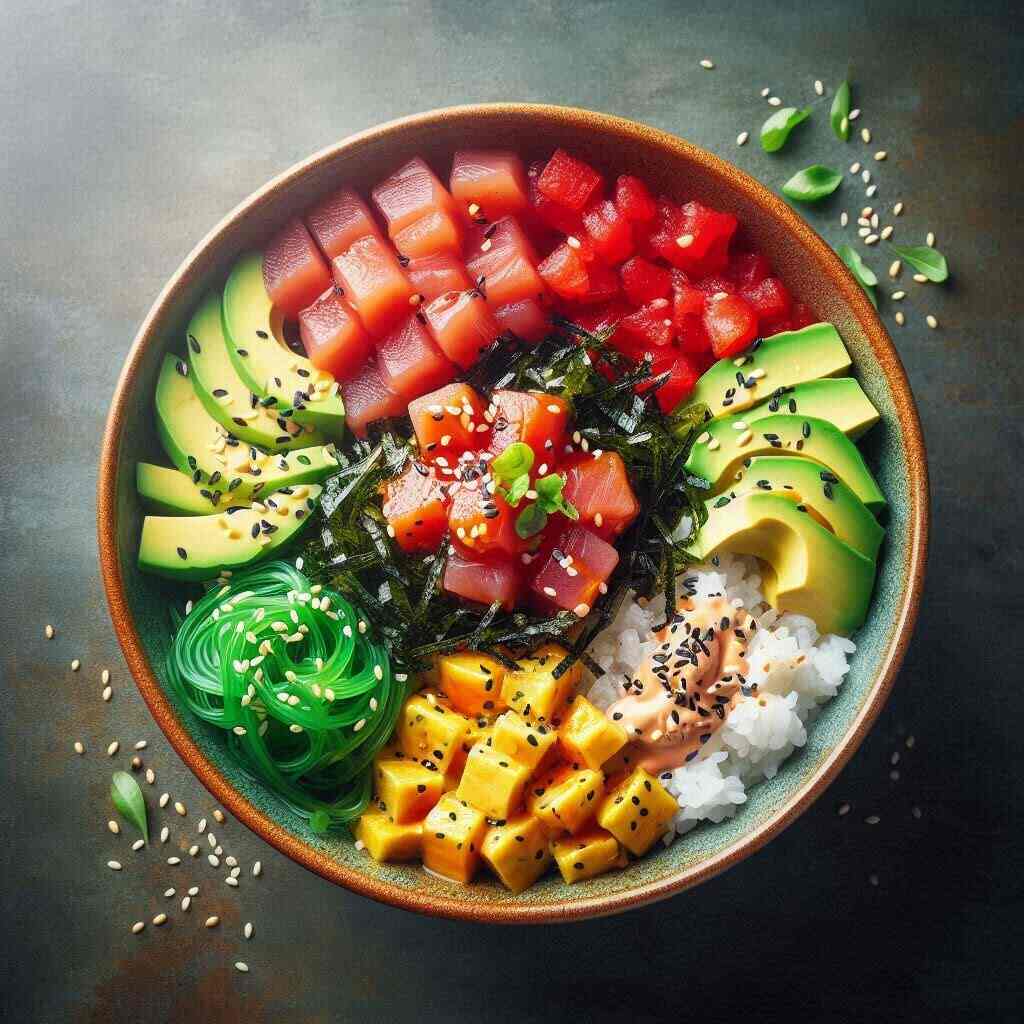
The NYT Cooking approach to poke — shaped significantly by the culinary philosophy of Sam Sifton and the test kitchen — operates on one governing principle: the condiment is the structural architecture of the bowl, not its finishing touch. Every component, from the shoyu base to the spicy mayo drizzle, performs a specific mechanical function. Get the ratios right, add them in the correct sequence, control the thermal environment of your assembly, and you replicate the experience of a premium poke bar at home. Get any of those three variables wrong, and the result is a soggy, over-salted, flat-tasting bowl that doesn’t justify the price of the fish.
This guide covers the complete condiment ecosystem: the exact volumetric ratios for scaling the dressing, the emulsion chemistry behind a flawless spicy mayo, the thermal mechanics that determine proper assembly sequence, and the specific troubleshooting protocols that no competitor currently provides. By the end, you won’t be approximating the NYT poke bowl flavor profile — you’ll understand precisely why it works, and how to reproduce it with predictable, repeatable results.
Decoding the NYT Cooking Poke Bowl Dressing Formula
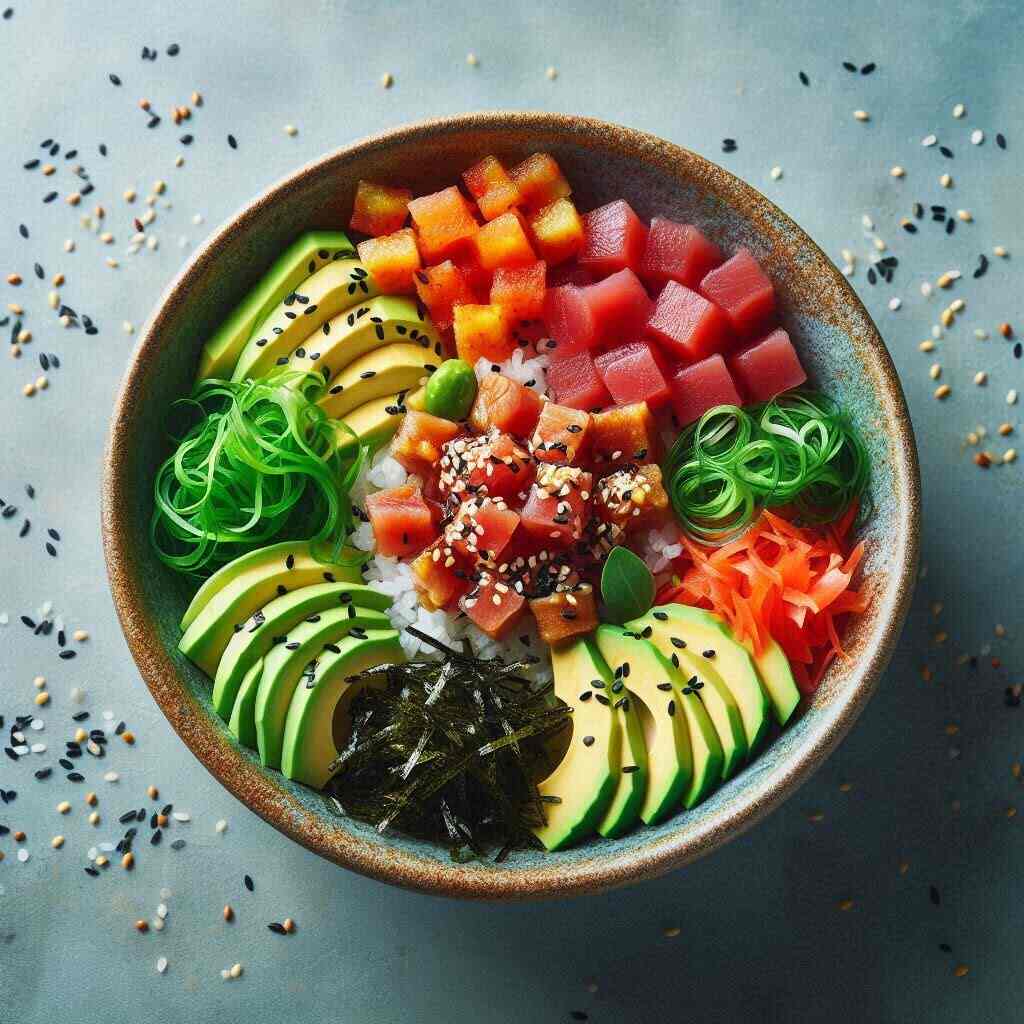
The nyt cooking poke bowl dressing is not a complex formula — it becomes complex only when you apply it without understanding the underlying chemistry. Three molecular interactions govern every decision in this dressing: the glutamate release from premium shoyu, the lipid-coating behavior of toasted sesame oil, and the acid-buffering function of rice vinegar or citrus. Master these three relationships and the shoyu poke marinade ratio becomes intuitive rather than guesswork.
The Umami-Fat Equilibrium
Premium shoyu — specifically a Japanese Koikuchi-style soy sauce — is not simply a salty liquid. It is a fermentation product containing naturally occurring glutamates (glutamic acid) and peptide fragments from the breakdown of wheat and soy proteins during the aging process. These glutamate compounds are the primary drivers of umami sensation, but they also perform a structural function: they act as partial solvents, weakening the tight protein bonds at the surface of raw fish cells and allowing fat molecules to penetrate the flesh.
This is why cheap soy sauce produces a poke bowl that tastes flat and one-dimensionally salty. Lower-grade soy sauces have been accelerated through hydrolysis (acid-HVP production) rather than natural fermentation, which yields sodium chloride concentration without the complex glutamate scaffolding. The fish gets salted but never flavored at depth.
Toasted sesame oil operates differently. It is a lipid carrier — its job is to coat the exterior of each fish cube with a viscous, aromatic film that seals in moisture while delivering toasted, nutty flavor compounds. The interaction between glutamate-rich shoyu and cold-pressed sesame oil creates the characteristic glossy, clinging texture of a properly dressed poke bowl. The fat adheres to the fish surface; the glutamates continue working beneath it. This is the umami-fat equilibrium — and it only functions correctly when the ratio is precisely calibrated.
Use too much sesame oil relative to shoyu and the dressing becomes greasy, coating your mouth rather than enhancing the fish. Use too little and the dressing pools at the bottom of the bowl, leaving the fish surface uncoated and vulnerable to oxidation.
The Shoyu Poke Marinade Ratio
The most important number in a high-performing poke dressing is the shoyu-to-fat ratio. While many recipes tell cooks to “season to taste,” that advice creates inconsistency because raw seafood reacts differently to salinity than cooked proteins.
For a traditional NYT-style profile, the working ratio is approximately 3 parts premium shoyu to 1 part toasted sesame oil, supported by a smaller acid buffer component. This balance allows the fermented soy compounds to penetrate the fish surface while the sesame oil forms a protective aromatic coating.
When the ratio shifts too heavily toward shoyu, osmotic pressure increases and moisture begins leaving the fish cells. The result is a firmer texture, excess liquid accumulation, and a loss of the silky mouthfeel associated with premium poke.
When the ratio shifts too heavily toward sesame oil, the dressing becomes greasy and struggles to distribute flavor evenly throughout the fish cubes. Instead of enhancing the seafood, the oil dominates it.
For tuna, salmon, and yellowtail, the safest approach is to maintain the established scaling matrix and adjust only in small increments. Professional poke bars rarely change the shoyu ratio dramatically. Instead, they make subtle adjustments through aromatics, citrus buffers, or finishing condiments while preserving the underlying balance between salinity and fat.
Traditional Hawaiian vs. Mainland NYT Profiles
Understanding where the classic hawaiian poke condiments diverge from the mainland NYT adaptation reveals exactly what substitutions are acceptable and which compromise the final result.
Authentic Hawaiian poke — specifically the Oahu market style that predates mainland popularization — relies on three elements you will not find in a standard US grocery store. Inamona is a condiment made from roasted and ground kukui (candlenut) kernels; it provides a rich, slightly bitter, nutty fat content that functions similarly to toasted sesame oil but with a more complex, resinous depth. Alaea sea salt is a volcanic Hawaiian salt infused with iron-rich red clay; its mineral profile is fundamentally different from kosher salt or table salt, delivering salinity with a distinct earthy undertone. Limu kohu is a native red seaweed with a briny, slightly iodine-forward flavor that adds oceanic dimension no continental substitute fully replicates.
The NYT mainland adaptation uses high-grade toasted sesame oil in place of inamona (lipid function preserved, flavor slightly altered), premium Koikuchi or Yamasa shoyu in place of alaea salt (salinity delivered through fermented liquid rather than crystal), and dried nori or wakame in place of fresh limu (iodine notes preserved, texture simplified). These are not lazy substitutions — they are deliberate translations that preserve the functional architecture of the original while using ingredients available in any well-stocked US pantry.
The important constraint: once you substitute, you must maintain the functional ratios of the original, not the volumetric ratios. Sesame oil has a higher viscosity than liquefied inamona fat; you use slightly less of it. Shoyu has lower salinity concentration than crystalline alaea salt by volume; you use slightly more of it.
The Critical Salinity-to-Acid Ratio
This is the most commonly misunderstood element of the poke dressing — and the primary source of the rubbery, watery fish texture that undermines most homemade bowls.
High concentrations of sodium chloride in direct contact with raw protein initiate osmotic pressure. Water molecules inside the fish cells migrate outward through the cell membrane toward the saltier exterior environment. This is the same mechanism that makes a salt-cured salmon firm up and weep liquid during gravlax preparation. In a poke context, over-salted dressing — particularly applied too early — begins curing the fish. The result: rubbery, shrunken fish cubes sitting in a puddle of expelled moisture at the base of your bowl.
Rice vinegar or fresh citrus juice functions as a chemical buffer — not primarily a flavor note. Its mild acidity slightly acidifies the exterior environment of the fish, slowing the osmotic extraction process and maintaining cellular firmness. The acid also denatures the surface proteins just enough to create micro-sites where the fat molecules can anchor, improving coating adhesion. The correct acid proportion is small — never enough to begin actual citrus-curing of the fish — but essential.
How to Fix an Over-Salted Dressing
If you’ve already mixed your dressing and the salinity is aggressive, do not add water. Water destroys the viscosity of the sesame oil emulsion, produces a watery pool that seeps directly into your rice base, and eliminates the glossy coating function of the fat.
The correct rescue protocol uses micro-dosing with sweetness:
- Add 0.25 tsp of mirin (not cooking sake — mirin’s sugar content is what you need) to the mixed dressing and whisk vigorously. Taste. Mirin’s natural sweetness elevates the perception of the non-salt flavor compounds, making the salt recede to the background.
- If salinity remains aggressive after one mirin dose, add 0.25 tsp of light agave nectar — not honey, which brings its own dominant flavor. Agave is flavor-neutral and raises perceived sweetness without adding detectable flavor complexity.
- Repeat in 0.25 tsp increments. Maximum two rounds of either sweetener before the dressing profile is permanently altered.
- Add a squeeze of fresh lime or a dash of additional rice vinegar to rebalance acidity after sweetness correction.
Classic Hawaiian Poke Condiments
Before poke became a mainland restaurant staple, traditional Hawaiian preparations relied on a relatively small group of highly functional condiments. These ingredients were chosen not only for flavor but for texture, preservation, and balance.
Inamona, made from roasted kukui nuts, contributed richness and a subtle bitterness that balanced the sweetness naturally present in fresh seafood. Unlike sesame oil, which delivers liquid fat, inamona adds texture while dispersing flavor throughout the mixture.
Limu kohu, a native Hawaiian seaweed, supplied oceanic salinity and a distinctive marine aroma. It connected the seasoning profile directly to the seafood rather than layering unrelated flavors on top.
Alaea salt, a Hawaiian sea salt blended with red volcanic clay, provided mineral complexity beyond standard sodium chloride. Its earthy undertones softened sharp salinity and created a more rounded finish.
Modern mainland adaptations often replace these ingredients with toasted sesame oil, premium shoyu, dried nori, and rice vinegar. While the flavor profile changes slightly, the functional goals remain identical: enhance umami, control moisture, provide texture, and maintain balance without overwhelming the fish itself.
Understanding these traditional building blocks helps home cooks make better substitutions while preserving the structural philosophy that defines authentic poke.
The Master Condiment Scaling Matrix
The table below delivers the exact volumetric measures for three distinct batch sizes. These ratios are calibrated to the NYT Cooking flavor profile — not generic poke bar approximations.
| Seafood Batch Size | Premium Shoyu (Base) | Toasted Sesame Oil | Rice Vinegar / Citrus Buffer | Finely Grated Ginger / Aromatics | Intended Flavor/Viscosity Profile |
|---|---|---|---|---|---|
| Single Portion (0.5 lb / 226g Fish) | 1.5 Tbsp (22.5 mL) | 1.0 Tsp (5.0 mL) | 0.5 Tsp (2.5 mL) | 0.25 Tsp | Ultra-Clean & Glossy: A light coating that rapidly penetrates the fish cubes without weeping water into the rice base. |
| Couples Batch (1.0 lb / 453g Fish) | 3.0 Tbsp (45.0 mL) | 2.0 Tsp (10.0 mL) | 1.0 Tsp (5.0 mL) | 0.5 Tsp | Deeply Balanced Umami: Perfect distribution of savory salt fats; forms a highly aromatic barrier over the fish proteins. |
| Party Platter (3.0 lbs / 1.36kg Fish) | 9.0 Tbsp (135.0 mL) | 2.0 Tbsp (30.0 mL) | 1.0 Tbsp (15.0 mL) | 1.5 Tsp | Rich Crystalline Glaze: Highly stable volume; balanced acidity prevents fish from turning mushy during a 30-minute buffet window. |
Apply the dressing to the fish 10 to 15 minutes before assembly — not immediately before serving. This window allows glutamate penetration without triggering full osmotic extraction. Beyond 20 minutes in the dressing, salinity begins curing; below 5 minutes, the fat hasn’t had time to form a complete surface coating.
Crafting the Signature Creamy Sriracha Drizzle
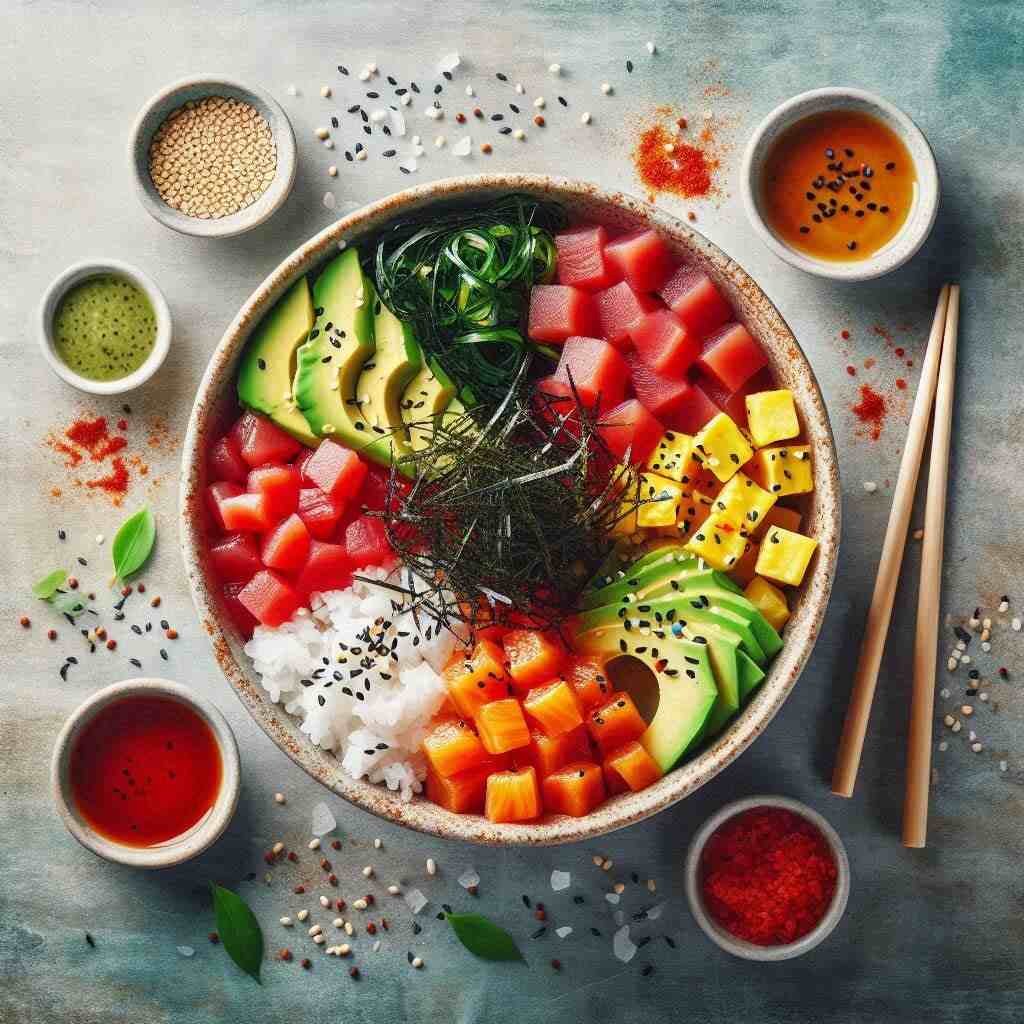
The spicy mayo poke bowl recipe nyt home cooks are searching for has one defining characteristic that separates it from the squeeze-bottle condiment at a generic sushi chain: it holds its shape, maintains a consistent glossy sheen, and flows with controlled viscosity rather than breaking into oil lines across the surface of the bowl. That behavior is entirely a product of the emulsion chemistry — specifically, the type of mayonnaise base used and the sequence in which the acid and heat components are introduced.
The Kewpie Advantage
Japanese Kewpie mayonnaise is not the same product as Western whole-egg mayonnaise, despite superficial similarities. The structural differences are significant and directly determine performance in a poke application.
Standard Western mayo (Hellmann’s, Best Foods) uses whole eggs — both yolk and white — as the emulsifying base. The egg white contributes water content and a looser protein network, resulting in a mayo with relatively low yolk-fat density. This produces a pale, fluffy emulsion that is excellent on sandwiches but lacks the concentrated richness needed to cling to the slick surface of raw, glossy fish.
Kewpie uses only egg yolks — no whites — at a significantly higher concentration relative to oil. Egg yolks contain lecithin, the phospholipid that acts as the primary emulsifier: one end of the lecithin molecule binds to water, the other to fat, creating the stable water-in-oil suspension that is mayonnaise. Higher yolk concentration means more lecithin, which means a more stable, denser emulsion with a distinctly amber-tinted, velvet-like texture.
Kewpie also contains a small amount of MSG (monosodium glutamate), which amplifies the savory depth of the spicy mayo without adding sodium at the level that shoyu does. Combined with rice vinegar (used instead of distilled vinegar in Western mayo), the result is a richer, more complex base that enhances rather than competes with the shoyu dressing already on the fish.
Use Western mayo and your spicy drizzle will slip off the fish. Use Kewpie and it adheres, coating each piece with a continuous glossy film.
Heat Integration Curves
Sriracha is not simply “hot sauce” from an emulsion chemistry standpoint. It contains organic acids — primarily acetic acid from fermentation — and capsaicin oils suspended in a vinegar-chili paste matrix. When added to a fat-based emulsion like mayonnaise, these organic acids can disrupt the lecithin bridges holding the water and fat molecules in suspension, particularly when introduced rapidly or at high concentration.
This is why poke bowl spicy mayo “breaks” in so many home kitchens — clear lines of yellow oil separating out across the top of the mixture, leaving a grainy, curdled paste underneath. The cook added Sriracha directly to mayo and stirred aggressively, destabilizing the emulsion before the acid could integrate gradually.
The correct protocol: introduce heat last, slowly, and always into a pre-conditioned fat base. The acid pre-blend (see the Emulsion Integrity Sequence below) loosens the mayo’s protein network uniformly before the Sriracha’s acidity arrives, giving the lecithin bridges enough flexibility to accommodate the new acid environment without fracturing.
Chili oil — a cleaner alternative to Sriracha — is easier to integrate because it delivers capsaicin without the high acetic acid load. For maximum control over heat level and separation risk, use a combination: 60% Sriracha for flavor complexity, 40% chili oil for capsaicin delivery.
Viscosity Engineering
A spicy mayo that pours correctly from a squeeze bottle in a restaurant differs from a home kitchen version primarily in viscosity management. Professional kitchens thin their base to a specific flow point — one that produces a clean, unbroken drizzle line rather than a clumpy, interrupted glob.
Mirin is the preferred thinning agent because it adds slight sweetness that balances the heat, and its water-alcohol-sugar composition integrates into the fat base without disrupting the emulsion. Add it in 0.25 tsp increments, whisking thoroughly between additions. Stop when the mixture flows freely from a spoon in a continuous ribbon rather than dropping in heavy clumps.
Fresh citrus juice (yuzu, lime, or lemon) achieves similar viscosity reduction while adding a bright acid counterpoint to the richness of the yolk base. Use sparingly — the acid load must remain below the emulsion’s tolerance threshold. Never exceed 0.5 tsp of citrus juice per 3 tablespoons of mayo base without pre-conditioning with the acid pre-blend step.
Preventing Emulsion Failure
Emulsion failure in stored spicy mayo — the separation that occurs when a squeeze bottle sits in the refrigerator overnight — results from two mechanisms: fat crystallization as temperatures drop, and gravitational separation as the heavier water-phase molecules settle toward the bottle bottom.
Both are preventable. Keep the squeeze bottle upright in the refrigerator, never inverted. Shake vigorously before each use, ideally with a stainless steel blending ball inside the bottle. Never store spicy mayo adjacent to the refrigerator door — temperature fluctuation from door opening accelerates the crystallization-and-separation cycle.
THE EMULSION INTEGRITY SEQUENCE (PREVENTING OIL SEPARATION)
Step 1 — The Lecithin Foundation: Always start with 100% Japanese Kewpie Mayo inside a chilled stainless steel bowl. The high concentration of egg yolks acts as a structural stabilizer. The bowl must be cold — warm surfaces accelerate fat molecule mobility and increase separation risk.
Step 2 — The Acid Pre-Blend: Whisk in 0.5 tsp of unseasoned rice vinegar and 0.5 tsp of mirin directly into the mayo before introducing any heat elements. This loosens the protein chains uniformly, creating a more flexible emulsion matrix that can accommodate the Sriracha’s acidity without fracturing.
Step 3 — The Slow Capsaicin Stream: Slow-pour your Sriracha into the center of the bowl in a paper-thin stream while maintaining a continuous, rapid figure-eight whisking motion. This prevents the heavy capsaicin oils from creating a localized acid concentration that breaks the delicate water-in-fat suspension.
Step 4 — The Squeeze Bottle Test: Pour the finished mixture into a clear squeeze bottle. Rest it in an ice bath for 7 minutes prior to service. If any clear separation lines form at the neck, shake vigorously with a clean stainless steel blending ball to instantly re-emulsify before plating.
The Thermodynamic Paradox: Warm Rice vs. Chilled Condiments
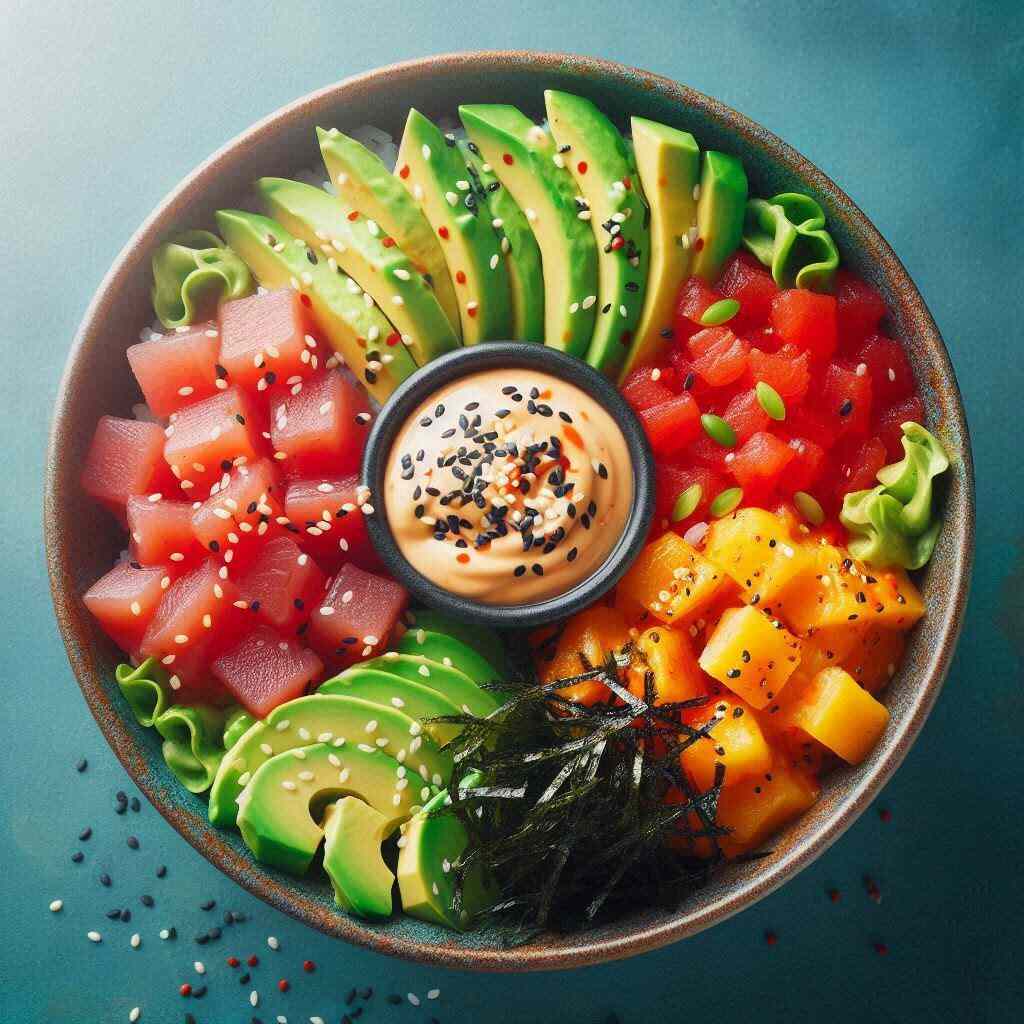
This is the single largest gap in competitor poke bowl content — and the primary reason carefully made condiments produce a disappointing bowl at home. Every recipe that instructs you to “assemble the bowl and drizzle with dressing” without addressing thermal sequencing is ignoring the physics of what actually happens when cold fat-based condiments contact freshly steamed sushi rice at 170°F–190°F (76°C–88°C).
Why Aromatics Disappear
Toasted sesame oil’s flavor impact comes from its volatile aromatic compounds — specifically pyrazines, furans, and thiophenes produced during the roasting of the sesame seeds. These molecules are characterized by extremely low boiling points relative to water. When sesame oil contacts a hot surface, these aromatic compounds flash off — transitioning rapidly from liquid to vapor — and escape into the air above the bowl. The result: the characteristic toasted sesame aroma dissipates entirely in seconds, leaving behind only the base lipid profile without the signature flavor complexity.
This evaporation threshold begins at temperatures above approximately 140°F (60°C) — well below the surface temperature of freshly cooked sushi rice. By the time your poke bowl reaches the table, assembled incorrectly, the sesame aromatics are gone.
The same mechanism applies to the ginger compounds in the dressing (gingerols convert to less aromatic shogaols under sustained heat) and to the top-note brightness of the rice vinegar buffer (acetic acid volatilizes rapidly above 118°F/48°C).
Fat Melting Dynamics
Beyond aromatic loss, the direct contact of cold sesame oil or chilled spicy mayo with hot rice creates a second structural failure: the fat emulsion melts and spreads. Cold sesame oil has a defined viscosity that allows it to coat fish surfaces in a controlled, clinging film. When that same oil hits hot rice, viscosity drops rapidly — the oil becomes fully mobile and migrates freely, soaking into the rice grains rather than maintaining its position as a surface coating on the fish.
Spicy mayo behaves even more catastrophically on hot surfaces. The lecithin bridges in the emulsion weaken dramatically above approximately 95°F (35°C). An emulsion that was carefully constructed to remain stable at refrigerator temperature breaks almost immediately on hot rice, separating into visible oil pools and protein solids.
Restaurant Assembly Protocol
High-end poke bars avoid all of these thermal failure modes through a disciplined, sequenced assembly protocol that uses dry seasonings as a thermal buffer layer:
- Rice base — freshly cooked, placed in the bowl immediately
- Furikake — scattered generously over the hot rice surface while still steaming. Furikake’s combination of sesame, nori, and dried fish particles acts as both a flavor layer and a partial thermal insulator, reducing the direct surface temperature the subsequent ingredients will encounter
- Shredded nori — adds additional dry insulation while contributing oceanic umami
- Marinated fish cubes — placed on top of the nori layer, never directly on the hot rice. The dry layer reduces the surface temperature the fish contacts from ~170°F to approximately 100°F–110°F (38°C–43°C) — below the threshold for osmotic acceleration and fat breakdown
- Shoyu dressing — applied to the fish directly, not poured onto the rice
- Spicy mayo drizzle — applied last, from a squeeze bottle, in controlled drizzle lines across the fish surface only
This sequence ensures that your carefully calibrated condiment system performs exactly as designed — the volatiles stay in the food, the emulsions hold, and the fish stays firm.
Frequently Asked Kitchen Questions
What is the best soy sauce brand for poke bowls?
The best soy sauce brand for poke depends on the style of bowl you’re trying to create, but for most home cooks, Yamasa Koikuchi Shoyu remains the gold standard because of its deep fermentation profile and balanced umami intensity.
- Yamasa Koikuchi Shoyu — Best overall choice. Rich fermentation character, layered umami, and excellent integration with sesame oil.
- Kikkoman Koikuchi — Best widely available option. Consistent quality, accessible pricing, and dependable performance in both marinades and finishing sauces.
- Premium Tamari — Best gluten-free option. Cleaner finish, slightly sweeter character, and less wheat influence.
If you’re working with fatty tuna or salmon, Yamasa’s stronger umami backbone helps support the richness of the fish. For lighter proteins such as yellowtail or scallops, Tamari often creates a cleaner finish. Kikkoman sits comfortably in the middle and remains the easiest recommendation for most U.S. kitchens.
Avoid reduced-sodium soy sauces when making poke. Lower sodium often means reduced flavor concentration, which weakens the dressing’s ability to create the characteristic savory depth associated with premium poke bars.
Can I store leftover mixed poke dressing?
Yes, but storage quality depends heavily on how well you protect the dressing from oxygen, heat, and moisture contamination.
- Store the dressing in an airtight glass container whenever possible.
- Keep it in the coldest area of the refrigerator rather than the door shelves.
- Use within 3–4 days for optimal flavor quality.
The biggest threat is oxidation. Toasted sesame oil contains aromatic compounds that gradually break down when exposed to air. As oxidation progresses, the dressing loses its nutty aroma and begins tasting flat or stale.
Warning signs include:
- Reduced sesame aroma
- Duller color
- Noticeably muted flavor
- Slight bitter aftertaste
To extend quality, place plastic wrap directly against the surface of the dressing before sealing the container. This reduces oxygen exposure and slows flavor degradation.
If the dressing develops an unusual odor, visible separation that will not remix, or any sign of spoilage, discard it immediately and prepare a fresh batch. Because poke is often paired with raw seafood, freshness standards should remain especially strict.
How do I incorporate a wasabi aioli drizzle without completely overpowering the delicate raw tuna?
The key is restraint. Wasabi should function as an aromatic accent rather than the dominant flavor component.
For tuna, keep the ratio at approximately 0.5 teaspoon of wasabi per 3 tablespoons of aioli base. This creates gentle heat while preserving the natural sweetness and mineral complexity of the fish.
Different seafood benefits from different intensity levels:
- Tuna — Lightest application. Thin drizzle only.
- Yellowtail — Moderate application. The richer texture can handle slightly more wasabi.
- Salmon — Most tolerant. The natural fat content buffers wasabi heat effectively.
To maintain balance:
- Add a small amount of honey or mirin to soften sharp edges.
- Apply the aioli in thin lines rather than broad coverage.
- Keep the wasabi drizzle separate from the primary shoyu dressing.
A properly balanced wasabi aioli should appear in the background of the flavor profile. If the first thing you notice is heat rather than fish quality, the drizzle is too aggressive and should be reduced.
Engineering the Perfect Bite: Final Assembly Blueprint
The poke bowl condiment nyt home cooks spend hours researching ultimately delivers its value in a single, well-constructed bite. That experience — the firm, silky fish, the glossy umami coating, the heat-controlled background richness of a properly emulsified mayo drizzle — is entirely the product of three controlled variables working in sequence: ratio precision, emulsion integrity, and thermal management.
Ratio precision means using the Master Condiment Scaling Matrix as your starting point every single time, then adjusting for specific fish variety (fatty tuna tolerates more sesame oil than lean albacore; scallops require a shorter dressing window than salmon). Emulsion integrity means following the four-step Emulsion Integrity Sequence without improvising the order — the lecithin foundation, the acid pre-blend, the slow capsaicin stream, and the ice-bath stability test exist because each step prevents a specific failure mode. Thermal management means executing the six-stage assembly protocol with the dry buffer layer in place before a single drop of condiment touches the bowl.
What separates the NYT Cooking poke bowl from the average home version is not the quality of the fish. It’s the precision of the condiment system around the fish. Professional kitchens treat each sauce as an engineered component with defined behavior under specific conditions. Apply that same discipline to your preparation — measure, sequence, and execute — and the result replicates the premium poke bar experience with consistency that improvisation never achieves.
Your condiment system is the architecture. Build it with precision, and every bowl you make will reflect that discipline in the first bite.