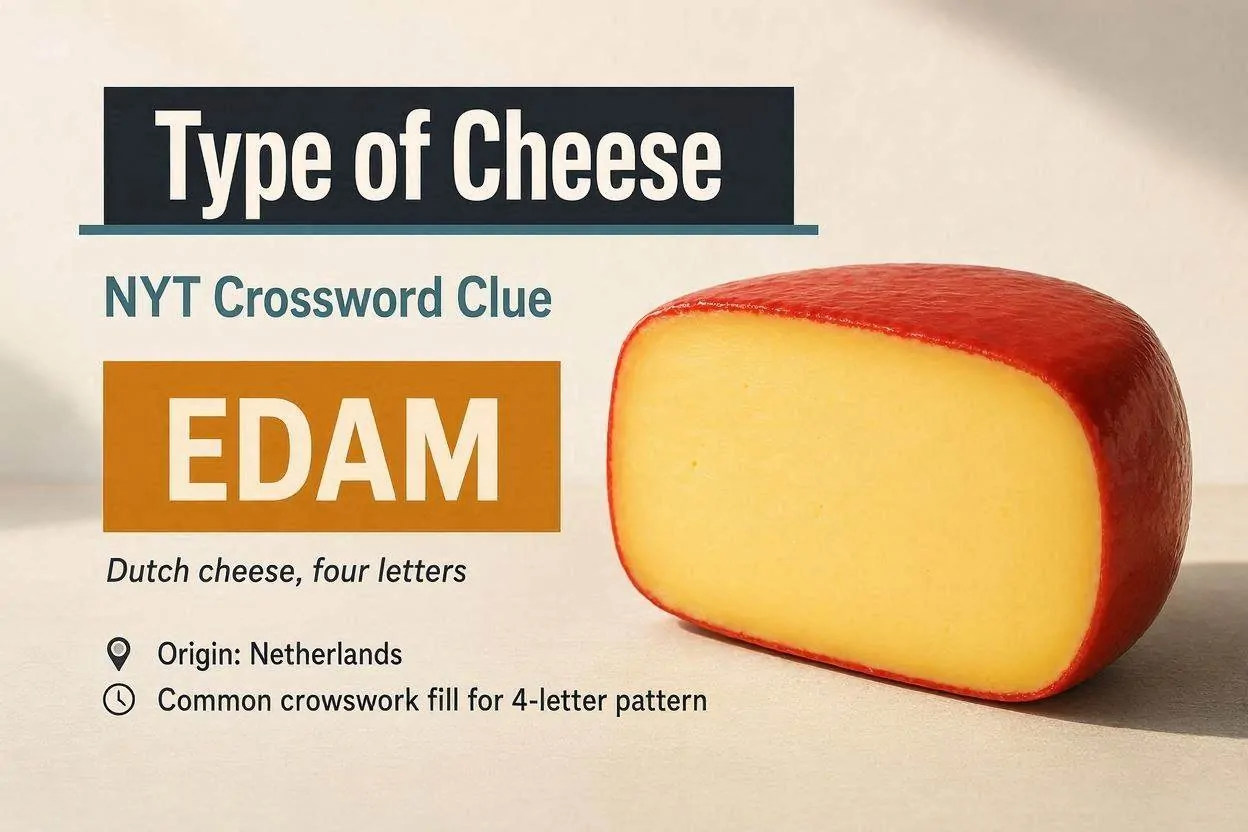
Type of Cheese NYT Crossword Clue Explained
You would think a clue like “type of cheese” should be easy. After all, everybody knows cheese. Brie, Gouda, feta, cheddar — how hard could it be?
Then the crossword grid fights back.
Suddenly, your confident answer does not fit the crossings. A simple clue becomes the last stubborn square blocking puzzle completion. That tiny moment explains why “type of cheese NYT crossword clue” frustrates so many solvers despite looking straightforward on the surface.
The reality is more interesting than most players realize. Crossword constructors do not choose cheese names randomly. They choose them because certain words fit puzzle architecture perfectly. Some cheeses appear again and again because their letter patterns solve difficult grid problems efficiently. Once you understand that hidden system, crossword solving starts feeling far less chaotic.
And honestly? That realization changes everything about how you approach puzzles.
Type of Cheese NYT Crossword Clue: Quick Answer
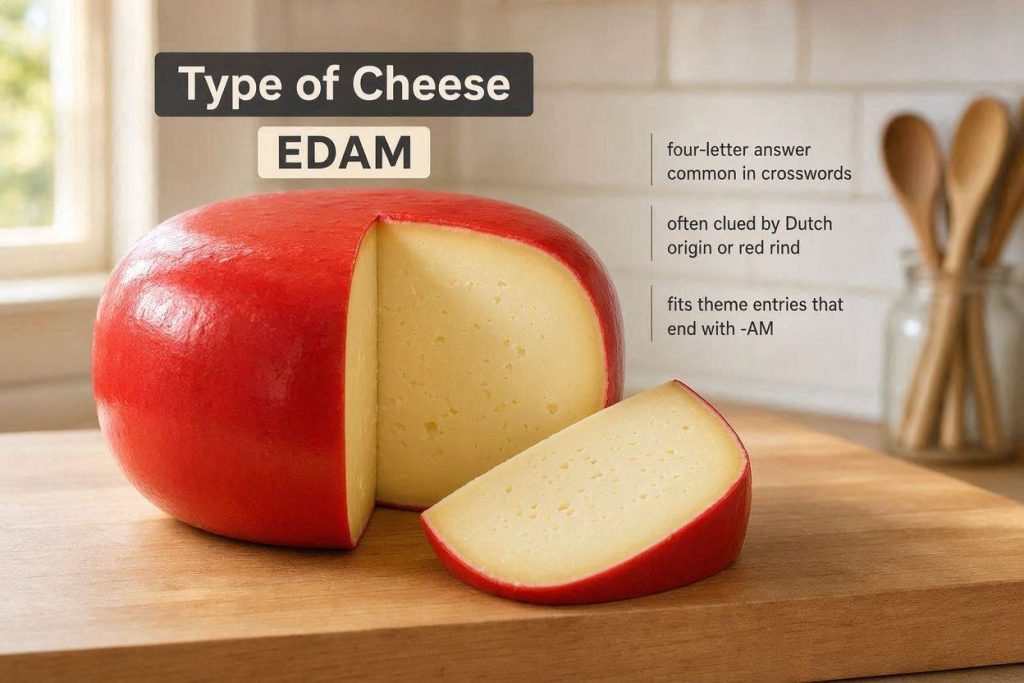
Type of cheese NYT crossword clue commonly leads to answers like “Brie,” “Edam,” “Feta,” “Gouda,” or “Asiago.” The correct answer depends on the puzzle’s letter count, crossing letters, and clue difficulty. Short vowel-heavy cheese names appear most frequently because crossword constructors prefer flexible words that fit complex grid patterns.
Why Cheese Clues Appear So Often in Crossword Puzzles
At first glance, it feels random. Why would crossword puzzles repeatedly use cheese clues when thousands of other food words exist?
The answer comes down to construction mechanics. Crossword grids behave almost like engineering projects. Every word must connect smoothly with surrounding answers while maintaining symmetry, spacing, and solvability. Constructors constantly search for words that function like puzzle glue.
Cheese names often solve that problem beautifully.
What Makes Cheese Names Grid-Friendly
Words such as “Brie” and “Edam” contain balanced vowel patterns that allow easier crossings. Think of vowels as flexible joints in a machine. Too many harsh consonants create rigid puzzle sections that become difficult to construct cleanly.
That is why short cheese words appear repeatedly:
- Brie
- Edam
- Feta
- Gouda
These are not necessarily the world’s most famous cheeses. They are simply excellent crossword tools.
💡 Pro Tip:
If you encounter a four-letter food clue in a crossword, mentally test Brie, Edam, and Feta early. Constructors return to them constantly because they solve awkward corners efficiently.
Why Constructors Prefer Short Cheese Words
Crossword puzzles reward efficiency. A short answer with useful vowels can unlock multiple surrounding words simultaneously.
Picture a crossword grid like city traffic. Some words create bottlenecks. Others keep movement flowing smoothly. Cheese names often function like open highways for constructors trying to connect difficult sections.
The Hidden Mathematics Behind Crossword Fill
Here is something casual solvers rarely notice: crossword construction contains an enormous amount of hidden probability calculation.
A constructor may choose “Edam” over another cheese simply because:
- E crosses efficiently
- D balances surrounding consonants
- A increases flexibility
- M finishes a difficult corner neatly
That decision has less to do with food and more to do with structural optimization.
📊 Did You Know?
The word “Edam” appears disproportionately often in American crosswords because its vowel-consonant balance makes it mathematically useful for grid design.
How Repeated Crossword Answers Train Solvers
Over time, crossword solving becomes pattern recognition rather than trivia recall.
A veteran solver sees:
“Dutch cheese” → instantly thinks Edam.
No conscious analysis required.
That automatic recognition matters because solving speed compounds across the entire puzzle. One instantly solved clue unlocks another, then another, until the whole grid suddenly opens up.
👉 Related Reading: Common Four-Letter Crossword Answers Every Solver Should Know
Now the fascinating part begins. Not all cheese clues behave the same way across the week.
Most Common Answers for Type of Cheese NYT Crossword Clue
Some cheese answers dominate crossword culture because constructors trust them repeatedly.
Four-Letter Cheese Crossword Answers
Four-letter answers appear especially often because they fit compact puzzle sections efficiently.
The most common include:
- Brie
- Edam
- Feta
These answers appear so frequently that experienced solvers practically memorize them as permanent crossword vocabulary.
Five and Six-Letter Crossword Cheese Answers
Longer cheese names also appear regularly, especially in larger or more difficult puzzles.
Common examples include:
- Gouda
- Colby
- Asiago
- Romano
These answers give constructors more flexibility when designing themed sections or balancing unusual letter distributions.
Why Vowel-Heavy Words Dominate Puzzles
Vowels behave like connectors inside crossword architecture. They create smoother intersections and reduce impossible letter combinations.
Imagine building a bridge. Flexible materials help sections connect cleanly. Crossword vowels serve a similar role.
That explains why:
- Asiago appears often
- Gouda fits many grids
- Brie remains extremely common
⚠️ Common Mistake:
Many beginners assume constructors choose words based only on popularity. In reality, grid usability often matters far more than public familiarity.
Crossword Cheese Answer Comparison Table
| Cheese Answer | Letters | Crossword Frequency | Why Constructors Like It |
|---|---|---|---|
| Brie | 4 | Very High | Balanced vowels |
| Edam | 4 | Very High | Excellent crossings |
| Feta | 4 | High | Flexible ending vowels |
| Gouda | 5 | Medium | Recognizable structure |
| Asiago | 6 | Medium | Vowel-rich composition |
| Colby | 5 | Medium | Useful “Y” ending |
| Swiss | 5 | Medium | Familiar clue association |
🔑 Key Takeaway:
Crossword cheese answers repeat because they solve construction problems efficiently, not because editors love dairy products.
But here is where crossword psychology becomes genuinely interesting…
How NYT Crossword Difficulty Changes Cheese Clues
A Monday crossword clue and a Saturday crossword clue can reference the exact same cheese while feeling completely different to solve. That difference matters more than most players realize.
Beginners often assume harder puzzles use obscure answers. Surprisingly, that is usually wrong. The answer itself may remain simple. The clue wording becomes the real challenge.
That subtle distinction separates experienced solvers from frustrated guessers.
Monday and Tuesday Clue Behavior
Early-week puzzles prioritize accessibility. The clues are direct, literal, and designed to help solvers build confidence quickly.
Examples include:
- “Soft French cheese”
- “Greek salad cheese”
- “Dutch cheese”
The constructor wants the solving experience to feel smooth and rewarding. A clue like “French cheese” almost screams Brie at experienced players because the puzzle intentionally avoids excessive trickery early in the week.
Think of Monday puzzles like training wheels. They teach recurring crossword vocabulary gradually.
Thursday and Saturday Misdirection
Now the puzzle starts playing mind games.
Thursday through Saturday puzzles introduce:
- Wordplay
- Double meanings
- Cultural references
- Indirect phrasing
- Hidden context shifts
A simple answer like “Brie” might suddenly appear behind a clue involving:
- Wheels
- French regions
- Party platters
- Melted appetizers
- Wine pairings
Here is where many solvers panic unnecessarily. They assume the answer must be obscure because the clue feels confusing.
Usually, it is not.
💎 Expert Insight:
Hard crossword puzzles often disguise ordinary answers behind unusual perspectives. Constructors prefer clever interpretation over impossible trivia.
Why Easy Answers Can Hide Inside Hard Clues
Crossword difficulty works a bit like stage magic. Your attention gets redirected away from the obvious answer.
For example:
- “Wheel option” may hint at cheese rather than transportation
- “Fondue ingredient” may secretly point toward Swiss
- “Wine-night selection” could indicate Brie
The answer remains simple. The interpretation changes.
That distinction explains why elite crossword solvers focus heavily on clue tone and puzzle day before committing to an answer.
🔑 Key Takeaway:
Hard crossword puzzles rarely demand impossible knowledge. They demand flexible thinking.
👉 Related Reading: How NYT Crossword Difficulty Changes Throughout the Week
And once you recognize that pattern, your solving speed starts improving dramatically.
How to Solve Type of Cheese NYT Crossword Clue Faster
Most crossword beginners solve reactively. Experienced solvers solve strategically.
That single difference changes everything.
Step 1: Analyze Letter Count
Letter count eliminates huge numbers of possibilities immediately.
If the answer contains:
- 4 letters → Brie, Edam, Feta
- 5 letters → Gouda, Colby
- 6 letters → Asiago, Romano
This process transforms solving from random guessing into structured elimination.
Crossword experts constantly narrow possibilities rather than chasing perfect certainty instantly.
Step 2: Use Crossing Letters Strategically
Crossings often matter more than the clue itself.
Imagine you already have:
_ R I E
At that point, the clue barely matters anymore. Brie becomes obvious because the pattern strongly limits alternatives.
Experienced solvers therefore prioritize:
- Confirmed vowels
- High-frequency consonants
- Repeated crossword patterns
The puzzle becomes less like trivia and more like decoding a language system.
💡 Pro Tip:
Crossword vowels act like anchors. One confirmed vowel can instantly eliminate dozens of incorrect possibilities.
Step 3: Identify Clue Tone and Puzzle Level
Would a Monday puzzle use an obscure Alpine cheese? Probably not.
Would a Saturday puzzle intentionally disguise Brie behind a misleading food metaphor? Absolutely.
Puzzle day changes clue interpretation dramatically.
This is where constructor psychology enters the solving process. The clue is not just asking a question. It is attempting to guide — or misguide — your assumptions.
Step 4: Recognize Recurring Crossword Patterns
Crossword culture contains recurring “fill words” that appear constantly:
- Oreo
- Erie
- Etna
- Edam
- Brie
These words survive because they fit grids beautifully.
Think of them like reusable building materials. Constructors return to them repeatedly because they solve structural problems efficiently.
⚠️ Common Mistake:
Many solvers ignore repeated crossword vocabulary because they assume every puzzle requires fresh knowledge. In reality, repetition is one of the biggest shortcuts in puzzle solving.
The Momentum Effect Most Solvers Ignore
One correct answer often unlocks an entire section.
Picture this:
You solve “Brie.” Suddenly:
- Three crossing clues become easier
- A nearby phrase becomes obvious
- Grid momentum returns instantly
That cascading effect explains why crossword veterans value familiar fill words so highly.
👉 Related Reading: Best Crossword Solving Techniques for Faster Completion
But wait — there is another psychological trap that destroys solving speed for many players.
Common Mistakes Crossword Solvers Make
Sometimes the puzzle is not the problem. The solving mindset is.
Many crossword frustrations come from predictable mental habits that trap beginners repeatedly.
Getting Emotionally Attached to One Answer
You think the answer must be Gouda.
The crossings disagree. But instead of adapting, you keep forcing the wrong answer because it “feels right.”
Sound familiar?
Crossword solving rewards flexibility, not stubbornness. Expert solvers abandon weak assumptions quickly and test alternatives aggressively.
That mental agility matters more than raw vocabulary size.
Ignoring Puzzle Difficulty Context
A clue never exists in isolation. Puzzle day changes everything.
A Monday clue behaves differently from:
- Thursday trick puzzles
- Friday themeless puzzles
- Saturday misdirection-heavy puzzles
Beginners often ignore this context completely. Experienced solvers treat puzzle difficulty as part of the clue itself.
Forgetting Constructor Psychology
Constructors are not random clue generators. They actively shape the solving experience.
Sometimes they:
- Increase tension intentionally
- Delay easy clues strategically
- Place familiar answers after difficult sections
- Control solving rhythm psychologically
Professional puzzle editing resembles storytelling more than pure word placement.
💎 Expert Insight:
Constructors frequently place familiar answers like Brie near difficult puzzle regions to prevent solver fatigue and abandonment.
📊 Did You Know?
Many professional crossword constructors test puzzle flow emotionally, not just logically. They want solvers to feel challenged without feeling defeated.
🔑 Key Takeaway:
The best crossword solvers constantly revise assumptions instead of defending them emotionally.
And that realization leads directly into the questions players search most often.
People Also Ask: Type of Cheese NYT Crossword Clue
What is the most common cheese crossword answer?
The most common cheese crossword answers include Brie, Edam, Feta, and Gouda. These cheeses appear frequently because their vowel-heavy structures fit crossword grids efficiently. Constructors often prioritize letter flexibility over food popularity, which explains why certain cheeses repeat across puzzles year after year.
Many experienced solvers recognize these answers instantly because they appear so often in American-style crosswords. That repeated exposure eventually turns them into automatic pattern recognition rather than trivia recall.
Why is Edam common in crosswords?
Edam appears frequently because its letter structure works exceptionally well inside crossword grids. The combination of alternating vowels and consonants gives constructors more flexibility when designing intersecting answers.
Think of Edam like a universal connector piece in a puzzle system. It solves awkward corners cleanly without creating impossible crossing combinations. That structural usefulness makes it one of the most reliable crossword fill words in puzzle construction history.
Is Brie a crossword favorite?
Absolutely. Brie is one of the most recognizable cheese answers in crossword culture because:
- It contains balanced vowels
- It fits four-letter slots perfectly
- It is widely familiar to solvers
- It crosses easily with surrounding answers
Brie also benefits from strong cultural recognition. Even casual players know the word, which allows constructors to use it without making puzzles feel unfair or overly obscure.
💡 Pro Tip:
Whenever you see a four-letter cheese clue in an early-week crossword, test Brie immediately before considering less common options.
How Do Constructors Choose Crossword Words?
Constructors balance several competing goals simultaneously:
- Grid symmetry
- Letter distribution
- Puzzle difficulty
- Theme consistency
- Solver satisfaction
Words like Brie and Edam survive because they help constructors maintain clean puzzle architecture. The process resembles engineering more than simple vocabulary selection.
Here is where it gets fascinating: constructors often choose words not because they are interesting individually, but because they make surrounding clues possible.
Can Beginners Improve Crossword Solving Speed?
Yes — and usually faster than they expect.
The biggest improvement comes from learning recurring crossword patterns rather than memorizing endless trivia. Once you recognize common fill words, clue structures, and constructor habits, solving speed increases naturally.
Beginners often believe elite solvers simply “know more.” In reality, experienced players mostly recognize patterns faster and adapt more flexibly when clues become misleading.
🔑 Key Takeaway:
Crossword expertise depends more on pattern recognition than encyclopedic knowledge.
👉 Related Reading: Beginner Crossword Strategies That Actually Work
But now we reach the part most casual solvers never think about at all.
Advanced Crossword Insights Most Solvers Never Notice
Crossword puzzles quietly train your brain in ways that feel almost invisible while solving.
You are not just filling squares. You are building cognitive shortcuts.
Why Crossword Solving Is Really Pattern Recognition
At first, crossword solving feels like information retrieval. You search your memory for facts and vocabulary.
Over time, though, the process changes completely.
Experienced solvers begin recognizing:
- Common clue rhythms
- Constructor habits
- Predictable letter combinations
- Hidden misdirection structures
The brain gradually transforms solving into probability analysis rather than brute-force guessing.
That shift explains why veteran solvers sometimes answer clues instantly without consciously understanding why the answer feels correct.
📊 Did You Know?
Frequent crossword solving improves linguistic flexibility because the brain repeatedly practices interpreting words through multiple contextual meanings.
The Psychology of Clue Misdirection
Here is something genuinely counterintuitive: the hardest clues often hide the simplest answers.
Constructors exploit mental assumptions constantly.
For example:
- “Wheel selection” may secretly refer to cheese
- “French party snack” could indicate Brie
- “Fondue necessity” may point toward Swiss
The clue manipulates perspective more than knowledge.
Think of crossword clues like optical illusions for language. The answer sits directly in front of you, but the wording nudges your brain toward the wrong interpretation first.
💎 Expert Insight:
Elite crossword solvers actively search for misdirection because they expect constructors to manipulate first impressions intentionally.
How Crossword Puzzles Maintain Solver Momentum
Good puzzles control emotional pacing carefully.
Too many impossible clues in a row? The solver quits.
Too many easy clues? The puzzle becomes boring.
Constructors therefore create rhythm intentionally:
- Difficult sections
- Familiar fill words
- Small breakthrough moments
- Momentum-restoring answers
A simple word like Brie may appear strategically after several difficult clues to give the solver psychological relief.
That pacing system resembles storytelling structure surprisingly closely.
⚠️ Common Mistake:
Many beginners think repeated crossword answers indicate lazy construction. Often the opposite is true. Familiar answers help maintain balance and fairness inside difficult grids.
And now crossword solving faces a major shift that could reshape puzzle design entirely.
The Future of Crossword Solving and AI-Assisted Puzzles
Crossword solving is entering a fascinating transition period.
AI tools can already solve many direct clues rapidly. Databases instantly surface recurring answers. Pattern-recognition systems continue improving every year.
Yet something surprising keeps happening.
Human-style wordplay still confuses automated systems more often than many people expected.
How AI Is Changing Crossword Construction
Constructors understand that searchable clue databases and AI solvers now exist. As a result, many modern puzzles increasingly emphasize:
- Misdirection
- Cultural nuance
- Multi-layered clues
- Conversational ambiguity
- Theme-based interpretation
The puzzle evolves because solving technology evolves.
This creates an interesting arms race between constructor creativity and automated solving assistance.
Why Human Intuition Still Matters
Crossword clues depend heavily on:
- Tone
- Humor
- Context shifts
- Emotional associations
- Cultural understanding
Humans naturally process these layers better than rigid lookup systems.
A clue may technically describe several answers, but human intuition often senses which interpretation “feels” correct within the puzzle’s style and rhythm.
That instinct remains difficult to automate completely.
Future Crossword Trends to Expect
Over the next few years, expect:
- More layered wordplay
- More conversational clues
- More theme-driven puzzles
- Greater emphasis on lateral thinking
- Increased resistance to database solving
Ironically, AI may push crossword puzzles toward becoming even more human creatively.
💡 Pro Tip:
If you want long-term crossword improvement, focus on flexible thinking instead of memorizing answers mechanically. Constructor creativity evolves constantly, but adaptive reasoning always remains valuable.
👉 Related Reading: How AI Is Changing Puzzle Games and Crossword Design
The final piece of this puzzle reveals why crossword solving remains addictive even after decades of repetition.
Conclusion
What looks like a tiny crossword clue often hides an entire system of puzzle psychology, language engineering, and pattern recognition underneath it. The “type of cheese NYT crossword clue” frustrates players not because cheese names are difficult, but because constructors carefully design clues to manipulate assumptions, pacing, and interpretation.
Once you understand why words like Brie, Edam, Gouda, and Feta appear repeatedly, crossword solving starts feeling much less random. You begin recognizing constructor habits, clue rhythms, and recurring answer structures almost instinctively. That shift transforms solving from pure guessing into strategic decoding.
More importantly, crossword improvement usually happens faster than people expect. A beginner who learns common fill words, puzzle-day difficulty patterns, and clue misdirection techniques can dramatically increase solving speed within weeks.
🔑 Key Takeaway:
The real secret behind strong crossword solving is not memorizing endless trivia. It is learning how constructors think.
As crossword puzzles continue evolving alongside AI-assisted solving tools, constructors will likely become even more creative, layered, and psychologically clever. And honestly, that ongoing battle between human creativity and pattern recognition may be exactly what keeps crossword culture alive for decades to come.
The next time you see “type of cheese” in a puzzle grid, you probably will not just see cheese anymore — you will see the constructor’s strategy hiding behind it.
Frequently Asked Questions
FAQ 1: What is the answer to type of cheese NYT crossword clue?
The answer to “type of cheese NYT crossword clue” commonly includes Brie, Edam, Feta, Gouda, or Asiago depending on the puzzle’s letter count and crossing clues. Four-letter answers like Brie and Edam appear most frequently because they fit crossword grids efficiently. The correct solution always depends on puzzle structure, clue style, and surrounding answers.
FAQ 2: Why does Brie appear so often in crossword puzzles?
Brie appears frequently because its balanced vowel structure makes crossword construction easier. Constructors prefer words that cross smoothly with other answers, and Brie provides excellent flexibility inside compact puzzle sections. It is also widely recognizable, which helps maintain fairness for casual solvers while still supporting complex grid architecture.
FAQ 3: Why is Edam considered a crossword favorite?
Edam has become a classic crossword fill word because its alternating consonants and vowels solve difficult grid intersections efficiently. Many constructors rely on it to stabilize awkward puzzle corners. Over time, regular crossword solvers begin recognizing Edam instantly because it appears repeatedly across many American-style crossword puzzles.
FAQ 4: Are crossword cheese clues harder later in the week?
Yes. Early-week NYT puzzles usually clue cheese answers directly, while Thursday through Saturday puzzles often use wordplay, indirect references, or misdirection. The answer itself may remain simple, but the clue interpretation becomes significantly more challenging as puzzle difficulty increases throughout the week.
FAQ 5: What cheeses appear most in NYT Mini crosswords?
The NYT Mini Crossword frequently uses short and recognizable cheese answers such as Brie, Feta, and Edam because the smaller grid requires highly flexible words. Mini puzzles prioritize compact answers with balanced vowels, making these cheeses especially useful for constructors working within limited puzzle space.
FAQ 6: How can beginners solve crossword clues faster?
Beginners improve fastest by learning recurring crossword vocabulary, analyzing letter counts carefully, and using crossing letters strategically. Instead of treating every clue like brand-new trivia, experienced solvers recognize repeated patterns and common fill words. That pattern recognition dramatically increases solving speed over time.
FAQ 7: Why do crossword constructors repeat the same answers?
Constructors repeat certain answers because some words fit puzzle architecture exceptionally well. Crossword grids require careful balance between symmetry, solvability, and letter distribution. Familiar answers like Brie and Edam remain popular because they consistently help constructors solve structural design problems efficiently.
FAQ 8: Is crossword solving really about intelligence?
Crossword solving depends more on pattern recognition, flexibility, and clue interpretation than raw intelligence alone. Skilled solvers develop familiarity with constructor habits, repeated answer structures, and common wordplay techniques. Over time, solving becomes less about memorizing facts and more about recognizing puzzle behavior quickly.
FAQ 9: Will AI change crossword puzzle design in the future?
AI-assisted solving tools are already influencing crossword construction. Many constructors now emphasize layered wordplay, conversational clues, and cultural nuance to challenge automated systems. Future crossword puzzles will likely become more creative and psychologically complex as constructors adapt to increasingly advanced solving technologies.
FAQ 10: Do hard crossword clues always have obscure answers?
No — and this is one of the biggest misconceptions beginners have. Difficult crossword clues often hide very simple answers behind misleading wording or unusual perspectives. A Saturday puzzle may disguise “Brie” behind clever wordplay, making interpretation difficult even though the answer itself remains familiar.