Cascais
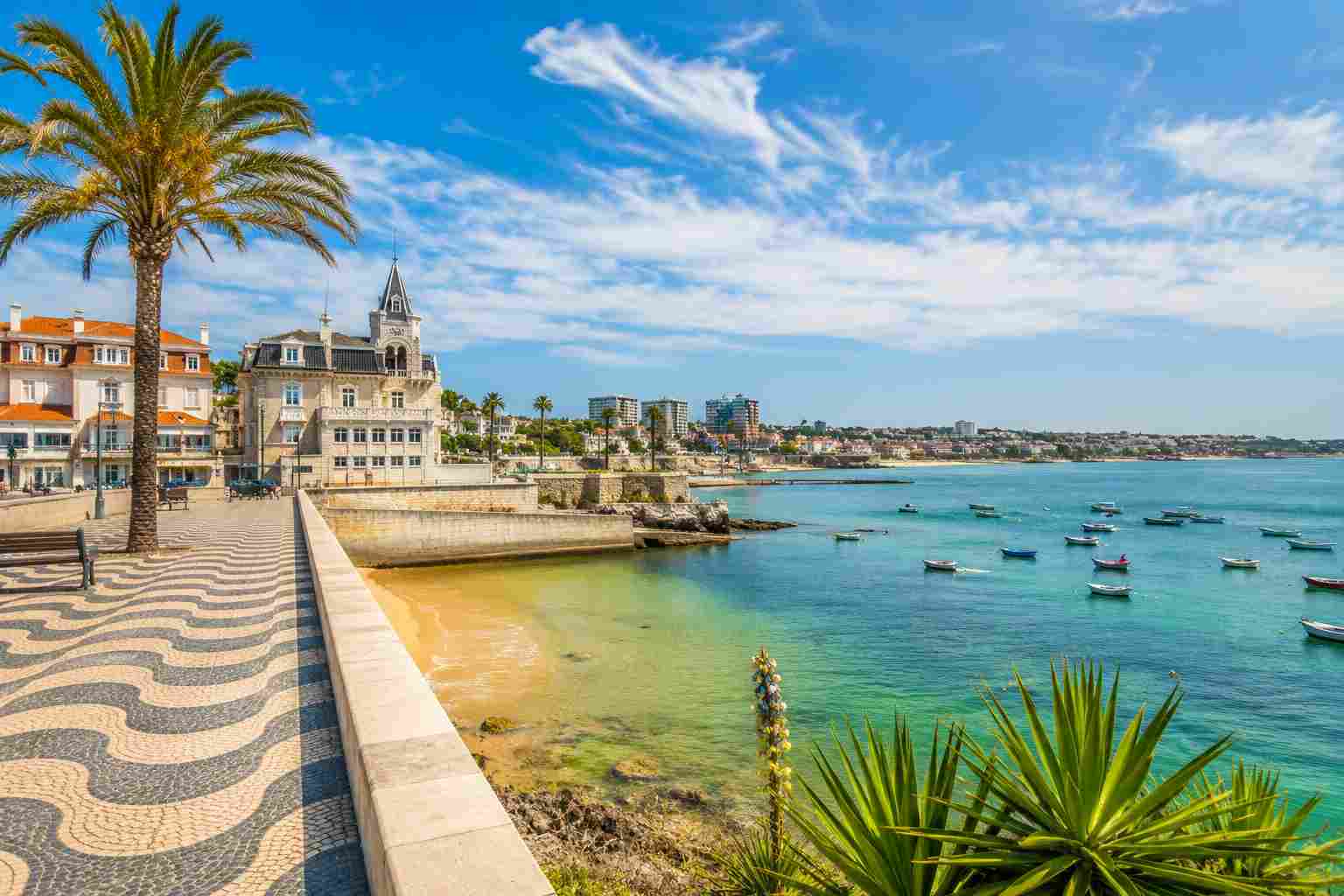
Nestled on Portugal’s Atlantic coast, Cascais is one of those destinations that effortlessly combines the elegance of a historic seaside town with the relaxed atmosphere of a modern coastal escape. Once a modest fishing village, it has evolved into a vibrant municipality where golden beaches, a charming historic center, scenic promenades, cultural attractions, and dramatic ocean landscapes exist within easy walking distance of one another. This unique balance has made Cascais one of the country’s most admired destinations for both domestic and international travelers.
For many first-time visitors to Portugal, Cascais initially appears to be a simple beach town near Lisbon. In reality, it offers a far richer experience. Its location on the renowned Portuguese Riviera, combined with centuries of maritime history, royal heritage, contemporary culture, and excellent accessibility, allows visitors to enjoy far more than a traditional seaside holiday. Whether your interests lie in history, photography, architecture, coastal walks, local cuisine, or simply slowing down beside the Atlantic Ocean, Cascais provides an experience that extends well beyond its beaches.
One of Cascais’ greatest strengths is the way it complements rather than competes with Portugal’s other iconic destinations. Lisbon offers the energy of a historic European capital, while Sintra captivates visitors with romantic palaces and forested hills. Cascais adds another dimension entirely: an elegant coastal setting where maritime heritage, everyday Portuguese life, and Atlantic scenery come together in a destination that feels both sophisticated and welcoming. Many travelers naturally combine these places into a single itinerary because each offers a distinctly different perspective on Portugal.
Accessibility is another reason Cascais consistently ranks among Portugal’s most recommended destinations. Located approximately 30 kilometers (19 miles) west of central Lisbon, it is easily reached by the direct suburban rail line operated by Comboios de Portugal (CP) from Cais do Sodré Station, making it one of the country’s most convenient coastal excursions. At the same time, visitors who choose to stay overnight often discover a quieter side of Cascais after many day-trippers return to Lisbon, enjoying peaceful waterfront walks, relaxed evenings in the historic center, and a slower pace that is difficult to experience during the busiest hours of the day.
Unlike guides that immediately jump into lists of attractions, this article begins by helping you understand what Cascais is and why it has become one of Portugal’s defining coastal destinations. From there, you’ll learn how it fits into a wider Portugal itinerary, which attractions deserve priority, which beaches best match your travel style, whether a day trip is enough, how much you should budget, when to visit, and how Cascais compares with nearby destinations such as Lisbon and Sintra. The goal is not simply to recommend places to see, but to provide the context and decision-making guidance needed to determine whether Cascais is the right destination for your own travel goals.
Throughout this guide, recommendations are grounded in the destination’s geography, visitor experience, and the planning principles outlined by official tourism and transport authorities where appropriate, while recognizing that the best itinerary ultimately depends on your interests, available time, and preferred pace of travel. By the end, you should have a clear understanding of what makes Cascais distinctive, how it fits within western Portugal, and how to plan a visit with confidence before moving on to more specialized topics such as accommodation, dining, or detailed itineraries.
What Is Cascais?
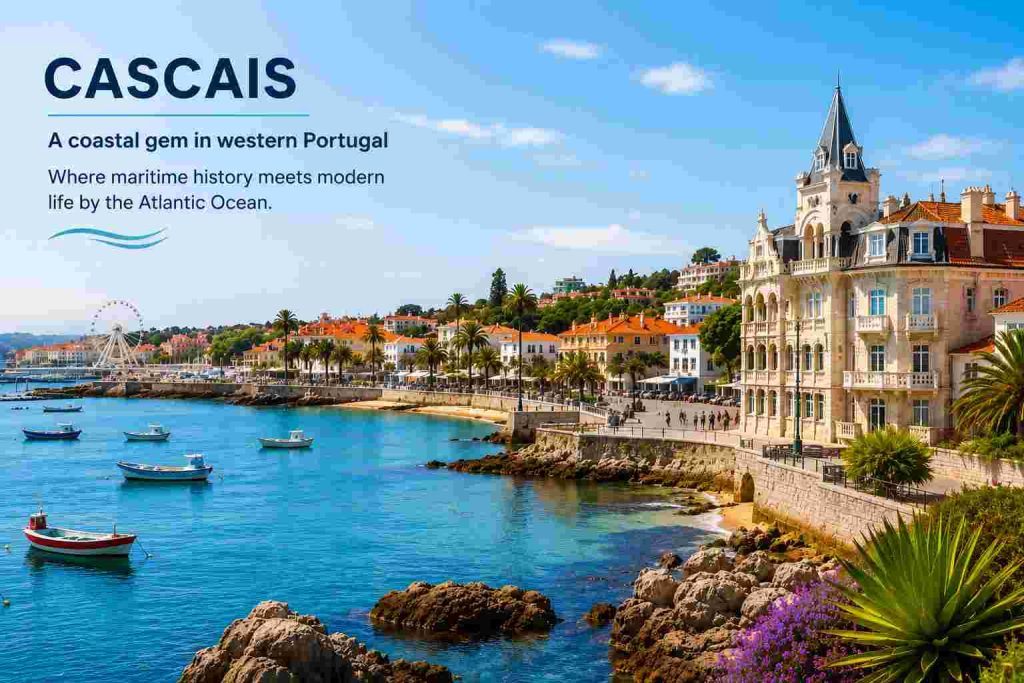
At its core, Cascais is a coastal municipality in western Portugal that combines centuries of maritime history with modern tourism, outdoor recreation, and everyday Portuguese life. Situated where the Tagus Estuary meets the Atlantic Ocean, it has grown from a traditional fishing village into one of Portugal’s most recognized seaside destinations without losing the character that made it distinctive in the first place.
Unlike purpose-built resort towns that exist primarily for tourism, Cascais remains a functioning community where local residents, businesses, fishing traditions, cultural institutions, and visitors share the same streets and waterfront. This balance gives the town a sense of authenticity that many travelers appreciate, particularly those looking for more than beaches and hotels.
Today, Cascais forms part of the greater Lisbon metropolitan area, yet it maintains a personality entirely its own. The town is known for its walkable historic center, attractive marina, oceanfront promenades, elegant architecture, public parks, museums, and easy access to both sheltered family beaches and the windswept Atlantic coastline. Its location also places it at the heart of the Portuguese Riviera, a coastal region long associated with royal retreats, international visitors, and scenic Atlantic landscapes.
Why Is Cascais So Popular?
Cascais appeals to an unusually broad range of travelers because it offers variety without requiring extensive travel between attractions. Within a relatively compact area, visitors can spend the morning exploring narrow historic streets, enjoy lunch overlooking the marina, relax on a beach in the afternoon, and finish the day watching the Atlantic sunset from dramatic coastal cliffs.
This convenience is one of the town’s defining strengths. Many destinations require visitors to choose between culture, nature, or relaxation. Cascais allows them to experience all three in a single day while rarely needing a car once they arrive.
Its popularity has also been shaped by history. During the late nineteenth century, the Portuguese royal family selected Cascais as their summer residence. Their presence encouraged the development of elegant villas, improved infrastructure, and international recognition that gradually transformed the town into one of Portugal’s premier coastal destinations. That legacy is still visible today in the town’s architecture, landscaped public spaces, and refined atmosphere.
Modern visitors are equally attracted by Cascais’ accessibility. Regular rail connections from Lisbon, a pedestrian-friendly layout, and a wide range of accommodation and dining options make it an easy destination for first-time visitors while still rewarding travelers who stay longer.
What Makes Cascais Different from Other Coastal Towns?
Portugal has no shortage of beautiful seaside destinations, yet Cascais occupies a distinctive position because it successfully blends several travel experiences into one destination.
Unlike many beach towns that focus almost exclusively on summer tourism, Cascais remains active throughout the year. Residents continue to use its cafés, markets, parks, and waterfront outside the busiest tourist months, creating a more authentic atmosphere than visitors often expect.
Its coastal scenery is also remarkably varied. Sheltered beaches within Cascais Bay provide calm conditions for swimming and families, while a short drive west leads to Praia do Guincho, where stronger Atlantic winds create an entirely different landscape favored by surfers, windsurfers, and photographers.
Cultural attractions further distinguish Cascais from destinations that rely primarily on their beaches. Museums, historic landmarks, public gardens, art spaces, and maritime heritage sites provide meaningful alternatives for visitors interested in Portuguese history and culture. Places such as the Museu Condes de Castro Guimarães, the Santa Marta Lighthouse Museum, and the vibrant Mercado da Vila contribute to a richer visitor experience that extends beyond the coastline.
Equally important is the town’s relationship with nearby destinations. Cascais is not an isolated attraction but part of a broader travel corridor that includes Lisbon, Estoril, Cabo da Roca, and Sintra. This allows visitors to experience urban culture, Atlantic scenery, dramatic cliffs, royal palaces, and historic seaside communities within a relatively small region.
Is Cascais Just Another Beach Town?
This is one of the most common misconceptions among first-time visitors.
While Cascais is undoubtedly known for its beaches, defining it solely as a beach destination overlooks much of what makes it special. Travelers who come expecting only sun and sand often discover a destination where maritime heritage, elegant architecture, cultural institutions, local markets, coastal walking routes, and everyday Portuguese life are equally important parts of the experience.
The beaches remain a major attraction, but they are best viewed as one element of a much broader destination rather than its sole identity. Visitors interested in photography can explore dramatic Atlantic viewpoints such as Boca do Inferno. History enthusiasts can wander through centuries-old streets and museums that reflect the town’s royal and maritime past. Food lovers can enjoy fresh seafood alongside traditional Portuguese cuisine, while those seeking relaxation often appreciate the slower pace that emerges during the early morning and evening hours after many day-trippers have departed.
For this reason, Cascais consistently appeals to travelers looking for a destination that offers more than a single highlight. It combines natural beauty, cultural heritage, accessibility, and a relaxed coastal atmosphere in a way that few European seaside towns manage to achieve.
By understanding Cascais as a complete destination rather than simply a beach resort, it becomes easier to appreciate why it continues to rank among Portugal’s most recommended places to visit and why so many travelers consider it an essential stop on a broader journey through western Portugal.
Where Is Cascais and Why Its Location Matters
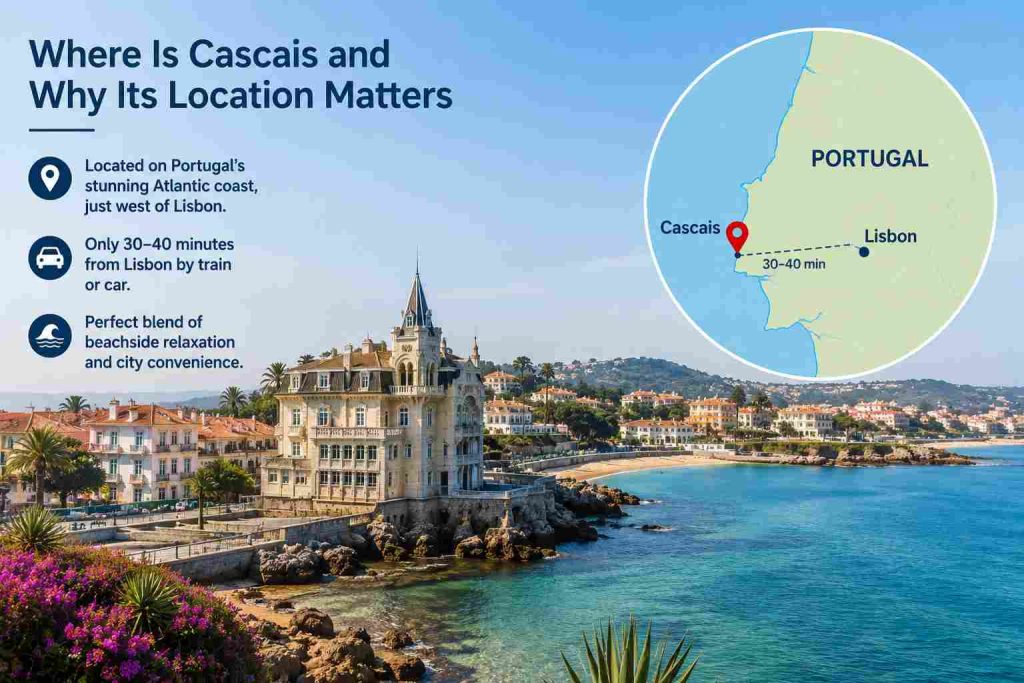
Understanding where Cascais is located is essential because its geography shapes almost every aspect of the visitor experience. Its proximity to Lisbon, position along the Atlantic coast, and relationship with neighboring destinations such as Sintra, Estoril, and Cabo da Roca explain why it consistently appears as one of Portugal’s most recommended travel destinations. Rather than existing in isolation, Cascais forms part of a broader travel ecosystem that allows visitors to experience several distinct sides of Portugal within a relatively small area.
Situated approximately 30 kilometers (19 miles) west of central Lisbon, Cascais occupies a privileged position on Portugal’s Atlantic coastline within the Lisbon metropolitan region. The municipality lies where the Tagus Estuary opens into the Atlantic Ocean, creating a landscape defined by sheltered bays, dramatic coastal cliffs, sandy beaches, and scenic waterfront promenades. This location has influenced Cascais’ development for centuries, first as a fishing community, later as a royal summer retreat, and today as one of Portugal’s leading coastal destinations.
Equally important is Cascais’ place within the Portuguese Riviera, a stretch of coastline historically associated with elegant seaside towns, royal heritage, and Atlantic scenery. While the term “Portuguese Riviera” is sometimes unfamiliar to first-time visitors, it generally refers to the coastal area extending from Lisbon through Estoril and Cascais toward Cabo da Roca. Understanding this regional identity helps explain why Cascais feels different from many conventional beach resorts. Visitors are not simply arriving at a seaside town—they are exploring a region shaped by maritime history, refined architecture, coastal landscapes, and long-standing international appeal.
Why Does Cascais’ Location Benefit Travelers?
For most visitors, Cascais’ greatest geographical advantage is convenience.
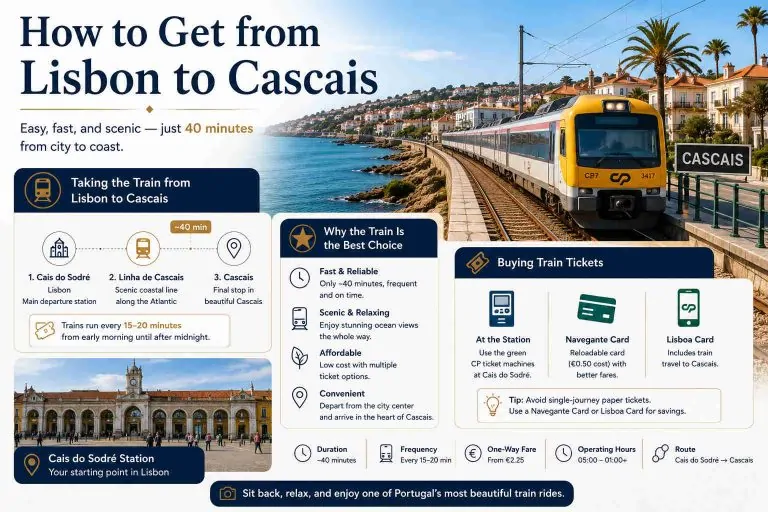
Unlike destinations that require long transfers or complicated travel arrangements, Cascais is exceptionally easy to reach from Lisbon. The direct railway operated by Comboios de Portugal (CP) connects Cais do Sodré Station with Cascais in roughly 40 minutes, making it one of Portugal’s most accessible coastal excursions. This straightforward journey allows travelers to enjoy a completely different environment without needing to rent a car or navigate unfamiliar roads. Official transport schedules and visitor information from Portuguese transport authorities make the route reliable throughout the year.
Its location also reduces the amount of time spent traveling once you arrive. The historic center, Marina de Cascais, several beaches, public gardens, museums, cafés, and waterfront viewpoints are concentrated within a compact area that can largely be explored on foot. This walkability repeatedly appears throughout the SERP research because it removes one of the most common sources of travel frustration—constantly moving between attractions by car or public transport.
Another advantage is the variety of coastal environments found within a short distance. Visitors can relax on calm beaches around Cascais Bay, stroll along the elegant promenade toward Estoril, or travel a little farther west to experience the rugged Atlantic scenery surrounding Praia do Guincho and Cabo da Roca. Few destinations offer such varied landscapes without requiring extensive travel.
Cascais Within the Lisbon–Sintra–Portuguese Riviera Travel Ecosystem
One of the strongest themes identified throughout the SERP research is that Google and travelers rarely view Cascais as a standalone destination. Instead, it is consistently understood as part of a broader western Portugal itinerary that combines urban culture, historic landmarks, Atlantic scenery, and natural landscapes.
Each nearby destination offers a distinct experience:
- Lisbon introduces visitors to Portugal’s capital through historic neighborhoods, museums, viewpoints, and vibrant city life.
- Sintra is renowned for romantic palaces, forested hills, and UNESCO-recognized cultural landscapes.
- Cascais provides a relaxed Atlantic atmosphere centered on beaches, waterfront walks, maritime heritage, and outdoor living.
- Estoril complements Cascais with elegant coastal gardens, beaches, and its historic promenade.
- Cabo da Roca, the westernmost point of mainland Europe, offers dramatic cliffs and sweeping ocean panoramas that showcase the raw beauty of Portugal’s Atlantic coast.
Rather than competing with one another, these destinations complement different travel styles and interests. Many visitors naturally experience all of them during a single trip because together they provide a more complete picture of western Portugal than any one destination could alone.
How Cascais Fits Into a Portugal Itinerary
For first-time visitors, Cascais is flexible enough to suit several types of itineraries.
If your schedule is limited, Cascais works exceptionally well as a day trip from Lisbon thanks to its direct rail connection and compact layout. Travelers with additional time often choose to stay overnight, allowing them to experience the quieter atmosphere after many day visitors have returned to Lisbon—an advantage repeatedly highlighted in the editorial audit as adding depth to the visitor experience.
Cascais also serves as an excellent base for exploring the surrounding region. Staying here allows travelers to combine coastal relaxation with day trips to Sintra, scenic drives toward Cabo da Roca, or additional time in Lisbon without changing accommodation every night. This slower approach often appeals to visitors who prefer balancing sightseeing with opportunities to enjoy cafés, waterfront walks, and local neighborhoods at a more relaxed pace.
Planning Perspective: Why Location Matters More Than Distance
Many travelers initially focus on how far Cascais is from Lisbon. In practice, the more useful question is how its location influences the overall travel experience.
Because Cascais combines easy accessibility with a compact, walkable center and close connections to other major destinations, it minimizes travel time while maximizing the variety of experiences available during a Portugal itinerary. Instead of spending hours moving between attractions, visitors can devote more of their day to exploring beaches, historic streets, museums, public gardens, local cafés, and Atlantic viewpoints.
This balance between convenience, scenery, and regional connectivity is one of the defining reasons Cascais consistently earns a place in Portugal itineraries. Its location does not simply make it easy to visit—it makes it easy to experience a broader and more rewarding side of western Portugal without adding unnecessary complexity to your trip.
Visitor Suitability Decision Matrix
| Traveler Type | Overall Match | Best Experiences | Recommended Stay | Why Cascais Is a Good Fit |
|---|---|---|---|---|
| First-Time Portugal Visitors | ⭐⭐⭐⭐⭐ | Historic Center, Marina, Beaches, Boca do Inferno | 1–2 Days | Offers an excellent introduction to Portugal’s Atlantic coast while remaining easy to reach from Lisbon. |
| Couples | ⭐⭐⭐⭐⭐ | Waterfront dining, sunsets, coastal walks, boutique hotels | 2 Days | Romantic atmosphere, scenic coastline, and relaxed evenings create an ideal couples’ getaway. |
| Families with Children | ⭐⭐⭐⭐⭐ | Praia da Conceição, parks, marina, promenade | 2–3 Days | Safe beaches, open green spaces, walkable streets, and family-friendly attractions make planning easy. |
| Solo Travelers | ⭐⭐⭐⭐⭐ | Walking tours, cafés, museums, beaches | 1–2 Days | Easy public transport, compact layout, and welcoming atmosphere allow independent exploration. |
| Beach Lovers | ⭐⭐⭐⭐⭐ | Praia da Rainha, Praia da Conceição, Praia do Guincho | 2–3 Days | Multiple beaches offer everything from calm swimming to dramatic Atlantic scenery. |
| Photographers | ⭐⭐⭐⭐⭐ | Boca do Inferno, Santa Marta Lighthouse, Historic Center, sunsets | 2 Days | Diverse landscapes, changing coastal light, and historic architecture provide outstanding photo opportunities. |
| History & Culture Enthusiasts | ⭐⭐⭐⭐☆ | Museums, Historic Center, maritime heritage | 2 Days | Royal heritage, museums, traditional architecture, and maritime history add depth beyond the beaches. |
| Food Lovers | ⭐⭐⭐⭐☆ | Seafood restaurants, Mercado da Vila, local cafés | 2 Days | Fresh seafood, Portuguese cuisine, and authentic local markets complement the sightseeing experience. |
| Luxury Travelers | ⭐⭐⭐⭐☆ | Boutique hotels, marina, fine dining, spa experiences | 2–4 Days | Elegant accommodation and waterfront experiences provide a refined yet relaxed coastal escape. |
| Adventure Travelers | ⭐⭐⭐☆☆ | Praia do Guincho, cycling, coastal hikes | 2 Days | Surfing, cycling, and nearby natural landscapes offer outdoor activities, though Cascais is not primarily an adventure destination. |
| Nightlife Seekers | ⭐⭐☆☆☆ | Marina bars, waterfront restaurants | 1 Day | Evening atmosphere is relaxed rather than energetic. Lisbon provides a much stronger nightlife scene. |
| Shopping Enthusiasts | ⭐⭐⭐☆☆ | Local boutiques, artisan shops | 1 Day | Ideal for boutique shopping and local products rather than large shopping districts or luxury retail. |
Which Destination Fits You Best?
| If Your Priority Is… | Best Choice |
|---|---|
| Relaxing by the Atlantic | ✅ Cascais |
| Beaches and coastal scenery | ✅ Cascais |
| Romantic getaway | ✅ Cascais |
| Family-friendly destination | ✅ Cascais |
| Easy walking and compact attractions | ✅ Cascais |
| Historic city exploration | ✅ Lisbon |
| Museums and major cultural institutions | ✅ Lisbon |
| Nightlife and entertainment | ✅ Lisbon |
| Royal palaces and castles | ✅ Sintra |
| UNESCO cultural landscapes | ✅ Sintra |
| Dramatic mountain scenery | ✅ Sintra |
| Surfing and wild Atlantic beaches | ✅ Cascais (Praia do Guincho) |
| Multi-destination Portugal itinerary | ✅ Combine Lisbon + Cascais + Sintra |
Quick Recommendation
| Your Available Time | Recommended Plan |
|---|---|
| 1 Day | Explore Cascais’ Historic Center, Marina, Boca do Inferno, and one beach. |
| 2 Days | Experience Cascais at a relaxed pace while visiting museums, Mercado da Vila, and coastal viewpoints. |
| 3 Days | Stay in Cascais and include a day trip to Sintra or Lisbon. |
| 4+ Days | Use Cascais as a base to explore the Lisbon–Sintra–Cascais region while enjoying a slower coastal experience. |
This decision matrix allows readers to immediately determine whether Cascais aligns with their travel style and helps them choose the most suitable itinerary based on their interests and available time.
Why Visit Cascais?
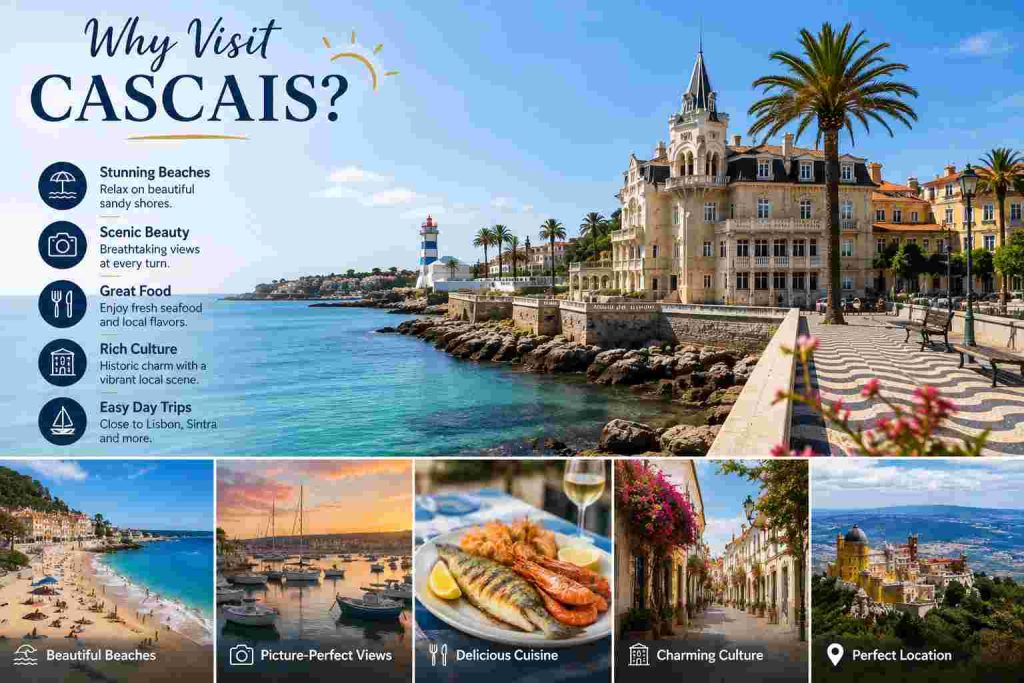
Choosing where to spend your time in Portugal often means balancing historic landmarks, coastal scenery, cultural experiences, practical logistics, and the pace of travel you want. Cascais stands out because it brings these elements together within a compact, highly walkable destination. Rather than relying on a single iconic attraction, it offers a well-rounded experience where beaches, maritime heritage, public parks, museums, waterfront promenades, and everyday Portuguese life coexist naturally. This combination consistently aligns with the needs identified throughout the SERP research, particularly for travelers deciding whether Cascais deserves a place in their Portugal itinerary.
Unlike destinations that appeal primarily to one type of traveler, Cascais accommodates a wide variety of travel styles. Couples can enjoy romantic coastal walks and waterfront dining, families benefit from accessible beaches and pedestrian-friendly streets, photographers find dramatic Atlantic viewpoints alongside elegant architecture, while independent travelers appreciate how easily the town can be explored without a car. Instead of forcing visitors to choose between sightseeing and relaxation, Cascais allows both experiences to fit comfortably into the same day.
A Destination That Balances History and Nature
Many coastal towns are known either for their beaches or for their historical significance. Cascais succeeds because it combines both without either overshadowing the other.
Its historic center preserves narrow cobbled streets, traditional Portuguese architecture, small squares, churches, and buildings that reflect centuries of maritime history. Yet these historic surroundings remain part of everyday life rather than functioning as an open-air museum. Local cafés, independent shops, markets, and public spaces continue to serve residents alongside visitors, creating a destination that feels lived in rather than staged for tourism.
Only a short walk away, the atmosphere changes completely. The Atlantic coastline introduces sandy beaches, scenic promenades, dramatic cliffs, landscaped gardens, and open ocean views that contrast beautifully with the compact urban center. Visitors can transition naturally from cultural sightseeing to coastal relaxation without spending valuable time on transportation.
This close relationship between urban heritage and natural scenery is one of Cascais’ defining characteristics and one of the reasons it appeals to travelers with diverse interests.
The Atlantic Coast Creates a Distinctive Experience
The Atlantic Ocean shapes nearly every aspect of Cascais.
Unlike destinations where beaches are the primary attraction, the coastline itself becomes part of the experience. Changing tides, fresh sea breezes, rugged rock formations, and panoramic viewpoints create a constantly evolving landscape that encourages exploration beyond swimming or sunbathing.
Places such as Boca do Inferno demonstrate the dramatic power of the Atlantic, where centuries of wave action have carved sea caves and cliffs into the coastline. Nearby promenades invite leisurely walks with uninterrupted ocean views, while the marina provides a quieter perspective on Cascais’ long relationship with the sea.
Even visitors who never step onto the sand often describe the coastline as one of the destination’s greatest highlights because it provides opportunities for photography, walking, cycling, and simply enjoying the changing character of the Atlantic throughout the day.
Everything Is Within Easy Reach
One of Cascais’ greatest practical advantages is its compact layout.
Many popular destinations require visitors to spend a significant portion of the day traveling between attractions. In Cascais, many of the most important places can be reached comfortably on foot, including:
- The Historic Center
- Marina de Cascais
- Praia da Rainha
- Praia da Conceição
- Parque Marechal Carmona
- Museums and cultural attractions
- Waterfront promenades
- Local cafés and restaurants
- Public gardens
This walkability does more than improve convenience—it creates flexibility. Visitors can easily adjust their plans if the weather changes, a beach becomes crowded, or they discover an interesting museum or café along the way. Rather than following a rigid itinerary, travelers can explore at their own pace while still seeing many of Cascais’ highlights.
A Destination That Rewards Every Travel Style
One of Cascais’ greatest strengths is that it rarely feels limited to a single type of holiday.
Visitors with only a few hours can enjoy many of the town’s principal attractions because they are concentrated within a relatively small area. Those staying longer discover a different rhythm altogether. Early mornings bring quieter streets and peaceful waterfront walks, afternoons offer time for beaches or museums, and evenings provide a more relaxed atmosphere after many day visitors return to Lisbon.
This flexibility explains why Cascais consistently appeals to:
- Couples seeking a romantic coastal escape.
- Families looking for accessible beaches and open public spaces.
- Solo travelers who value safety and walkability.
- Photographers interested in both architecture and dramatic seascapes.
- Slow travelers who prefer spending several days exploring at an unhurried pace.
Rather than promoting a single “ideal” way to visit, Cascais adapts well to different travel priorities.
An Excellent Base for Exploring Western Portugal
Although Cascais deserves attention as a destination in its own right, its location also makes it an excellent base for discovering western Portugal.
From here, travelers can comfortably combine visits to:
- Lisbon’s historic neighborhoods and museums.
- Sintra’s palaces and gardens.
- Estoril’s elegant waterfront.
- Cabo da Roca’s spectacular Atlantic cliffs.
- The wider Sintra-Cascais Natural Park.
Instead of changing hotels repeatedly, many visitors choose to stay in one location and take short excursions throughout the region. This approach reduces travel time while allowing each destination to be appreciated on its own terms.
A Relaxed Atmosphere Without Feeling Remote
Despite its international popularity, Cascais generally feels calmer than many major European tourist destinations.
Busy waterfront areas certainly exist during the peak summer months, but the town’s parks, residential streets, cultural institutions, and secondary squares provide quieter alternatives within a short walk. Visitors willing to explore beyond the busiest beachfront often encounter a more authentic side of local life, where cafés, neighborhood bakeries, and public spaces continue to serve the community alongside tourism.
This balance between international appeal and everyday Portuguese life was identified in the Editorial Quality Audit as an area where stronger interpretation would improve the article. Rather than viewing authenticity and tourism as opposites, Cascais demonstrates how both can coexist within a destination that continues to function as a real coastal municipality while welcoming visitors from around the world.
Is Cascais Worth Visiting?
For most first-time visitors to Portugal, the answer is yes—but the reasons differ depending on individual travel goals.
Cascais is particularly rewarding if you value:
- A destination that combines beaches, history, and culture.
- Easy independent exploration without a car.
- Scenic Atlantic landscapes.
- Flexible itineraries.
- Excellent access from Lisbon.
- A slower pace than the capital while remaining well connected.
Travelers whose primary interest is royal palaces and mountain landscapes may naturally spend more time in Sintra, while those focused on museums, nightlife, and urban culture will likely devote additional days to Lisbon.
Rather than competing with either destination, Cascais complements them by offering experiences they cannot fully replicate. This complementary role—rather than direct competition—is one of the strongest conclusions supported throughout the Editorial Blueprint and SERP research.
Who Benefits Most from Visiting Cascais?
The destination is especially well suited to:
| Traveler Type | Why Cascais Works Well |
|---|---|
| Couples | Romantic coastal walks, waterfront dining, and relaxed evenings. |
| Families | Walkable streets, accessible beaches, parks, and flexible sightseeing. |
| Solo Travelers | Easy navigation, reliable public transport, and compact attractions. |
| Beach Lovers | Multiple beaches with different atmospheres and easy access. |
| Photographers | Historic streets, Atlantic cliffs, marinas, sunsets, and coastal scenery. |
| Slow Travelers | A destination that rewards longer stays through its relaxed pace and regional connections. |
No destination suits every traveler equally. Visitors seeking high-energy nightlife, extensive shopping districts, or large-scale theme parks may find Lisbon or other Portuguese destinations better aligned with those interests. Cascais instead excels as a destination where natural beauty, maritime heritage, cultural attractions, and relaxed coastal living come together in a way that encourages exploration rather than rushing from one attraction to the next.
Common Misconceptions About Cascais
Several misconceptions appear repeatedly in online discussions and search queries. Addressing them helps set realistic expectations before you arrive.
| Misconception | Reality |
|---|---|
| Cascais is only a beach destination. | Beaches are important, but museums, parks, maritime heritage, public markets, architecture, and coastal walks contribute equally to its appeal. |
| A day trip is always enough. | A day trip covers the highlights, but an overnight stay allows visitors to experience quieter mornings, evenings, and a more relaxed atmosphere. |
| Cascais is too expensive for most travelers. | Accommodation varies widely, but day trips and mid-range visits remain achievable with realistic planning. |
| It feels like a purpose-built resort. | Cascais remains an active municipality where local life and tourism continue to coexist. |
By understanding these realities before visiting, travelers are better equipped to decide whether Cascais matches their own interests rather than relying on generalized recommendations.
Top Attractions in Cascais
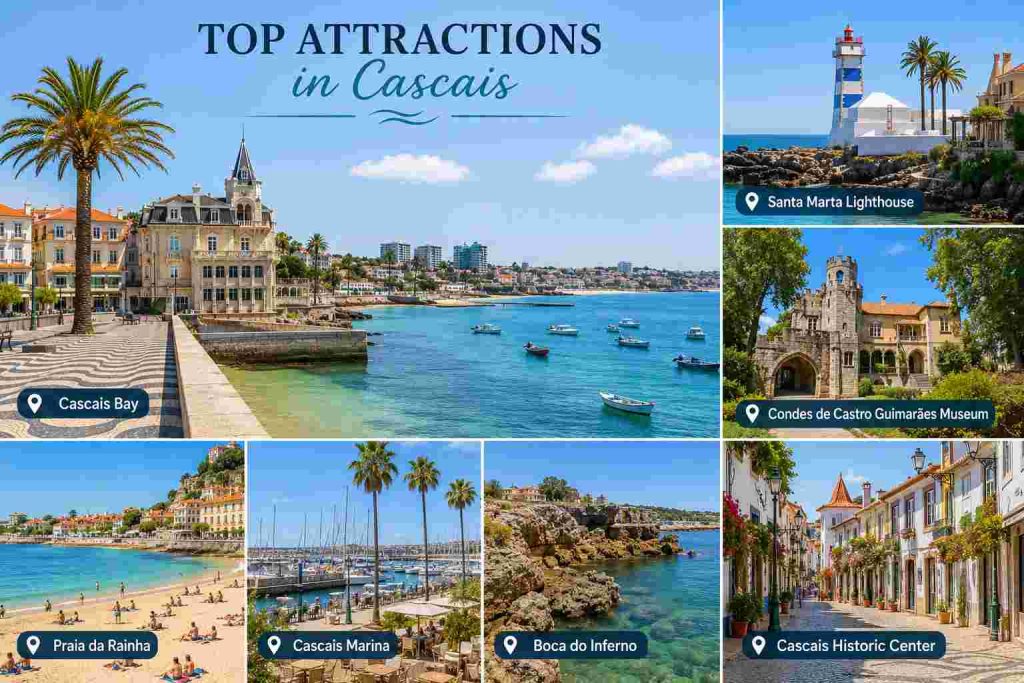
One of Cascais’ greatest strengths is that its attractions are close enough to experience without spending much of the day traveling. Rather than scattering highlights across a large metropolitan area, the destination concentrates many of its most rewarding places within a walkable historic center and along the Atlantic waterfront. This allows visitors to build a flexible itinerary that combines history, coastal scenery, culture, and relaxation at their own pace.
Unlike many destination guides that simply list attractions, it’s more useful to understand which places deserve priority, who each attraction suits best, and how they fit together during a visit. The following overview focuses on the experiences that consistently define Cascais while helping first-time visitors make informed choices.
Quick Attraction Priority Guide
| Attraction | Time Needed | Best For | Priority |
|---|---|---|---|
| Boca do Inferno | 30–60 minutes | First-time visitors, photographers, nature lovers | ★★★★★ |
| Historic Center | 2–3 hours | Everyone | ★★★★★ |
| Marina de Cascais | 45–90 minutes | Couples, families, waterfront dining | ★★★★☆ |
| Praia da Rainha | 30–90 minutes | Beach lovers, photographers | ★★★★☆ |
| Parque Marechal Carmona | 45–90 minutes | Families, slow travelers | ★★★★☆ |
| Museu Condes de Castro Guimarães | 60–90 minutes | History and culture enthusiasts | ★★★★☆ |
| Santa Marta Lighthouse Museum | 30–60 minutes | Maritime history, photography | ★★★★☆ |
| Mercado da Vila | 30–60 minutes | Food lovers, local culture | ★★★☆☆ |
This prioritization reflects the destination’s overall visitor experience rather than official rankings and is designed to help travelers with limited time decide where to focus first.
Boca do Inferno
Few places symbolize Cascais more clearly than Boca do Inferno, whose name translates to “Hell’s Mouth.” This dramatic coastal formation has been carved over centuries by the relentless force of Atlantic waves, creating cliffs, sea caves, and rocky arches that showcase the power of Portugal’s western coastline.
Although many visitors arrive expecting only a scenic viewpoint, Boca do Inferno offers a broader appreciation of Cascais’ natural environment. The experience changes throughout the day as tides, weather, and sunlight continually transform the landscape. On calm days, visitors can admire the turquoise water flowing through the rocky inlet, while rough Atlantic conditions create crashing waves that have made the site one of the region’s most photographed landmarks.
Early morning and late afternoon generally provide the most pleasant lighting for photography while also avoiding the busiest visitor periods during peak season.
Best for
- First-time visitors
- Landscape photographers
- Coastal walks
- Sunset viewing
- Nature enthusiasts
Travel Tip
If your schedule is limited, Boca do Inferno should remain one of your highest priorities because it represents a landscape that cannot be experienced elsewhere within Cascais.
Cascais Historic Center
The historic center is the heart of Cascais and the place where most visitors spend the largest portion of their day.
Rather than functioning as a preserved historic district separated from daily life, it remains an active part of the municipality where residents and visitors naturally share cafés, shops, plazas, bakeries, restaurants, and public spaces. Walking through its narrow cobbled streets reveals centuries of Portuguese history while maintaining the relaxed atmosphere that distinguishes Cascais from larger urban destinations.
Instead of rushing through the area in search of individual landmarks, allow yourself time to explore without a fixed route. Small side streets frequently reveal attractive squares, traditional façades, independent boutiques, and cafés that contribute as much to the experience as the better-known attractions.
This blend of history and contemporary local life was identified in the Editorial Quality Audit as one of the destination’s strongest opportunities for authentic visitor experiences.
Marina de Cascais
Located beside the historic waterfront, Marina de Cascais reflects the town’s longstanding relationship with the Atlantic Ocean.
Today, recreational yachts occupy much of the marina, yet the area continues to symbolize Cascais’ maritime heritage while providing one of the town’s most attractive waterfront environments. Restaurants, cafés, walking paths, and public seating create an atmosphere that encourages visitors to slow down rather than simply pass through.
Many travelers choose the marina for lunch or an early evening stroll because it combines sea views with convenient access to nearby attractions, including the historic center, Boca do Inferno, and several beaches.
The marina is particularly enjoyable during sunset, when changing light creates excellent photography opportunities across the harbor.
Parque Marechal Carmona
While beaches receive much of the attention, Parque Marechal Carmona offers a different side of Cascais.
Its landscaped gardens, shaded walking paths, ponds, mature trees, and open lawns provide a peaceful contrast to the busy waterfront during warmer months. Families often appreciate the extra space for children, while slower-paced travelers value the opportunity to rest between sightseeing.
The park also forms part of a broader cultural area that includes museums and historic buildings, making it easy to combine several attractions during a single visit.
Museums and Cultural Attractions
Although Cascais is often introduced through its beaches, its museums provide valuable insight into the town’s maritime heritage, royal connections, and cultural development.
Two museums are especially worthwhile for first-time visitors:
| Museum | Why Visit | Ideal Visitor |
|---|---|---|
| Museu Condes de Castro Guimarães | Historic mansion, collections, local history | History enthusiasts, architecture lovers |
| Santa Marta Lighthouse Museum | Maritime heritage, lighthouse history, coastal views | Families, photographers, maritime enthusiasts |
These museums complement the outdoor attractions by explaining how Cascais evolved from a fishing community into one of Portugal’s best-known coastal destinations. They are particularly valuable during cooler weather or if you prefer balancing outdoor sightseeing with cultural experiences.
Mercado da Vila
Among the attractions identified in the Editorial Blueprint as deserving greater attention is Mercado da Vila. Rather than functioning solely as a shopping venue, it offers visitors an opportunity to experience everyday local life beyond the main tourist streets.
Depending on the time of day and season, visitors may find fresh produce, seafood, regional specialties, cafés, and local vendors serving both residents and travelers. Unlike souvenir-focused shopping areas, the market provides a more authentic glimpse into the rhythms of the community.
Food lovers, in particular, often appreciate visiting Mercado da Vila before lunch, when the atmosphere is livelier and local businesses are busiest.
Santa Marta Lighthouse
Standing on the Atlantic shoreline, the Santa Marta Lighthouse combines practical maritime history with one of Cascais’ most scenic coastal viewpoints.
Its distinctive architecture, surrounding rocky coastline, and nearby museum make it especially appealing to photographers and visitors interested in Portugal’s maritime traditions.
Although often overshadowed by Boca do Inferno, the lighthouse rewards travelers looking for a quieter stop that combines history with impressive ocean views.
Oitavos Dunes Golf Course
Among Portugal’s most respected golf destinations, Oitavos Dunes Golf Course is one of Cascais’ signature attractions. Located within the scenic surroundings of the Sintra-Cascais Natural Park, the course combines championship golf with spectacular Atlantic views, protected coastal landscapes, and a peaceful natural setting.
Unlike traditional parkland courses, Oitavos Dunes embraces the surrounding environment. Native vegetation, rolling dunes, pine forests, and ocean breezes form part of the playing experience, creating a course that is both visually impressive and technically rewarding.
Whether you’re an experienced golfer or simply interested in the region’s luxury attractions, Oitavos Dunes represents one of the highlights of Cascais’ premium tourism offering.
Why Is Oitavos Dunes So Well Known?
Oitavos Dunes has earned international recognition for several reasons.
Championship Design
The course was designed to work with the natural landscape rather than reshape it extensively. Fairways follow the contours of the dunes, preserving much of the surrounding ecosystem while creating strategic challenges for golfers of different skill levels.
Atlantic Setting
Few European golf courses offer such close connections to the Atlantic Ocean. Many holes provide panoramic coastal views, making the scenery as memorable as the golf itself.
Sustainable Development
The course is known for integrating environmental considerations into its design and maintenance, reflecting the protected surroundings of the Sintra-Cascais Natural Park.
Who Should Visit?
You don’t need to be an avid golfer to appreciate Oitavos Dunes.
| Visitor Type | Why Visit |
|---|---|
| Golf Enthusiasts | Championship-level course and world-class facilities |
| Luxury Travelers | Premium resort experience and coastal setting |
| Couples | Scenic surroundings and fine dining opportunities |
| Photographers | Ocean views, dunes, pine forests, and sunsets |
| Nature Lovers | Beautiful location within a protected landscape |
What Can Visitors Expect?
In addition to golf, visitors may enjoy:
- Practice facilities.
- Clubhouse and restaurant.
- Scenic walking areas around the resort.
- Luxury accommodation nearby.
- Views across the Atlantic coastline.
Many travelers combine a visit to Oitavos Dunes with nearby attractions such as Praia do Guincho, Boca do Inferno, or the scenic roads through the Sintra-Cascais Natural Park.
Planning Your Visit
| Consideration | Recommendation |
|---|---|
| Tee Times | Reserve in advance, particularly during peak travel seasons. |
| Transportation | A car or taxi provides the most convenient access from central Cascais. |
| Dress Code | Check current course requirements before arrival. |
| Playing Experience | Suitable for a wide range of handicaps, though coastal winds can increase the challenge. |
| Nearby Attractions | Combine with Guincho Beach or Cabo da Roca for a full-day excursion. |
Even visitors who don’t plan to play golf often appreciate the peaceful setting and scenic environment surrounding the course.
Want a complete guide? Read our detailed article on Oitavos Dunes Golf Course, where we cover course design, green fees, facilities, playing tips, nearby attractions, and planning advice for golfers visiting Cascais.
Wedding Venues in Cascais
With its Atlantic coastline, elegant architecture, luxury hotels, historic estates, and year-round mild climate, Cascais has become one of Portugal’s most desirable wedding destinations. Couples from around the world choose the region for intimate ceremonies, luxury celebrations, destination weddings, and seaside receptions.
Rather than offering a single wedding style, Cascais provides a wide variety of venues, allowing couples to select a location that matches their vision, guest list, and budget.
Why Choose Cascais for a Wedding?
Several factors contribute to Cascais’ popularity as a wedding destination.
Coastal Scenery
Atlantic beaches, dramatic cliffs, marinas, and ocean sunsets create spectacular settings for wedding ceremonies and photography.
Luxury Hospitality
The municipality is home to numerous boutique hotels, luxury resorts, and event venues capable of hosting weddings of different sizes.
Accessibility
Guests arriving from abroad benefit from convenient access via Lisbon Airport, followed by a relatively short journey to Cascais.
Popular Wedding Venue Types
| Venue Type | Best For |
|---|---|
| Luxury Hotels | Large destination weddings |
| Boutique Hotels | Intimate celebrations |
| Historic Estates | Elegant traditional weddings |
| Beachfront Venues | Romantic ceremonies with ocean views |
| Private Villas | Exclusive celebrations |
| Garden Venues | Outdoor weddings during spring and summer |
Each venue type offers a different atmosphere, making it important to match the location with the style of celebration you envision.
Choosing the Right Venue
When comparing venues, consider:
| Factor | Why It Matters |
|---|---|
| Guest Capacity | Ensures comfortable accommodation for everyone attending. |
| Accommodation | Helpful for destination weddings with international guests. |
| Ceremony and Reception Space | Some venues can host both in one location. |
| Photography Opportunities | Coastal landscapes and gardens enhance wedding photos. |
| Accessibility | Convenient transportation benefits guests arriving from Lisbon or abroad. |
| Weather Contingency | Indoor alternatives provide flexibility throughout the year. |
Best Time for a Wedding
Although weddings take place throughout the year, many couples prefer:
| Season | Why Couples Choose It |
|---|---|
| Spring | Comfortable temperatures and blooming gardens |
| Early Summer | Long daylight hours and pleasant evenings |
| Early Autumn | Mild weather with fewer visitors |
| Winter | Smaller celebrations and potential venue availability |
The choice often depends on the desired atmosphere, guest availability, and venue scheduling.
Is Cascais Suitable for Destination Weddings?
For many international couples, the answer is yes.
The combination of luxury accommodation, excellent restaurants, nearby beaches, historic landmarks, golf courses, and easy access from Lisbon allows guests to enjoy a complete holiday alongside the wedding celebration.
Many wedding groups extend their stay to explore nearby destinations such as Lisbon, Sintra, Cabo da Roca, and the Sintra-Cascais Natural Park, transforming the event into a memorable multi-day experience.
Wedding Planning Checklist
| Before Booking | Recommendation |
|---|---|
| Choose your preferred season | Availability and weather vary throughout the year. |
| Confirm guest numbers | Influences venue selection. |
| Compare accommodation options | Important for destination weddings. |
| Consider transportation | Especially for guests arriving from Lisbon Airport. |
| Review local legal requirements | Requirements differ depending on residency and nationality. |
| Reserve early | Premium venues often book well in advance. |
Whether you’re planning an intimate seaside ceremony or a large luxury celebration, Cascais offers an impressive range of venues that combine Portuguese hospitality with one of Europe’s most attractive coastal settings.
Planning your special day? Our complete Wedding Venues in Cascais Guide compares the best hotels, estates, beachfront venues, planning timelines, legal considerations, photography locations, and practical advice for destination weddings.
Which Attractions Should You Prioritize?
The answer depends less on popularity than on your available time and travel style.
| If You Have… | Prioritize |
|---|---|
| 3–4 Hours | Historic Center, Boca do Inferno, Marina |
| One Full Day | Historic Center, Boca do Inferno, Marina, one beach, Parque Marechal Carmona |
| Two Days | Add museums, Mercado da Vila, Santa Marta Lighthouse, longer coastal walks |
| Three Days or More | Explore at a slower pace while combining nearby destinations such as Estoril, Cabo da Roca, or Sintra |
One of the most common planning mistakes is trying to see every attraction in a single day. Because Cascais is appreciated as much for its atmosphere as its landmarks, allowing time for waterfront walks, cafés, public gardens, and spontaneous exploration often creates a more memorable experience than rushing between every listed site.
Rather than measuring a successful visit by the number of attractions completed, consider using your available time to experience the destination’s rhythm. This approach aligns closely with the decision-support philosophy outlined in the Editorial Blueprint and addresses one of the key gaps identified in the SERP analysis: helping visitors prioritize experiences instead of simply presenting another attraction list.
Beaches of Cascais at a Glance
For many travelers, the beaches are the first reason Cascais appears on their itinerary. Yet one of the destination’s greatest advantages is not simply the number of beaches, but the variety they offer. Within a relatively short distance, visitors can move from sheltered bays ideal for swimming to wide Atlantic beaches known for dramatic scenery, surfing, and powerful ocean conditions. This diversity allows different types of travelers to find a beach that matches their interests rather than assuming every beach offers the same experience.
Instead of asking, “Which is the best beach?”, a more useful question is:
“Which beach best matches my travel style?”
That approach reflects one of the key information-gain opportunities identified in the Editorial Blueprint—helping readers make confident decisions rather than simply listing locations.
Beach Comparison at a Glance
| Beach | Best For | Atmosphere | Swimming | Accessibility | Time Needed |
|---|---|---|---|---|---|
| Praia da Rainha | Couples, photographers | Intimate and scenic | Excellent in calm weather | Easy walk from town | 30–90 minutes |
| Praia da Conceição | Families, first-time visitors | Lively but relaxed | Very good | Excellent | 1–3 hours |
| Praia da Duquesa | Relaxation, beach walks | Spacious and peaceful | Good | Easy | 1–3 hours |
| Praia da Ribeira | Short visits, waterfront atmosphere | Urban beach | Limited | Excellent | 20–60 minutes |
| Praia do Guincho | Surfers, photographers, nature lovers | Wild Atlantic | Usually unsuitable for casual swimming | Car or bus recommended | Half day |
Each beach contributes something different to the overall Cascais experience, making it worthwhile to choose based on your priorities rather than popularity alone.
Praia da Rainha
Although one of Cascais’ smallest beaches, Praia da Rainha is often considered one of its most picturesque.
Nestled between rocky cliffs near the historic center, it offers calm waters, golden sand, and a sheltered setting that feels surprisingly secluded despite its central location. Its name, meaning “Queen’s Beach,” reflects its historical association with Portuguese royalty.
Because of its limited size, Praia da Rainha fills quickly during the busiest summer months. Visitors hoping for a quieter experience generally benefit from arriving earlier in the morning or later in the afternoon.
Highlights
- Beautiful natural setting
- Excellent photography
- Short walk from the historic center
- Calm atmosphere outside peak hours
Best suited for
- Couples
- First-time visitors
- Photographers
- Travelers with limited time
Praia da Conceição
Located beside Cascais’ railway station, Praia da Conceição is one of the town’s most accessible beaches and consistently appeals to first-time visitors.
Its wide sandy shoreline, relatively calm waters, and nearby cafés make it particularly attractive for families and anyone looking for a straightforward beach day without complicated logistics.
The beach also connects naturally with neighboring Praia da Duquesa, allowing visitors to enjoy longer walks along the waterfront while remaining close to restaurants and the historic center.
Highlights
- Easy access from the train station
- Family-friendly atmosphere
- Nearby cafés and facilities
- Good swimming conditions during suitable weather
Praia da Duquesa
Immediately west of Praia da Conceição lies Praia da Duquesa, which offers a similar setting but generally feels slightly more spacious.
Visitors often appreciate its wider sandy areas and relaxed atmosphere, making it suitable for travelers who prefer quieter surroundings without leaving central Cascais.
Its position also provides attractive coastal views while remaining within comfortable walking distance of the marina and historic center.
Best for
- Relaxation
- Reading
- Coastal walks
- Families
- Couples
Praia da Ribeira
Situated directly beside the historic center and marina, Praia da Ribeira is one of the first beaches many visitors encounter.
Rather than serving as a destination for spending an entire day, it functions more as part of the overall waterfront experience. Visitors frequently pause here while exploring the marina, restaurants, or nearby public squares.
Its central location makes it ideal for travelers with limited time who simply want to experience Cascais’ seaside atmosphere without leaving town.
Praia do Guincho
Only a short drive west of central Cascais, Praia do Guincho presents a completely different side of Portugal’s Atlantic coast.
Instead of sheltered waters, visitors encounter broad sandy beaches, powerful waves, strong Atlantic winds, and expansive natural scenery that feels dramatically different from the calmer beaches around Cascais Bay.
Because conditions are frequently influenced by wind and surf, Guincho is internationally recognized among surfers, windsurfers, and kitesurfers. Casual swimmers should always pay close attention to local safety guidance and beach conditions.
For photographers, however, Praia do Guincho is one of the region’s most rewarding coastal landscapes throughout the year.
Ideal for
- Landscape photography
- Surfing
- Scenic drives
- Nature lovers
- Sunset views
Which Beach Should You Choose?
Rather than recommending one beach for everyone, the following guide helps match beaches with different travel priorities.
| If You Want… | Recommended Beach |
|---|---|
| Calm swimming | Praia da Conceição |
| Romantic scenery | Praia da Rainha |
| Family-friendly environment | Praia da Conceição |
| Spacious surroundings | Praia da Duquesa |
| Dramatic Atlantic landscapes | Praia do Guincho |
| A quick stop near town | Praia da Ribeira |
| Photography | Praia da Rainha or Praia do Guincho |
Practical Beach Tips
A few practical considerations can make your visit more enjoyable.
- Beaches closest to the historic center become busiest during summer afternoons.
- Morning visits generally provide a quieter atmosphere and softer light for photography.
- Atlantic weather can change quickly, particularly at Praia do Guincho.
- Comfortable walking shoes are useful if you plan to combine beaches with sightseeing.
- Respect local safety flags and lifeguard guidance before entering the water.
These simple preparations help visitors spend more time enjoying the coastline and less time dealing with avoidable inconveniences.
Beyond the Sand
One of Cascais’ greatest strengths is that the beaches rarely exist in isolation.
A typical visit naturally combines beach time with waterfront cafés, promenades, historic streets, parks, museums, or the marina. This flexibility allows visitors to adapt their day according to weather, energy levels, or personal interests rather than committing to a full day on the sand.
For many travelers, this combination is what ultimately distinguishes Cascais from destinations where beaches dominate the entire experience. Here, the coastline forms part of a broader destination that successfully blends natural beauty, history, culture, and everyday Portuguese life into one of Portugal’s most rewarding seaside experiences.
Beach Comparison Table
This comparison table helps readers quickly identify which Cascais beach best matches their travel style, accessibility needs, and preferred beach experience.
| Beach | Best Traveler Type | Accessibility | Swimming Conditions | Atmosphere | Facilities | Scenic Value | Time Needed | Overall Recommendation |
|---|---|---|---|---|---|---|---|---|
| Praia da Rainha | Couples, photographers, first-time visitors | ⭐⭐⭐⭐⭐5-minute walk from the Historic Center | ⭐⭐⭐⭐☆Generally calm in suitable weather | Quiet, intimate, picturesque | Limited due to its small size | ⭐⭐⭐⭐⭐ | 30–90 minutes | Best for romance and photography |
| Praia da Conceição | Families, swimmers, day-trippers | ⭐⭐⭐⭐⭐Adjacent to Cascais Railway Station | ⭐⭐⭐⭐⭐Excellent for most visitors | Lively, social, family-friendly | Restaurants, cafés, restrooms, rentals | ⭐⭐⭐⭐☆ | 1–3 hours | Best all-around beach for first-time visitors |
| Praia da Duquesa | Couples, families, slow travelers | ⭐⭐⭐⭐☆Easy walk from the town center | ⭐⭐⭐⭐☆ | Relaxed and spacious | Beach services and cafés | ⭐⭐⭐⭐☆ | 1–3 hours | Best for a quieter beach experience |
| Praia da Ribeira | Sightseers, solo travelers, short-stop visitors | ⭐⭐⭐⭐⭐Located beside the Historic Center | ⭐⭐⭐☆☆ | Urban waterfront atmosphere | Excellent nearby restaurants and cafés | ⭐⭐⭐☆☆ | 20–60 minutes | Best during a sightseeing break |
| Praia do Guincho | Surfers, photographers, nature lovers | ⭐⭐⭐☆☆Best reached by car, taxi, or bus | ⭐⭐☆☆☆Strong Atlantic waves; conditions vary | Wild, rugged, windswept | Parking, restaurants, surf facilities | ⭐⭐⭐⭐⭐ | Half day | Best for dramatic scenery and surfing |
Swimming Note: Atlantic conditions can change quickly. Always check local beach safety flags and follow lifeguard guidance before entering the water.
Which Beach Is Right for You?
| If Your Priority Is… | Recommended Beach | Why It Stands Out |
|---|---|---|
| Calm swimming | Praia da Conceição | Sheltered waters, family-friendly atmosphere, and excellent facilities. |
| Romantic scenery | Praia da Rainha | Small, charming cove surrounded by rocky cliffs. |
| Families with children | Praia da Conceição | Easy access, nearby amenities, and spacious sandy beach. |
| Peace and relaxation | Praia da Duquesa | Less crowded and ideal for spending several hours. |
| Photography | Praia do Guincho or Praia da Rainha | Dramatic Atlantic landscapes or intimate coastal scenery. |
| Surfing and wind sports | Praia do Guincho | One of Portugal’s best-known Atlantic surfing beaches. |
| Short visit while sightseeing | Praia da Ribeira | Convenient location beside the marina and Historic Center. |
Beach Suitability Matrix
| Beach | Couples | Families | Solo Travelers | Photographers | Swimmers | Surfers | Relaxation |
|---|---|---|---|---|---|---|---|
| Praia da Rainha | ⭐⭐⭐⭐⭐ | ⭐⭐⭐☆☆ | ⭐⭐⭐⭐☆ | ⭐⭐⭐⭐⭐ | ⭐⭐⭐⭐☆ | ⭐☆☆☆☆ | ⭐⭐⭐⭐☆ |
| Praia da Conceição | ⭐⭐⭐⭐☆ | ⭐⭐⭐⭐⭐ | ⭐⭐⭐⭐☆ | ⭐⭐⭐⭐☆ | ⭐⭐⭐⭐⭐ | ⭐⭐☆☆☆ | ⭐⭐⭐⭐☆ |
| Praia da Duquesa | ⭐⭐⭐⭐☆ | ⭐⭐⭐⭐☆ | ⭐⭐⭐⭐☆ | ⭐⭐⭐⭐☆ | ⭐⭐⭐⭐☆ | ⭐⭐☆☆☆ | ⭐⭐⭐⭐⭐ |
| Praia da Ribeira | ⭐⭐⭐☆☆ | ⭐⭐⭐☆☆ | ⭐⭐⭐⭐☆ | ⭐⭐⭐☆☆ | ⭐⭐⭐☆☆ | ⭐☆☆☆☆ | ⭐⭐⭐☆☆ |
| Praia do Guincho | ⭐⭐⭐⭐☆ | ⭐⭐☆☆☆ | ⭐⭐⭐⭐☆ | ⭐⭐⭐⭐⭐ | ⭐⭐☆☆☆ | ⭐⭐⭐⭐⭐ | ⭐⭐⭐⭐☆ |
Beach Selection Decision Guide
| Your Travel Style | Best Beach |
|---|---|
| First-time visitor | Praia da Conceição |
| Romantic getaway | Praia da Rainha |
| Family vacation | Praia da Conceição |
| Peaceful beach day | Praia da Duquesa |
| Landscape photography | Praia do Guincho |
| Surfing adventure | Praia do Guincho |
| Quick stop during sightseeing | Praia da Ribeira |
Best Areas to Stay in Cascais
Choosing the right area to stay can significantly influence your experience in Cascais. Although the municipality is relatively compact, each neighborhood has its own character, pace, accommodation style, and advantages. Some areas place you within walking distance of beaches and restaurants, while others offer quieter residential surroundings or luxury coastal living.
Rather than asking, “Where should I stay?”, it’s more useful to ask, “Which neighborhood best matches my travel style?” The answer depends on your priorities, whether that’s sightseeing, beach access, family-friendly accommodation, luxury, or convenience.
Cascais Neighborhood Comparison
| Area | Best For | Atmosphere | Accommodation | Walkability |
|---|---|---|---|---|
| Historic Center | First-time visitors | Vibrant and charming | Boutique hotels, apartments | ⭐⭐⭐⭐⭐ |
| Marina Area | Couples and luxury travelers | Elegant waterfront | Hotels and luxury apartments | ⭐⭐⭐⭐⭐ |
| Estoril | Families and longer stays | Relaxed residential | Hotels, apartments, villas | ⭐⭐⭐⭐☆ |
| Monte Estoril | Couples and quiet holidays | Peaceful and upscale | Boutique hotels and villas | ⭐⭐⭐⭐☆ |
| Quinta da Marinha | Luxury travel and golf | Exclusive and tranquil | Luxury resorts and villas | ⭐⭐⭐☆☆ |
| Birre | Families and long-term visitors | Residential | Houses and apartments | ⭐⭐⭐☆☆ |
Historic Center
For most first-time visitors, the Historic Center is the best place to stay.
You’ll be within walking distance of the marina, beaches, restaurants, museums, cafés, and the railway station, making it easy to explore without relying on taxis or rental cars.
Best For
- First-time visitors
- Couples
- Solo travelers
- Short stays
- Visitors arriving by train
Advantages
- Walk everywhere
- Wide selection of restaurants
- Close to major attractions
- Excellent atmosphere day and evening
Estoril
Although technically a neighboring town, Estoril forms part of the same coastal experience and is connected to Cascais by train and the waterfront promenade.
Visitors staying here often enjoy quieter surroundings while remaining only a few minutes from Cascais.
Best For
- Families
- Longer holidays
- Business travelers
- Travelers seeking quieter accommodation
Monte Estoril
Monte Estoril offers one of the area’s most elegant residential environments.
Its elevated position provides attractive views while maintaining a peaceful atmosphere. Boutique hotels, villas, and high-end apartments appeal to travelers looking for relaxation rather than nightlife.
Quinta da Marinha
Quinta da Marinha is one of Cascais’ most prestigious neighborhoods.
Luxury villas, five-star resorts, golf courses, and proximity to the Atlantic coastline make it particularly attractive for visitors seeking premium accommodation.
It is best suited to travelers who value privacy and resort-style experiences over being within walking distance of the Historic Center.
Which Area Should You Choose?
| If You Want… | Recommended Area |
|---|---|
| Walk to everything | Historic Center |
| Romantic holiday | Marina Area or Monte Estoril |
| Family vacation | Estoril |
| Luxury accommodation | Quinta da Marinha |
| Quiet surroundings | Monte Estoril |
| Longer residential stay | Birre |
Choosing accommodation that matches your travel style usually has a greater impact on your trip than selecting the most expensive hotel.
Want a complete comparison? Our dedicated guide to Best Areas to Stay in Cascais explores every neighborhood in detail, including hotels, transportation, attractions, and recommendations for different budgets.
Living in Cascais
Many visitors arrive in Cascais intending to stay for only a few days but leave wondering what it would be like to live there permanently.
The municipality consistently attracts retirees, professionals, entrepreneurs, digital nomads, and families because it combines coastal living with excellent infrastructure, international connectivity, and a high quality of life.
Unlike destinations that depend mainly on tourism, Cascais functions as a modern municipality with schools, healthcare facilities, shopping centers, sports clubs, cultural institutions, and year-round community life.
Why People Choose to Live in Cascais
Residents often cite several reasons for relocating to Cascais.
Quality of Life
The combination of beaches, public parks, clean streets, outdoor recreation, and a relaxed atmosphere contributes to one of Portugal’s most desirable lifestyles.
Proximity to Lisbon
Living in Cascais allows residents to enjoy a quieter coastal environment while remaining within commuting distance of Portugal’s capital.
International Community
The municipality has an established international population, making it easier for newcomers to settle while still experiencing Portuguese culture.
Advantages and Considerations
| Advantages | Considerations |
|---|---|
| Coastal lifestyle | Property prices are generally higher than many Portuguese towns |
| Excellent infrastructure | Popular areas can become busy during summer |
| Good healthcare | Premium neighborhoods command premium prices |
| International schools | Demand for housing remains strong |
| Safe residential environment | Planning ahead is important for long-term rentals |
Who Is Cascais Best Suited For?
| Resident Type | Suitability |
|---|---|
| Families | ⭐⭐⭐⭐⭐ |
| Retirees | ⭐⭐⭐⭐⭐ |
| Remote workers | ⭐⭐⭐⭐⭐ |
| Entrepreneurs | ⭐⭐⭐⭐☆ |
| Students | ⭐⭐⭐☆☆ |
| Luxury buyers | ⭐⭐⭐⭐⭐ |
Before Relocating
Before moving to Cascais, consider:
- Housing costs.
- Daily commuting requirements.
- Preferred neighborhood.
- School options (if relocating with children).
- Access to healthcare.
- Long-term residency requirements if applicable.
Relocating successfully often depends as much on choosing the right neighborhood as selecting the right property.
Planning a move? Our complete Living in Cascais Guide explores neighborhoods, lifestyle, education, healthcare, transportation, and relocation considerations in much greater depth.
Is Cascais Worth a Day Trip or an Overnight Stay?
One of the most common questions travelers ask before visiting Cascais is whether it deserves just a few hours or a longer stay. The answer depends less on the destination itself and more on your travel style, available time, and what you hope to experience.
This uncertainty appears repeatedly across travel forums, Google’s “People Also Ask” results, and destination guides because Cascais offers enough attractions for a rewarding day trip while also providing a slower, more immersive atmosphere that only becomes apparent after many visitors leave in the evening. Rather than recommending one option for everyone, it’s more useful to understand what each approach offers so you can make an informed decision.
Day Trip vs Overnight Stay
| Factor | Day Trip | Overnight Stay |
|---|---|---|
| Time Available | 6–10 hours | 2–3 days |
| Main Highlights | Easily covered | Fully explored |
| Historic Center | ✓ | ✓ |
| Boca do Inferno | ✓ | ✓ |
| Marina | ✓ | ✓ |
| Beaches | Limited time | Relaxed experience |
| Museums | Usually one | Multiple visits possible |
| Sunrise & Sunset | Usually one | Both |
| Evening Atmosphere | Missed | Fully experienced |
| Pace | Fast | Relaxed |
| Best For | First-time visitors with limited time | Travelers wanting a deeper experience |
When a Day Trip Is the Right Choice
For many visitors, especially those staying in Lisbon, a day trip is a practical and rewarding way to experience Cascais.
The town’s compact layout means that several major attractions are within comfortable walking distance of one another. Arriving by train in the morning gives enough time to explore the historic center, visit Boca do Inferno, enjoy lunch by the marina, spend time at one of the central beaches, and return to Lisbon in the evening without feeling rushed—provided you prioritize your activities.
A typical day might look like this:
| Time | Suggested Activity |
|---|---|
| 9:00 AM | Arrive in Cascais and explore the Historic Center |
| 10:30 AM | Walk to Marina de Cascais |
| 11:30 AM | Visit Boca do Inferno |
| 1:00 PM | Lunch overlooking the waterfront |
| 2:30 PM | Relax at Praia da Conceição or Praia da Rainha |
| 4:30 PM | Explore local shops, cafés, or Mercado da Vila |
| 6:00 PM | Return to Lisbon |
This schedule is only an example, not a fixed itinerary, but it demonstrates that a single day can comfortably include many of Cascais’ defining experiences.
Why Staying Overnight Changes the Experience
Although a day trip covers the highlights, staying overnight reveals a different side of Cascais.
As afternoon trains return many visitors to Lisbon, the atmosphere becomes noticeably calmer. The waterfront feels less crowded, restaurants become more relaxed, and the historic center takes on a quieter rhythm that many travelers find more enjoyable than the busy daytime hours.
An overnight stay also provides opportunities that are difficult to experience during a day trip:
- Watching both sunrise and sunset over the Atlantic.
- Enjoying early morning walks before crowds arrive.
- Spending unhurried time in museums and parks.
- Exploring cafés and local restaurants without worrying about train schedules.
- Visiting nearby attractions such as Estoril or Cabo da Roca without rushing.
Rather than trying to fit everything into one day, staying longer allows the destination’s atmosphere to become part of the experience.
Which Travelers Benefit Most from Staying Overnight?
While anyone can enjoy an overnight visit, some travelers gain more from the additional time.
| Traveler | Recommendation | Why |
|---|---|---|
| Couples | Highly Recommended | Romantic waterfront evenings and slower pace |
| Families | Recommended | Flexible schedule and less rushing between attractions |
| Photographers | Highly Recommended | Better light at sunrise and sunset |
| Slow Travelers | Highly Recommended | Time to experience local neighborhoods and culture |
| First-Time Portugal Visitors | Recommended | Easier to combine with nearby destinations |
| Cruise Visitors | Day Trip | Time constraints usually make a day visit more practical |
When One Day May Not Be Enough
Consider staying overnight if you plan to:
- Visit several museums.
- Spend significant time at the beach.
- Explore nearby Cabo da Roca.
- Walk the coastal promenade toward Estoril.
- Enjoy waterfront dining without watching the clock.
- Experience Cascais after most day visitors have left.
Trying to include all of these activities in one day often leads to rushing rather than enjoying the destination.
Common Planning Mistakes
Many first-time visitors unintentionally reduce their experience by making avoidable planning decisions.
| Mistake | Better Approach |
|---|---|
| Trying to visit every attraction | Prioritize your interests instead of completing a checklist |
| Spending too much time commuting | Walk whenever possible—the town is designed for exploration on foot |
| Visiting only the beach | Combine beaches with history, parks, and the waterfront |
| Ignoring museums | Include at least one cultural attraction for a more complete understanding of Cascais |
| Leaving immediately after lunch | Stay until evening if your schedule allows to experience the changing atmosphere |
Our Recommendation
If your Portugal itinerary is limited, a full day in Cascais is absolutely worthwhile. The town’s excellent transport links, compact historic center, and concentration of attractions make it one of the country’s most rewarding day trips.
However, if you have flexibility in your schedule, one overnight stay offers a noticeably richer experience. It gives you time to appreciate not only the famous landmarks but also the quieter moments that define Cascais—early morning waterfront walks, relaxed dinners overlooking the Atlantic, unhurried museum visits, and the slower rhythm that many travelers remember long after their trip.
Ultimately, the best choice depends on what kind of traveler you are. If your goal is simply to see the highlights, a day trip is sufficient. If your goal is to experience the character of Cascais rather than just visit it, staying overnight is likely to be the more rewarding option.
Getting Around and Visiting Cascais
One of Cascais’ greatest advantages is that exploring the town is remarkably straightforward. Unlike many destinations where visitors spend a significant portion of their day navigating unfamiliar transport systems, Cascais allows most travelers to focus on the experience itself rather than the logistics.
Its compact historic center, excellent public transport connections, and pedestrian-friendly streets make it one of Portugal’s easiest destinations to explore independently. Whether you arrive by train from Lisbon, rent a car for a wider Portugal road trip, or simply spend the day walking along the waterfront, transportation rarely becomes a challenge with a little planning.
How to Get to Cascais from Lisbon
For most visitors, the train is the easiest, most convenient, and most economical way to reach Cascais.
Comboios de Portugal (CP) operates regular suburban trains from Cais do Sodré Station in central Lisbon directly to Cascais. The journey follows the Atlantic coastline for much of the route, making the trip itself part of the overall experience.
| Transport Option | Best For | Approximate Journey | Advantages | Considerations |
|---|---|---|---|---|
| Train | Most visitors | About 40 minutes | Direct, affordable, scenic, no parking concerns | Can become busy during summer weekends |
| Car | Regional exploration | 35–60 minutes depending on traffic | Flexibility for nearby destinations | Parking may be limited in peak season |
| Taxi / Ride-share | Groups or convenience | Similar to driving | Door-to-door service | Higher cost than public transport |
For first-time visitors staying in Lisbon, the train is generally the recommended option because it removes concerns about traffic, parking, and navigating unfamiliar roads while delivering passengers within easy walking distance of the historic center. This recommendation aligns with the editorial audit’s emphasis on practical visitor workflows rather than simply listing transport options.
Arriving from Lisbon Airport
Many international visitors arrive in Portugal through Humberto Delgado Airport (Lisbon Airport) and wonder whether visiting Cascais directly is practical.
For most travelers, the journey follows a straightforward sequence:
| Step | Action |
|---|---|
| 1 | Arrive at Lisbon Airport. |
| 2 | Travel into central Lisbon using Metro, taxi, or an airport transfer. |
| 3 | Continue to Cais do Sodré Station. |
| 4 | Board the direct CP train to Cascais. |
| 5 | Walk from Cascais Station to your accommodation or begin exploring the historic center. |
This route avoids the complexity of driving immediately after an international flight while taking advantage of Portugal’s well-established public transport network.
Travelers staying several nights in Cascais before exploring other regions often find this approach more relaxing than collecting a rental car upon arrival.
Exploring Cascais on Foot
Walking is, without question, the best way to experience Cascais.
The historic center was developed long before modern traffic patterns, resulting in compact streets, attractive public squares, and short distances between major attractions.
Most visitors can comfortably walk between:
- Cascais Railway Station
- Historic Center
- Marina de Cascais
- Praia da Rainha
- Praia da Conceição
- Parque Marechal Carmona
- Museu Condes de Castro Guimarães
- Santa Marta Lighthouse
- Boca do Inferno
This pedestrian-friendly layout encourages spontaneous exploration. Small cafés, viewpoints, independent shops, public art, and quiet residential streets often become memorable parts of the visit even though they may not appear in traditional sightseeing itineraries.
Walking Distances Between Major Attractions
| From | To | Approximate Walking Time |
|---|---|---|
| Railway Station | Historic Center | 5 minutes |
| Historic Center | Marina | 8 minutes |
| Marina | Santa Marta Lighthouse | 10 minutes |
| Lighthouse | Boca do Inferno | 15–20 minutes |
| Historic Center | Parque Marechal Carmona | 8 minutes |
| Historic Center | Praia da Rainha | 5 minutes |
These walking times are approximate and naturally vary depending on pace and the number of stops made along the way.
Should You Rent a Car?
For visitors whose itinerary focuses exclusively on Lisbon and Cascais, renting a car is usually unnecessary.
Public transportation is efficient, the town is highly walkable, and parking can become limited during the busiest travel periods.
However, a rental car becomes much more valuable if you plan to:
- Explore several coastal towns.
- Visit lesser-known beaches.
- Drive through Sintra-Cascais Natural Park.
- Continue toward other regions of Portugal.
- Prefer complete flexibility over fixed transport schedules.
Parking in Cascais
If you do choose to drive, it’s worth planning ahead.
Parking is available throughout the municipality, but availability decreases significantly during weekends, public holidays, and the peak summer season.
Some practical considerations include:
- Arrive earlier in the day if visiting during summer.
- Expect increased demand near central beaches.
- Be prepared to walk a short distance from parking areas to the historic center.
- Always observe local parking regulations and payment requirements where applicable.
Visitors should also remember that once parked, a car is rarely needed again until leaving Cascais.
Cycling Along the Coast
For travelers who enjoy outdoor activities, cycling offers another enjoyable way to experience the coastline.
Dedicated cycling routes and relatively gentle terrain along sections of the waterfront make riding between Cascais and nearby coastal areas particularly attractive.
Cycling is especially popular during spring and autumn, when cooler temperatures make longer rides more comfortable than during the hottest summer afternoons.
Accessibility Considerations
Cascais is generally easier to navigate than many historic European towns.
Wide promenades, modern public spaces, and relatively short distances between attractions improve accessibility for many visitors.
However, some parts of the historic center retain traditional cobbled streets and older surfaces that may require additional care for travelers using wheelchairs, mobility aids, or strollers.
Planning slightly slower walking routes and allowing additional time for exploration can make the experience more comfortable without significantly affecting the overall itinerary.
Practical Transportation Tips
A few simple planning decisions can make visiting Cascais considerably easier.
| Tip | Why It Helps |
|---|---|
| Use the train if staying in Lisbon | Avoids traffic and parking |
| Wear comfortable walking shoes | Most attractions are explored on foot |
| Begin sightseeing early | Quieter streets and more pleasant temperatures |
| Carry water during warmer months | Coastal walks often involve extended time outdoors |
| Allow flexibility in your schedule | Cascais is best enjoyed at a relaxed pace rather than following a rigid timetable |
Recommended Transportation by Travel Style
| Traveler Type | Recommended Transport |
|---|---|
| First-time visitor | Train + walking |
| Couple | Train + walking |
| Family | Train or car, depending on itinerary |
| Photographer | Train + walking with optional taxi to Praia do Guincho |
| Road trip traveler | Rental car |
| Slow traveler | Train + walking with occasional local transport if needed |
Ultimately, transportation in Cascais should support—not dominate—your visit. The destination rewards travelers who slow down, walk between attractions, and leave enough time to appreciate the waterfront, public gardens, cafés, and quieter streets that give the town its distinctive character. This ease of movement is one of the reasons Cascais consistently stands out as one of Portugal’s most accessible and enjoyable coastal destinations for independent travelers.
Cascais Events
Cascais hosts a wide variety of cultural, sporting, gastronomic, and seasonal events throughout the year. While many visitors initially come for the beaches and coastal scenery, the town’s event calendar adds another dimension to the experience, giving travelers opportunities to enjoy local traditions, international competitions, outdoor festivals, concerts, and community celebrations.
Unlike destinations that only come alive during the summer, Cascais maintains an active calendar across all four seasons. Although event schedules naturally change from year to year, visitors can generally expect something taking place regardless of when they visit.
Types of Events Held in Cascais
Throughout the year, Cascais hosts events across multiple categories.
| Event Category | What to Expect | Typical Time of Year |
|---|---|---|
| Cultural Festivals | Music, art, exhibitions, local traditions | Throughout the year |
| Food & Gastronomy | Portuguese cuisine, seafood, local markets | Various seasons |
| Sporting Events | Golf, sailing, cycling, running, surfing | Throughout the year |
| Christmas Celebrations | Markets, lights, family entertainment | November–January |
| Outdoor Concerts | Live performances and community events | Spring and Summer |
| Marina Events | Sailing activities and waterfront celebrations | Spring through Autumn |
The exact schedule changes annually, so visitors should always consult official tourism resources or event organizers for confirmed dates before planning their trip.
Popular Annual Events
Although dates may vary, several recurring events contribute to Cascais’ reputation as one of Portugal’s most vibrant coastal destinations.
Cultural Festivals
Art exhibitions, local performances, and community celebrations showcase Portuguese culture while attracting both residents and visitors.
Sporting Competitions
Thanks to its Atlantic location and outdoor lifestyle, Cascais regularly hosts sailing regattas, golf tournaments, cycling events, triathlons, surfing competitions, and running races.
Seasonal Celebrations
Holiday markets, Christmas decorations, family entertainment, and public events create a festive atmosphere during the winter months.
Best Time to Visit for Events
| Season | Event Highlights |
|---|---|
| Spring | Outdoor festivals, sporting events, cultural activities |
| Summer | Concerts, marina events, beach activities, festivals |
| Autumn | Food festivals, cultural programs, sporting competitions |
| Winter | Christmas Village, seasonal markets, holiday celebrations |
Every season offers something different, allowing travelers to choose a visit that matches their interests.
Tips for Event Travelers
If attending a major event is one of your priorities:
- Book accommodation early during popular festivals.
- Check official event schedules before finalizing travel dates.
- Arrive early for waterfront celebrations and concerts.
- Consider using public transport during larger events.
- Allow additional time if road closures or increased visitor numbers are expected.
Planning ahead helps ensure you can enjoy both the event itself and the rest of Cascais without unnecessary stress.
Why Events Enhance a Visit to Cascais
Events provide visitors with an opportunity to experience Cascais beyond its landmarks.
Rather than simply sightseeing, travelers can interact with local traditions, enjoy Portuguese music and cuisine, watch international sporting competitions, or participate in seasonal celebrations. These experiences often create some of the most memorable moments of a trip because they reflect everyday community life rather than permanent attractions.
Looking for current schedules? Our dedicated Cascais Events Guide covers upcoming festivals, annual celebrations, concerts, sporting events, seasonal activities, and practical planning advice throughout the year.
Cascais Christmas Village
During the holiday season, Cascais transforms into one of Portugal’s most festive coastal destinations through the annual Cascais Christmas Village. The event attracts families, couples, and visitors from across Portugal with seasonal decorations, themed attractions, entertainment, and festive markets.
Rather than being a single attraction, Christmas Village creates a broader holiday atmosphere that extends throughout parts of Cascais, encouraging visitors to combine festive activities with sightseeing, shopping, and waterfront walks.
What Is Cascais Christmas Village?
Cascais Christmas Village is a seasonal celebration designed primarily for families but enjoyed by visitors of all ages.
While the program changes each year, visitors can generally expect:
- Christmas-themed decorations.
- Holiday markets.
- Family entertainment.
- Seasonal food and drinks.
- Children’s activities.
- Festive lighting displays.
- Live performances and special events.
Because attractions and schedules vary annually, checking official event information before visiting is recommended.
Why Visit During Christmas?
The holiday season offers a completely different perspective on Cascais.
Instead of focusing mainly on beaches and outdoor recreation, visitors experience festive streets, illuminated public spaces, seasonal shopping, and a welcoming winter atmosphere that contrasts beautifully with the Atlantic coastline.
For travelers already planning a December trip to Portugal, Cascais provides an enjoyable alternative to spending all of their time in Lisbon.
What Visitors Can Expect
| Experience | Suitable For |
|---|---|
| Christmas Markets | Families, couples, shoppers |
| Seasonal Food | Everyone |
| Holiday Entertainment | Families and children |
| Festive Decorations | Photographers |
| Live Performances | All ages |
| Christmas Shopping | Visitors looking for local gifts |
Many visitors choose to spend several hours exploring the Christmas Village before continuing to restaurants, cafés, or the waterfront.
Tips for Visiting
To make the most of your visit:
- Check opening dates before traveling.
- Visit on weekdays if you prefer smaller crowds.
- Dress appropriately for cooler evening temperatures.
- Allow time to explore both the Christmas Village and the Historic Center.
- Reserve accommodation early if visiting during the holiday period.
Combining Christmas Village with Other Attractions
One advantage of visiting Cascais during the festive season is that the Christmas Village is only one part of the experience.
Many travelers combine their visit with:
| Nearby Attraction | Why Combine It? |
|---|---|
| Historic Center | Seasonal decorations and shopping |
| Marina de Cascais | Waterfront walks and festive atmosphere |
| Local Restaurants | Traditional Portuguese holiday dining |
| Beaches | Quiet winter coastal scenery |
| Boca do Inferno | Dramatic Atlantic views in a peaceful season |
This combination allows visitors to enjoy both the holiday celebrations and the natural beauty that defines Cascais throughout the year.
Is Christmas a Good Time to Visit Cascais?
If your goal is a traditional beach holiday, summer remains the better choice.
However, if you enjoy festive markets, seasonal events, quieter sightseeing, and experiencing Portugal from a different perspective, Christmas is one of the most charming times to visit Cascais.
The cooler weather, holiday decorations, and relaxed coastal atmosphere create a unique experience that differs significantly from the busy summer months while still showcasing the town’s historic character and Atlantic setting.
Planning a winter trip? Our complete Cascais Christmas Village Guide covers opening dates, attractions, tickets (where applicable), family activities, nearby hotels, transportation, and practical advice for visiting during the holiday season.
Costs, Budget, and Travel Expectations
One of the most common questions first-time visitors ask is whether Cascais is an expensive destination. The short answer is it depends on your travel style. Compared with many smaller Portuguese towns, Cascais generally has higher prices because of its popularity, coastal location, and proximity to Lisbon. However, compared with many well-known Western European seaside destinations, it still offers good value, particularly when travelers plan realistically and understand where their money is likely to be spent.
Rather than focusing on exact prices—which change over time—it is more helpful to understand the types of expenses you can expect and how different travel choices influence your overall budget. This approach keeps your planning useful even as seasonal pricing changes.
Is Cascais Expensive?
The perception that Cascais is prohibitively expensive is one of the destination’s most common misconceptions.
While luxury hotels, fine dining restaurants, and premium waterfront properties certainly exist, they represent only one part of the visitor experience. Mid-range accommodation, casual cafés, local bakeries, public beaches, parks, museums, and many walking attractions remain accessible to a broad range of travelers.
The town offers options across several budget levels, allowing visitors to adjust spending without significantly reducing the quality of their trip.
Typical Budget by Travel Style
| Travel Style | Accommodation | Dining | Activities | Overall Budget |
|---|---|---|---|---|
| Budget Traveler | Guesthouses or budget hotels | Local cafés, bakeries, casual restaurants | Beaches, walking, parks, viewpoints | Lower |
| Mid-Range Traveler | Boutique hotels or quality apartments | Mix of casual and waterfront restaurants | Museums, attractions, beach activities | Moderate |
| Luxury Traveler | Luxury hotels and resorts | Fine dining and premium experiences | Private tours, sailing, exclusive experiences | Higher |
Instead of viewing Cascais as either “cheap” or “expensive,” it’s more accurate to think of it as a destination that offers flexibility. Visitors can comfortably adjust their spending based on personal preferences without missing many of the experiences that make the town special.
Where Will You Spend the Most?
Understanding typical spending categories helps travelers plan more effectively.
| Category | Budget Impact | Notes |
|---|---|---|
| Accommodation | High | Usually the largest expense, especially during summer. |
| Dining | Moderate | Wide range of choices from casual cafés to upscale restaurants. |
| Transportation | Low | Walking and public transport reduce costs considerably. |
| Attractions | Low to Moderate | Many highlights, including beaches and promenades, are free to enjoy. |
| Shopping | Optional | Depends entirely on personal interests. |
One of Cascais’ biggest advantages is that many of its best experiences require little or no admission cost. Walking through the historic center, enjoying the marina, exploring public parks, visiting viewpoints, and relaxing on several beaches all contribute significantly to the destination without substantially increasing your budget.
Budget Expectations by Length of Stay
| Length of Stay | Budget Considerations |
|---|---|
| Day Trip | Primarily transportation, meals, and optional attraction entry fees. |
| One Night | Adds accommodation but allows a more relaxed experience. |
| Two to Three Days | Better value for visitors who want beaches, museums, and nearby excursions without rushing. |
A longer stay naturally increases accommodation costs, but it can also improve the overall value of the trip by reducing the need to rush between attractions and allowing time to experience quieter parts of Cascais.
Seasonal Impact on Costs
Seasonality has a greater influence on travel costs than almost any other factor.
| Season | Visitor Numbers | Relative Cost |
|---|---|---|
| Spring | Moderate | Moderate |
| Summer | Highest | Highest |
| Autumn | Moderate | Moderate |
| Winter | Lower | Generally Lower |
Summer’s popularity brings higher demand for accommodation and increased activity throughout the town. Travelers with flexible schedules often find spring and autumn attractive because they combine pleasant weather with a more relaxed atmosphere and, in many cases, better overall value.
Practical Ways to Get Better Value
Spending less does not necessarily mean experiencing less.
Many experienced travelers improve value by making small planning decisions rather than eliminating activities altogether.
Some practical approaches include:
- Visit outside the busiest summer holiday period if possible.
- Reserve accommodation well in advance during peak travel seasons.
- Explore the historic center and beaches on foot instead of relying on taxis.
- Balance waterfront restaurants with local cafés and neighborhood eateries.
- Combine several nearby attractions into one walking route rather than making repeated journeys across town.
These choices often improve both the travel experience and the overall budget.
Are the Main Attractions Worth the Cost?
One reason Cascais consistently receives positive reviews is that many of its defining attractions are not expensive.
The historic center, Boca do Inferno, coastal promenades, Marina de Cascais, public gardens, and several beaches can all be enjoyed with little or no direct admission cost.
Museums and cultural attractions typically represent a relatively small portion of overall travel expenses while adding valuable historical and cultural context to the visit.
For many travelers, the greatest value comes not from expensive activities but from the destination’s atmosphere, walkability, and variety.
Budget Planning Checklist
Before your trip, consider the following questions:
| Question | Why It Matters |
|---|---|
| Are you visiting during peak summer? | Accommodation prices may be significantly higher. |
| Will you stay overnight? | Accommodation is usually the largest expense. |
| Are beaches your main priority? | Many of the best experiences are free. |
| Will you explore nearby destinations? | Transport planning may affect your budget. |
| Do you prefer casual or fine dining? | Restaurant choices have a noticeable impact on spending. |
Answering these questions before booking often leads to more realistic expectations and fewer unexpected expenses.
Overall Value for Money
Rather than asking whether Cascais is expensive, a better question is whether it offers good value.
For most travelers, the answer is yes.
Its combination of beaches, historic streets, museums, waterfront scenery, parks, walkability, and easy access from Lisbon means visitors receive a remarkably varied experience without needing to purchase expensive tours or travel long distances between attractions.
While luxury experiences are certainly available, they are optional rather than essential. Visitors who prioritize thoughtful planning over high spending often discover that Cascais delivers one of the most rewarding balances of quality, convenience, and atmosphere on Portugal’s Atlantic coast.
Best Time to Visit Cascais
Cascais is a year-round destination, but the experience changes noticeably with the seasons. Weather, visitor numbers, accommodation availability, beach conditions, and the overall atmosphere all influence what your trip will feel like. Rather than asking “When is the best time to visit?”, it’s more helpful to ask “Which season best matches the experience I’m looking for?”
Unlike destinations that are heavily dependent on a single travel season, Cascais offers something different throughout the year. Spring and autumn provide mild temperatures and comfortable sightseeing conditions, summer delivers the classic beach holiday atmosphere, while winter offers a quieter and more authentic perspective on daily life along Portugal’s Atlantic coast.
Seasonal Comparison at a Glance
| Season | Weather | Crowds | Beaches | Outdoor Activities | Overall Experience | Best For |
|---|---|---|---|---|---|---|
| Spring | Mild | Moderate | Pleasant | Excellent | Fresh and relaxed | Sightseeing, walking, photography |
| Summer | Warm to hot | High | Excellent | Very Good | Vibrant and lively | Beach holidays, families |
| Autumn | Mild | Moderate | Good | Excellent | Relaxed and comfortable | Couples, slow travelers |
| Winter | Cool | Low | Limited for swimming | Good | Quiet and authentic | Culture, coastal walks, photography |
Each season offers advantages, and choosing the right time depends more on your priorities than on the weather alone.
Spring (March to May)
Spring is widely considered one of the most balanced times to visit Cascais.
The town begins to feel increasingly lively as outdoor cafés reopen fully, gardens become greener, and longer daylight hours encourage exploration. Comfortable temperatures make walking through the historic center, visiting parks, and exploring the coastline particularly enjoyable without the intense heat of summer.
Photographers also appreciate spring because the softer light and blooming landscapes create excellent conditions for capturing both the historic streets and Atlantic coastline.
Spring is ideal for:
- First-time visitors
- Walking tours
- Coastal hikes
- Photography
- Couples
- Cultural sightseeing
Summer (June to August)
Summer is the busiest period of the year and attracts visitors from across Portugal and around the world.
The beaches become the main focus of daily activity, waterfront cafés are at their liveliest, and the town enjoys a vibrant holiday atmosphere. Families often choose this season because school holidays coincide with warm weather and excellent beach conditions.
However, popularity comes with trade-offs. Accommodation demand is highest, restaurants may require reservations, and central beaches become considerably busier during the afternoon.
If you visit during summer, planning ahead makes a noticeable difference.
Tips for summer travel:
- Book accommodation well in advance.
- Visit popular attractions earlier in the day.
- Reserve restaurants for evening dining during peak periods.
- Carry water and sun protection during long walks.
- Consider spending time at less crowded beaches outside the central waterfront.
Summer remains an outstanding time to visit, particularly for travelers whose priority is enjoying the Atlantic coastline.
Autumn (September to November)
For many experienced travelers, autumn represents one of Cascais’ most rewarding seasons.
The warm summer atmosphere continues into early autumn, but visitor numbers gradually decline. Beaches remain attractive, walking conditions improve, and restaurants, cafés, and cultural attractions become noticeably less crowded.
This combination of pleasant weather and a slower pace allows visitors to experience more of the destination without feeling pressured by peak-season demand.
Autumn is particularly well suited to:
- Couples
- Independent travelers
- Photographers
- Food-focused trips
- Multi-day stays
Winter (December to February)
Winter presents a very different version of Cascais.
While it is generally not the preferred season for beach holidays, it offers advantages that many visitors overlook. The Atlantic coastline remains dramatic, coastal walks continue to be enjoyable, and museums, cafés, and the historic center become far quieter than during summer.
Travelers interested in architecture, local culture, photography, or simply escaping larger city crowds often appreciate the calmer atmosphere.
Although occasional rainfall and cooler temperatures should be expected, winter reveals a more authentic side of Cascais where everyday local life becomes more visible after the busiest tourism season has ended.
Monthly Experience Overview
| Month | What to Expect |
|---|---|
| January | Quiet atmosphere, cooler weather, peaceful sightseeing |
| February | Similar to January with gradually increasing daylight |
| March | Beginning of spring, pleasant walking conditions |
| April | Comfortable temperatures and blooming gardens |
| May | Excellent weather before peak summer crowds |
| June | Warm days and increasing beach activity |
| July | Peak tourism and lively waterfront atmosphere |
| August | Busiest month with excellent beach conditions |
| September | Warm weather with fewer visitors |
| October | Comfortable sightseeing and coastal walks |
| November | Quieter atmosphere and mild autumn weather |
| December | Relaxed environment and seasonal charm |
Choosing the Best Season for Your Travel Style
Different travelers often enjoy different times of the year.
| If Your Priority Is… | Best Season |
|---|---|
| Beach holidays | Summer |
| Sightseeing | Spring or Autumn |
| Photography | Spring, Autumn, or Winter |
| Budget-conscious travel | Winter or shoulder seasons |
| Avoiding crowds | Autumn or Winter |
| Outdoor walking | Spring or Autumn |
| Family vacations | Summer |
| Relaxed atmosphere | Autumn |
How Crowds Change Throughout the Day
Season is only one factor that affects your experience.
Even during summer, the atmosphere changes significantly throughout the day.
| Time of Day | What You’ll Experience |
|---|---|
| Early Morning | Quiet streets, peaceful beaches, ideal for photography |
| Late Morning | Attractions begin becoming busier |
| Afternoon | Peak visitor activity, especially near central beaches |
| Early Evening | Crowds begin to disperse, waterfront becomes more relaxed |
| Night | Calm atmosphere, waterfront dining, enjoyable walks |
Understanding these daily patterns can often improve your visit as much as choosing the right season.
Which Season Offers the Best Overall Experience?
If flexibility allows, late spring (April–May) and early autumn (September–October) provide the strongest overall balance.
During these months, visitors typically enjoy:
- Pleasant temperatures.
- Comfortable sightseeing.
- Manageable visitor numbers.
- Excellent walking conditions.
- Attractive coastal scenery.
- Easier access to accommodation and restaurants.
That said, there is no universally perfect season. Travelers seeking vibrant beach holidays may naturally prefer summer, while those interested in photography, local culture, or a quieter atmosphere often find greater satisfaction outside the busiest months.
Ultimately, the best time to visit Cascais is the one that aligns with your travel priorities. Understanding how each season shapes the destination allows you to choose an experience that matches your expectations rather than simply following the busiest travel period.
Cascais vs Lisbon vs Sintra
One of the biggest planning decisions for first-time visitors to Portugal is deciding how to divide their time between Lisbon, Cascais, and Sintra. Since these destinations are located relatively close to one another, many travelers wonder whether they should choose one, combine two, or visit all three.
The reality is that they are not competing destinations. Each offers a completely different experience, and together they create one of Portugal’s most rewarding travel regions. Understanding what each destination does best will help you build an itinerary that matches your interests rather than trying to identify a single “best” place to visit.
Quick Comparison
| Feature | Cascais | Lisbon | Sintra |
|---|---|---|---|
| Overall Atmosphere | Relaxed coastal town | Vibrant historic capital | Romantic mountain town |
| Best Known For | Beaches, Atlantic coastline, marina | History, culture, viewpoints, nightlife | Palaces, castles, forests |
| Walking Difficulty | Easy | Moderate to challenging (many hills) | Moderate to challenging (steep terrain) |
| Pace | Slow and relaxing | Busy and energetic | Moderate, attraction-focused |
| Best Length of Stay | 1–3 days | 2–4 days | 1 full day or overnight |
| Ideal For | Relaxation and coastal scenery | City exploration | Historic architecture and landscapes |
Rather than viewing them as alternatives, think of them as three chapters of the same Portugal experience.
Cascais vs Lisbon
Although only a short train journey separates the two, Cascais and Lisbon offer remarkably different atmospheres.
Lisbon is Portugal’s capital and one of Europe’s most historic cities. Visitors are drawn to its famous neighborhoods, museums, viewpoints, trams, markets, architecture, and lively streets. Days in Lisbon often involve climbing steep hills, exploring historic districts, and discovering layers of history around nearly every corner.
Cascais, by contrast, feels noticeably calmer.
Instead of busy avenues and urban energy, you’ll find oceanfront promenades, beaches, public gardens, marinas, and compact pedestrian streets. Walking is generally easier, distances between attractions are shorter, and the pace naturally encourages visitors to slow down.
Which Destination Is Better?
The answer depends entirely on your priorities.
| Choose Lisbon If You Want… | Choose Cascais If You Want… |
|---|---|
| Major museums | Atlantic beaches |
| Historic neighborhoods | Relaxed coastal atmosphere |
| Nightlife | Waterfront cafés |
| Shopping | Scenic walks |
| Large architectural landmarks | Easy walking between attractions |
| Urban culture | Outdoor relaxation |
For most first-time visitors, Lisbon should remain the primary base, while Cascais provides the ideal coastal escape that balances the energy of the capital with a slower, more relaxing experience.
Cascais vs Sintra
Cascais and Sintra are often visited together, yet they provide completely different experiences.
Sintra is internationally famous for its colorful palaces, historic estates, gardens, and forest-covered hills. It rewards travelers interested in architecture, royal history, and UNESCO-recognized cultural landscapes.
Cascais focuses on the Atlantic Ocean.
Its attractions revolve around beaches, maritime heritage, coastal scenery, waterfront walks, and a relaxed seaside lifestyle rather than monumental architecture.
Side-by-Side Comparison
| Category | Cascais | Sintra |
|---|---|---|
| Landscape | Atlantic coastline | Forested mountains |
| Signature Experience | Beaches and waterfront | Palaces and castles |
| Walking | Mostly level | Frequently steep |
| Atmosphere | Relaxed | Busy around major attractions |
| Photography | Ocean, marinas, sunsets | Architecture, gardens, panoramic views |
| Time Needed | 1–3 days | 1 full day |
Many visitors discover that the two destinations complement each other exceptionally well because they offer contrasting landscapes within a short distance.
Can You Visit Both in One Day?
Technically, yes.
Practically, it depends on what kind of experience you want.
A combined day trip is possible, particularly if your itinerary is limited. However, both destinations deserve more time than many visitors initially expect.
Trying to include Sintra’s major palaces and Cascais’ beaches, marina, historic center, and coastal viewpoints in one day often results in spending more time traveling than enjoying either destination.
For travelers with flexibility, the following approach usually provides a better balance.
| Available Time | Recommended Plan |
|---|---|
| One Day | Choose either Cascais or Sintra |
| Two Days | One full day in each destination |
| Three Days | Lisbon + Cascais + Sintra |
| Four or More Days | Use Lisbon or Cascais as a base while exploring all three destinations |
Which Destination Matches Your Travel Style?
Every traveler values different experiences.
The table below provides a practical starting point.
| Your Priority | Best Choice |
|---|---|
| Beaches | Cascais |
| Historic city life | Lisbon |
| Fairy-tale architecture | Sintra |
| Relaxation | Cascais |
| Museums | Lisbon |
| Coastal photography | Cascais |
| Royal palaces | Sintra |
| Nightlife | Lisbon |
| Scenic coastal walks | Cascais |
| UNESCO heritage sites | Sintra |
Do You Need to Choose?
In most cases, no.
One of western Portugal’s greatest strengths is how naturally these destinations fit together.
A typical first-time itinerary might include:
- Exploring Lisbon’s historic districts.
- Spending a relaxing day in Cascais.
- Visiting Sintra’s palaces and gardens.
- Watching the Atlantic from Cabo da Roca.
- Returning to Lisbon for additional museums or cultural experiences.
Rather than competing for your time, each destination fills a different role.
Our Recommendation
If this is your first trip to Portugal, don’t think in terms of Cascais versus Lisbon versus Sintra.
Instead, think of them as complementary experiences.
- Lisbon introduces Portugal’s history, culture, neighborhoods, and urban energy.
- Sintra showcases royal heritage, architecture, and mountain landscapes.
- Cascais provides the Atlantic coastline, beaches, maritime heritage, and relaxed atmosphere that complete the journey.
If you only have time for one destination beyond Lisbon, your choice should depend on what you value most.
Choose Cascais if you want ocean views, beaches, easy walking, and a slower pace.
Choose Sintra if your priority is historic palaces, dramatic architecture, and UNESCO-recognized cultural landscapes.
Neither destination is objectively better—they simply offer different ways to experience Portugal. Understanding those differences allows you to build an itinerary that reflects your own interests rather than following someone else’s checklist.
Who Will Enjoy Cascais Most?
Cascais is one of Portugal’s most versatile destinations because it appeals to a wide variety of travelers without trying to be everything to everyone. While no destination perfectly matches every travel style, Cascais combines natural beauty, walkability, cultural attractions, and coastal relaxation in a way that allows different visitors to enjoy it for different reasons.
Rather than asking whether Cascais is “worth visiting,” a more useful question is whether it aligns with your expectations and travel priorities. The following guide will help you determine whether Cascais is the right fit for your trip.
Traveler Suitability Overview
| Traveler Type | Suitability | Why Cascais Works Well |
|---|---|---|
| Couples | ★★★★★ | Romantic coastline, waterfront dining, sunsets, relaxed atmosphere |
| Families | ★★★★★ | Safe beaches, parks, walkability, family-friendly attractions |
| Solo Travelers | ★★★★★ | Easy navigation, excellent transport, welcoming atmosphere |
| Beach Lovers | ★★★★★ | Variety of beaches within a compact area |
| Photographers | ★★★★★ | Historic streets, Atlantic cliffs, marinas, sunsets |
| Slow Travelers | ★★★★★ | Ideal for unhurried exploration |
| Luxury Travelers | ★★★★☆ | Boutique hotels, upscale dining, marina |
| History Enthusiasts | ★★★★☆ | Maritime heritage, museums, historic center |
| Adventure Travelers | ★★★☆☆ | Surfing, cycling, coastal hiking nearby |
| Nightlife Seekers | ★★☆☆☆ | Relaxed evenings rather than vibrant nightlife |
This framework is intended to help visitors identify whether Cascais matches their preferred style of travel rather than ranking traveler types.
Couples
Cascais is one of Portugal’s most appealing coastal destinations for couples.
The combination of Atlantic sunsets, quiet waterfront walks, intimate cafés, elegant architecture, and excellent restaurants creates an atmosphere that naturally encourages a slower pace. Unlike larger cities where sightseeing often dominates the day, Cascais allows couples to balance exploration with relaxation.
Many visitors enjoy:
- Walking from the Historic Center to Boca do Inferno.
- Watching sunset from the marina.
- Dining at waterfront restaurants.
- Spending relaxed mornings in local cafés.
- Exploring quiet side streets together.
Because attractions are located close together, couples can spend less time navigating transportation and more time enjoying the destination itself.
Families
Families often appreciate Cascais because it combines convenience with flexibility.
Instead of requiring constant transportation between attractions, children and adults can comfortably explore much of the town on foot. Beaches, parks, cafés, museums, and public spaces are all located within a relatively compact area.
Families particularly benefit from:
- Calm central beaches.
- Open green spaces in Parque Marechal Carmona.
- Short walking distances.
- Numerous cafés and restaurants.
- Safe, pedestrian-friendly streets.
Rather than following a strict sightseeing schedule, parents can easily adjust the day according to children’s energy levels and weather conditions.
Solo Travelers
Cascais is exceptionally well suited to independent travel.
Its compact size, reliable public transport, and walkable layout make it easy to explore confidently without a vehicle. Visitors traveling alone can comfortably spend time wandering the historic center, visiting museums, relaxing at cafés, or walking along the coastline without feeling isolated.
Many solo travelers appreciate:
- Direct train access from Lisbon.
- Easy orientation.
- Relaxed atmosphere.
- Plenty of outdoor public spaces.
- Flexible sightseeing opportunities.
Beach Lovers
If your ideal holiday includes time beside the ocean, Cascais offers enough variety to keep several beach days interesting.
Rather than repeating the same experience, visitors can alternate between:
- Sheltered beaches near the Historic Center.
- Wider sandy beaches.
- Dramatic Atlantic coastlines.
- Scenic walking routes overlooking the ocean.
Because beaches are integrated into the town itself, visitors rarely need to dedicate an entire day exclusively to the beach unless they choose to.
Photographers
Photography enthusiasts often discover that Cascais provides opportunities throughout the day.
Morning light enhances the historic streets and marina, midday highlights the beaches and Atlantic waters, while evening creates spectacular conditions around Boca do Inferno and the western coastline.
Popular photography subjects include:
- Traditional Portuguese architecture.
- Narrow cobbled streets.
- Fishing boats and marina reflections.
- Atlantic cliffs.
- Lighthouses.
- Golden-hour waterfront scenes.
- Ocean sunsets.
The changing light throughout the day ensures that the same locations often appear completely different between morning and evening.
Slow Travelers
Some destinations encourage visitors to move quickly from one landmark to another.
Cascais rewards the opposite approach.
Travelers who enjoy spending time in cafés, reading beside the waterfront, browsing local shops, visiting museums without rushing, or simply observing everyday life often find Cascais particularly satisfying.
The destination’s greatest strength is not the number of attractions but how naturally they connect to one another.
Luxury Travelers
Although accessible to many budgets, Cascais also offers refined experiences for visitors seeking greater comfort.
Luxury travelers can enjoy:
- Boutique hotels.
- High-end waterfront accommodation.
- Fine dining.
- Marina views.
- Private sailing experiences.
- Premium spa facilities.
Importantly, these experiences exist alongside the town’s traditional character rather than replacing it.
History and Culture Enthusiasts
Visitors interested in Portuguese history often arrive expecting primarily a beach destination and leave pleasantly surprised.
Beyond the coastline, Cascais offers:
- Maritime heritage.
- Royal history.
- Historic churches.
- Traditional architecture.
- Museums.
- Cultural institutions.
- Historic public buildings.
Combined with nearby Sintra and Lisbon, Cascais becomes part of one of Portugal’s richest historical regions.
Who Might Prefer Another Destination?
Although Cascais appeals to many travelers, it may not perfectly suit everyone.
You may wish to spend more time elsewhere if your primary interests include:
| Your Main Interest | Better Choice |
|---|---|
| Large museums | Lisbon |
| Vibrant nightlife | Lisbon |
| Royal palaces | Sintra |
| Mountain landscapes | Sintra |
| Extensive shopping districts | Lisbon |
| Adventure sports only | Algarve or Peniche may offer broader options |
This does not mean Cascais lacks these experiences—it simply means other destinations place greater emphasis on them.
Is Cascais Right for You?
The following decision framework summarizes the recommendations throughout this guide.
| If You Want… | Cascais Is an Excellent Choice? |
|---|---|
| Relax beside the Atlantic | ✅ Yes |
| Walk everywhere | ✅ Yes |
| Combine beaches with culture | ✅ Yes |
| Visit as a day trip from Lisbon | ✅ Yes |
| Stay several days at a slower pace | ✅ Yes |
| Explore western Portugal | ✅ Yes |
| Experience major nightlife | ❌ Probably not |
| Focus mainly on royal palaces | ❌ Sintra may be better |
| Spend most of your trip in museums | ⚠️ Combine with Lisbon |
Ultimately, Cascais succeeds because it rarely asks visitors to compromise. It combines beaches without becoming only a beach resort, history without feeling like an open-air museum, and modern tourism without losing its identity as a living Portuguese coastal town. That balance explains why it consistently appeals to such a broad range of travelers and why it remains one of the country’s most rewarding destinations for anyone seeking a relaxed yet culturally rich experience.
Planning Your Visit to Cascais
Planning a trip to Cascais is relatively straightforward, but thoughtful preparation can significantly improve your overall experience. Because the destination is compact, walkable, and well connected to Lisbon and other nearby attractions, small planning decisions often have a greater impact than detailed itineraries.
Rather than trying to see every attraction or follow a rigid schedule, the most rewarding visits typically balance sightseeing with time to enjoy the town’s atmosphere. Cascais is a destination that rewards slower exploration, allowing visitors to appreciate its waterfront promenades, public gardens, cafés, museums, beaches, and historic streets at a comfortable pace.
Before You Go
Preparing a few practical details before your trip can help you spend more time enjoying Cascais and less time solving avoidable problems.
Essential Planning Checklist
| Task | Recommendation | Why It Matters |
|---|---|---|
| Choose your travel season | Spring and autumn offer an excellent balance of weather and visitor numbers | Improves comfort and overall experience |
| Decide on trip length | One full day is sufficient for highlights; two or more days allow deeper exploration | Prevents rushing |
| Reserve accommodation early (if staying overnight) | Especially during summer | Better availability and more accommodation choices |
| Check train schedules | If traveling from Lisbon | Makes planning smoother |
| Wear comfortable walking shoes | Many attractions are explored on foot | Increases comfort |
| Carry reusable water | Particularly during warmer months | Helpful during long coastal walks |
| Allow flexible sightseeing time | Avoid over-scheduling | Leaves room for spontaneous discoveries |
Suggested One-Day Walking Route
If you only have one day in Cascais, the following route provides a balanced introduction to the destination while minimizing unnecessary walking.
| Time | Activity |
|---|---|
| 9:00 AM | Arrive at Cascais Railway Station |
| 9:15 AM | Explore the Historic Center |
| 10:30 AM | Visit Marina de Cascais |
| 11:15 AM | Walk to Santa Marta Lighthouse |
| 12:00 PM | Continue to Boca do Inferno |
| 1:30 PM | Lunch at the marina or historic center |
| 3:00 PM | Relax at Praia da Rainha or Praia da Conceição |
| 4:30 PM | Visit Parque Marechal Carmona or a museum |
| 6:00 PM | Return to the waterfront for sunset before departing |
This route is intentionally flexible. You can shorten or extend it depending on your interests, weather conditions, and available time.
Suggested Two-Day Itinerary
Visitors staying overnight can enjoy Cascais at a much more relaxed pace.
Day One
- Explore the Historic Center.
- Visit Marina de Cascais.
- Lunch by the waterfront.
- Walk to Santa Marta Lighthouse.
- Continue to Boca do Inferno.
- Sunset along the Atlantic promenade.
Day Two
- Enjoy breakfast in a local café.
- Visit Museu Condes de Castro Guimarães.
- Explore Parque Marechal Carmona.
- Browse Mercado da Vila.
- Spend the afternoon at Praia da Conceição or Praia da Duquesa.
- Enjoy an unhurried evening before departure.
This slower itinerary allows visitors to experience not only Cascais’ landmarks but also its atmosphere, which many travelers identify as one of the destination’s greatest strengths.
If You Have More Than Two Days
Additional time opens opportunities to explore the wider region without changing accommodation.
Possible excursions include:
| Destination | Why Visit |
|---|---|
| Sintra | Royal palaces, gardens, UNESCO World Heritage landscapes |
| Estoril | Beaches, elegant promenade, relaxed coastal atmosphere |
| Cabo da Roca | Westernmost point of mainland Europe and dramatic Atlantic cliffs |
| Sintra-Cascais Natural Park | Scenic drives, hiking, coastal viewpoints |
| Lisbon | Museums, historic neighborhoods, cultural attractions |
This regional flexibility is one of the reasons Cascais works so well as a travel base rather than simply a standalone destination.
Common Mistakes to Avoid
Most first-time visitors enjoy Cascais, but several recurring planning mistakes can reduce the overall experience.
| Mistake | Better Approach |
|---|---|
| Trying to see every attraction in one day | Focus on the experiences that match your interests |
| Spending the entire visit at one beach | Combine beaches with history, parks, museums, and waterfront walks |
| Ignoring the historic center | It forms the cultural heart of Cascais |
| Arriving late during peak season | Earlier arrivals provide quieter streets and easier access to attractions |
| Underestimating walking | Comfortable footwear makes a noticeable difference |
| Leaving immediately after lunch | Evening often reveals Cascais at its most relaxed |
What Should You Prioritize If Time Is Limited?
One improvement identified in the Editorial Quality Audit was providing clearer prioritization for travelers with limited time. If your visit is shorter than expected, focus on the experiences that best represent Cascais rather than trying to complete a long checklist.
Must-See Experiences
- Explore the Historic Center.
- Walk along Marina de Cascais.
- Visit Boca do Inferno.
- Spend time at one central beach.
- Enjoy a meal or coffee overlooking the Atlantic.
Worth Adding If Time Allows
- Santa Marta Lighthouse.
- Parque Marechal Carmona.
- Museu Condes de Castro Guimarães.
- Mercado da Vila.
- Coastal walk toward Estoril.
Experiences You Can Skip If You’re Short on Time
If your itinerary is limited to a single day, it’s perfectly reasonable to leave some activities for another visit.
For example:
- Spending several hours at multiple beaches.
- Visiting every museum.
- Extensive shopping.
- Long excursions beyond Cascais before exploring the town itself.
Prioritizing quality over quantity generally leads to a more enjoyable experience.
Cascais Real Estate
Cascais has become one of Portugal’s most sought-after real estate markets, attracting domestic buyers, international investors, retirees, digital professionals, and families looking for a high quality of life near Lisbon. Its combination of Atlantic coastline, excellent infrastructure, international schools, and proximity to Portugal’s capital has helped establish Cascais as one of the country’s premium residential destinations.
Unlike many resort towns that experience large seasonal fluctuations, Cascais functions as a year-round municipality with established residential neighborhoods, business activity, healthcare services, and educational institutions. This creates a property market that serves both permanent residents and buyers seeking holiday homes or investment properties.
While property prices generally rank among Portugal’s highest, buyers can find a wide range of housing options, from modern apartments and traditional townhouses to luxury villas overlooking the Atlantic.
Why People Buy Property in Cascais
Several factors continue to support demand for Cascais real estate.
Lifestyle
Residents enjoy a balance between coastal living and urban convenience. Beaches, parks, restaurants, marinas, golf courses, and cultural attractions are all within easy reach, while Lisbon remains easily accessible by road and rail.
Accessibility
Cascais is approximately 30 kilometers from Lisbon and benefits from direct train connections, modern highways, and convenient access to Lisbon Airport, making both domestic and international travel relatively straightforward.
Long-Term Appeal
The municipality continues to attract buyers seeking stability, quality infrastructure, and a strong residential environment rather than purely seasonal tourism.
Popular Areas for Property Buyers
| Area | Best For | Property Style |
|---|---|---|
| Historic Center | Buyers seeking walkable living | Apartments, renovated townhouses |
| Monte Estoril | Luxury buyers | Villas and premium apartments |
| Estoril | Families and professionals | Apartments and detached homes |
| Quinta da Marinha | Luxury lifestyle | High-end villas and golf properties |
| Birre | Families | Detached homes and modern developments |
| Alcabideche | Value-focused buyers | Apartments and family homes |
Each neighborhood offers a different balance between lifestyle, convenience, and budget, making local research an important part of any purchasing decision.
Is Cascais Real Estate Right for You?
Cascais may be an excellent choice if you are looking for:
- A permanent residence near Lisbon.
- A second home by the Atlantic.
- A retirement destination.
- A long-term investment.
- A luxury coastal property.
Because purchasing property involves legal, financial, and tax considerations, prospective buyers should always seek advice from qualified Portuguese real estate professionals before making investment decisions.
Looking for more detail? Read our complete guide to Cascais Real Estate, where we cover neighborhoods, market trends, buying costs, legal procedures, investment opportunities, and practical advice for international buyers.
Apartments for Rent in Cascais
Renting an apartment is one of the most popular ways to experience Cascais, whether you’re visiting for a few weeks, relocating temporarily, or planning a longer stay before purchasing property.
The rental market includes everything from compact studios in the historic center to spacious family apartments in residential neighborhoods. Availability, pricing, and lease terms vary depending on location, season, and property type, so beginning your search early is particularly important during periods of high demand.
Types of Rental Apartments
Visitors and residents can generally choose from several categories.
| Apartment Type | Best For |
|---|---|
| Studio Apartments | Solo travelers and digital nomads |
| One-Bedroom Apartments | Couples and short-term stays |
| Two- and Three-Bedroom Apartments | Families and longer stays |
| Luxury Apartments | Premium coastal living |
| Serviced Apartments | Business travelers and extended visits |
The best option depends on your budget, preferred neighborhood, and expected length of stay.
Choosing the Right Neighborhood
Different parts of Cascais suit different lifestyles.
| Neighborhood | Ideal For |
|---|---|
| Historic Center | Walkable lifestyle and tourism |
| Estoril | Families and professionals |
| Monte Estoril | Quiet residential living |
| Quinta da Marinha | Luxury accommodation |
| Birre | Long-term family rentals |
Before signing a lease, consider:
- Walking distance to public transport.
- Nearby supermarkets and services.
- Parking availability.
- Internet reliability for remote work.
- Commute requirements.
- Seasonal visitor activity.
Short-Term vs Long-Term Rentals
| Rental Type | Best For |
|---|---|
| Short-Term | Holidays, business trips, temporary stays |
| Medium-Term | Remote workers and extended travel |
| Long-Term | Residents relocating to Cascais |
Understanding lease duration, included utilities, deposit requirements, and local rental regulations helps avoid misunderstandings before moving in.
Looking for detailed rental advice? Our dedicated guide to Apartments for Rent in Cascais explains average rental expectations, neighborhood comparisons, lease considerations, and practical tips for finding the right property.
Airbnb in Cascais
Airbnb has become a popular accommodation option for visitors who prefer greater flexibility than traditional hotels. It is particularly attractive to families, digital nomads, groups, and travelers planning longer stays who value additional living space, kitchen facilities, and residential surroundings.
Because Airbnb listings are spread across different neighborhoods, choosing the right location often has a greater impact on your experience than selecting the property itself.
Who Should Choose Airbnb?
Airbnb accommodation is especially suitable for:
- Families needing multiple bedrooms.
- Groups traveling together.
- Remote workers requiring longer stays.
- Visitors wanting kitchen facilities.
- Travelers seeking a more residential experience.
Hotels may remain the better choice for visitors looking for daily housekeeping, concierge services, and on-site amenities.
Choosing the Best Airbnb Location
| Area | Best For |
|---|---|
| Historic Center | Walking to attractions, restaurants, and beaches |
| Estoril | Relaxed atmosphere with excellent transport links |
| Monte Estoril | Quiet residential surroundings |
| Quinta da Marinha | Luxury villas and premium accommodation |
| Birre | Longer stays and family travel |
Selecting accommodation close to your planned activities can reduce travel time and make your visit considerably more convenient.
Airbnb or Hotel?
| Airbnb | Hotel |
|---|---|
| More living space | Professional hotel services |
| Kitchen facilities | Daily housekeeping |
| Suitable for longer stays | Easier short stays |
| Often better for families | Convenient for business travel |
| Residential experience | Full-service amenities |
Neither option is universally better. The right choice depends on your travel style, group size, budget, and desired level of independence.
Tips Before Booking
Before reserving an Airbnb property in Cascais, consider:
- Read recent guest reviews carefully.
- Confirm the exact neighborhood.
- Check walking distance to transport.
- Review parking availability if renting a car.
- Understand cancellation policies.
- Verify included amenities before booking.
These simple checks can help ensure that your accommodation matches your expectations and supports the type of visit you are planning.
Want help choosing the right property? Our complete Airbnb Cascais Guide compares neighborhoods, accommodation types, seasonal considerations, booking strategies, and practical advice for first-time visitors.
Final Thoughts
Cascais is far more than a convenient day trip from Lisbon or a collection of attractive beaches. It is a destination where maritime heritage, Atlantic landscapes, elegant architecture, cultural attractions, and everyday Portuguese life come together in a way that feels both accessible and authentic.
Its greatest strength is not any single landmark but the balance it offers. Visitors can experience history without the intensity of a major city, enjoy the Atlantic without committing to a traditional beach holiday, and explore at their own pace without spending much of the day on transportation.
Whether you stay for a few hours or several days, Cascais rewards curiosity more than speed. The most memorable visits often come not from trying to see everything, but from allowing time to wander its historic streets, pause beside the waterfront, discover local cafés, watch the changing Atlantic light, and appreciate the slower rhythm that has made this corner of Portugal one of the country’s most enduringly popular destinations.
For travelers planning a journey through western Portugal, Cascais is not simply another stop on the itinerary—it is a destination that complements Lisbon’s urban energy, Sintra’s romantic landscapes, and the dramatic Atlantic coastline, creating a richer and more complete understanding of what Portugal has to offer. By approaching your visit with realistic expectations, thoughtful planning, and enough time to enjoy both its highlights and quieter moments, you’ll be well positioned to experience the qualities that continue to make Cascais one of Portugal’s most admired coastal towns.