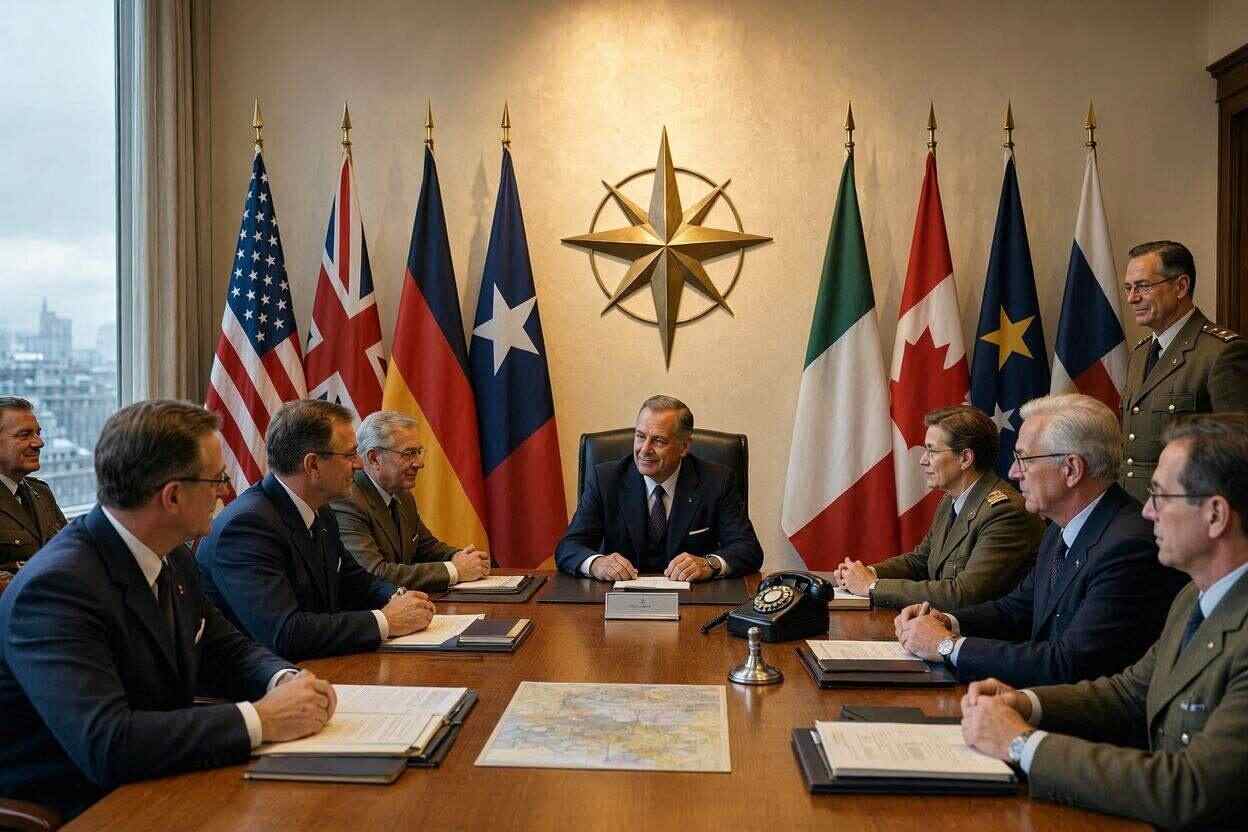
Cold War Alliance NYT Crossword Clue
If you’ve ever been stuck on the clue “cold war alliance” in the New York Times Crossword, you’re definitely not alone. Crossword enthusiasts around the world search for this exact phrase every day, hoping to uncover the correct answer and move one square closer to victory. The clue looks simple at first glance, but like many NYT crossword clues, it hides layers of historical and linguistic nuance.
| Category | Facts & Figures About “Cold War Alliance” NYT Crossword Clue |
|---|---|
| Most Common Crossword Answer | NATO |
| Full Form of NATO | North Atlantic Treaty Organization |
| Typical Letter Count | 4 letters |
| Cold War Time Period | 1947–1991 |
| NATO Formation Year | 1949 |
| Purpose of NATO | Collective defense against Soviet expansion |
| Founding NATO Members | 12 countries |
| Key Founding Countries | United States, United Kingdom, Canada, France, Italy |
| Primary Rival Alliance | Warsaw Pact |
| Warsaw Pact Formation Year | 1955 |
| Warsaw Pact Leader | Soviet Union |
| Another Possible Crossword Answer | SEATO |
| Full Form of SEATO | Southeast Asia Treaty Organization |
| SEATO Formation Year | 1954 |
| Why NATO Appears Frequently in Crosswords | Short length, common letters, historical relevance |
| Common Crossword Category | Historical / Political clue |
| Puzzle Type | NYT Crossword |
| Most Likely Difficulty Level | Easy to Medium |
| Common Related Crossword Terms | USSR, CIA, UN, OPEC, FBI |
| Crossword Solving Tip | Use crossing letters and letter count |
| Most Common Answer Pattern | N _ T O |
| Historical Context | Western alliance during the Cold War |
| Opposing Political Blocs | NATO (West) vs Warsaw Pact (East) |
| Reason for Online Searches | Players seeking quick crossword solutions |
| NYT Crossword Launch Year | 1942 |
| Hardest NYT Crossword Day | Saturday |
| Easiest NYT Crossword Day | Monday |
| Main Benefit of Solving Crosswords | Improves vocabulary, memory, and pattern recognition |
| Common Crossword Feature | Use of abbreviations and acronyms |
| Estimated Popularity of NATO in Crosswords | One of the most repeated geopolitical abbreviations |
Crossword puzzles are more than just word games. They’re tiny mental gyms where memory, logic, trivia, and vocabulary all wrestle together. And historical clues? They can feel like opening a dusty history textbook in the middle of a brain teaser.
The phrase “cold war alliance” is one of those clues that repeatedly appears in crossword puzzles because it combines history, abbreviations, and geopolitical terminology—all things crossword creators absolutely love.
So what’s the answer? Why does it show up so often? And how can you solve similar clues faster in the future? Let’s dive in.
Understanding the Meaning of “Cold War Alliance”
Before solving the clue, it helps to understand what the phrase actually means.
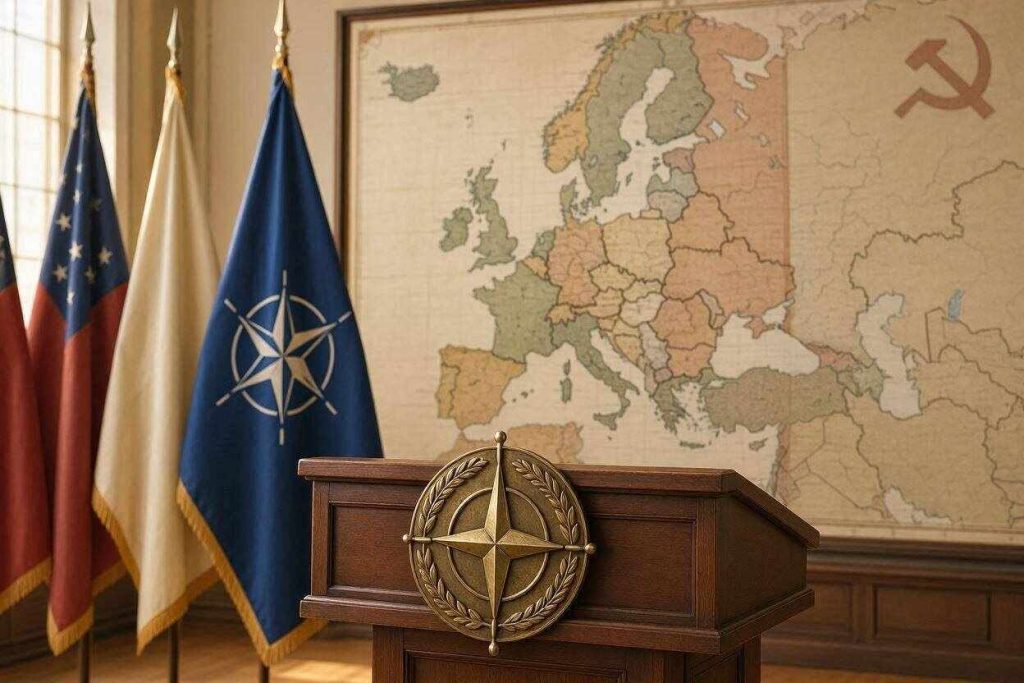
The Cold War was the long political and military tension between the United States and the Soviet Union after World War II. It lasted roughly from 1947 to 1991. Although the two superpowers never directly fought each other in a full-scale war, they competed through alliances, propaganda, espionage, and proxy wars.
When a crossword clue says “cold war alliance,” it usually refers to one of the military or political alliances formed during that period.
Think of the Cold War like a giant chessboard. Every country was a piece, and alliances determined which side they played for.
This historical background is exactly why the clue appears so frequently. It combines:
- History
- Politics
- Acronyms
- Recognizable terminology
And crossword constructors love all four.
The Most Common Answer to the Clue
NATO Explained
The most common answer to the clue “cold war alliance” is:
NATO
NATO stands for the North Atlantic Treaty Organization.
It’s one of the most recognizable international alliances in modern history. Founded in 1949, NATO was created as a defense alliance among Western nations to counter potential Soviet aggression during the Cold War.
Because “NATO” is only four letters long, it fits beautifully into crossword grids. Short words are the lifeblood of crossword construction. Add historical significance to the mix, and you’ve got a perfect recurring answer.
Crossword editors adore words like NATO because:
- They are widely recognizable
- They contain common letters
- They fit many puzzle layouts
- They carry historical meaning
That’s why if you see “cold war alliance” and the answer has four spaces, NATO should probably be your first guess.
History of NATO During the Cold War
Formation of NATO
NATO officially formed on April 4, 1949.
The founding countries included:
- United States
- Canada
- United Kingdom
- France
- Belgium
- Netherlands
- Luxembourg
- Norway
- Denmark
- Iceland
- Italy
- Portugal
The organization’s core principle was collective defense. In simple terms, an attack on one member would be considered an attack on all members.
This was a direct response to growing Soviet influence in Eastern Europe after World War II.
Imagine a neighborhood watch—but on a global military scale.
NATO vs Warsaw Pact
No discussion of Cold War alliances is complete without mentioning the Warsaw Pact.
The Warsaw Pact was formed in 1955 by the Soviet Union and several Eastern Bloc countries. It acted as NATO’s communist counterpart.
This created two giant opposing camps:
- NATO representing Western democracies
- Warsaw Pact representing Soviet-aligned communist nations
The rivalry shaped global politics for decades.
In crossword puzzles, constructors may sometimes use clues like:
- Soviet alliance
- Cold War bloc
- Eastern alliance
These often point toward “Warsaw Pact” or abbreviations linked to Soviet alliances.
Why NYT Crossword Uses Historical Clues
The New York Times Crossword is famous for blending intelligence with entertainment.
Historical clues challenge solvers to think beyond modern slang or pop culture. They reward knowledge and curiosity.
A clue like “cold war alliance” works so well because it:
- Tests historical awareness
- Uses concise wording
- Encourages lateral thinking
- Fits neatly into crossword structures
History-based clues also age well. Unlike trendy internet references, organizations like NATO remain relevant across generations.
That timeless quality makes them crossword gold.
How to Solve Crossword Clues Like “Cold War Alliance”
Look at Letter Count
Always start with the number of letters.
If the answer space has:
- 4 letters → likely NATO
- 5 letters → maybe SEATO
- Longer answers → could involve Warsaw Pact references
Letter count immediately narrows your possibilities.
Use Crossing Words
Crossword solving is like assembling a jigsaw puzzle. Every completed word helps reveal another.
Suppose you already have:
- N _ T O
At that point, NATO becomes obvious.
Crossing letters are often the fastest route to solving difficult historical clues.
Recognize Repeated Clues
Experienced solvers know that crossword puzzles repeat themes and answers constantly.
Words like:
- NATO
- OPEC
- CIA
- USSR
- UN
appear over and over again.
Once you recognize these recurring terms, solving becomes dramatically easier.
It’s almost like learning the “greatest hits” of crossword vocabulary.
Other Possible Answers for the Clue
SEATO
Another possible answer is:
SEATO
SEATO stands for Southeast Asia Treaty Organization.
It was created in 1954 to resist communist expansion in Southeast Asia.
Although less famous than NATO, SEATO appears in crossword puzzles because:
- It’s short
- It’s acronym-based
- It relates to Cold War politics
Crossword creators love unusual abbreviations that still carry historical legitimacy.
Warsaw Pact
Sometimes the clue may refer indirectly to the Soviet alliance.
The Warsaw Pact included:
- Soviet Union
- Poland
- East Germany
- Hungary
- Bulgaria
- Romania
- Czechoslovakia
- Albania
Unlike NATO, “Warsaw Pact” is longer and appears less frequently as a direct answer due to space limitations in puzzles.
Still, understanding it can help solve surrounding clues.
The Role of Abbreviations in Crossword Puzzles
Crossword puzzles are practically built on abbreviations.
Why?
Because short answers help constructors connect larger words across the puzzle grid.
Organizations like:
- NATO
- FBI
- CIA
- NASA
- UNESCO
are crossword staples.
They act like glue holding the puzzle together.
Without abbreviations, crossword grids would become much harder to construct efficiently.
NYT Crossword and Pop Culture Influence
The NYT Crossword has evolved dramatically over the decades.
Older puzzles leaned heavily on classical literature and obscure trivia. Modern puzzles blend:
- Internet culture
- Politics
- Music
- Movies
- History
- Memes
Yet historical clues remain incredibly common.
Why?
Because they create balance.
A puzzle might contain:
- A TikTok reference
- A Taylor Swift lyric
- A Cold War alliance
That mix keeps puzzles fresh and intellectually satisfying.
Tips for Becoming Better at NYT Crosswords
Practice Daily
Crossword solving is a skill.
The more you practice, the more patterns your brain recognizes automatically.
Daily solving improves:
- Vocabulary
- Memory
- Pattern recognition
- General knowledge
Over time, clues like “cold war alliance” become instant answers.
Learn Common Crossword Vocabulary
Every crossword solver eventually discovers there’s a hidden crossword dictionary.
Certain words appear constantly:
- Oreo
- Erie
- Epee
- Aloe
- Etna
- NATO
Memorizing these repeat offenders can dramatically improve your speed.
Study Historical Events
You don’t need a PhD in history, but basic historical knowledge helps enormously.
Topics frequently appearing in crosswords include:
- Ancient Rome
- World Wars
- U.S. presidents
- Greek mythology
- Cold War politics
Even casual reading can sharpen your solving skills.
Digital Tools for Crossword Enthusiasts
Today’s crossword fans have more tools than ever before.
Popular resources include:
- Crossword-solving apps
- Online dictionaries
- Puzzle archives
- Solver communities
- Reddit forums
Many solvers collaborate online to discuss difficult clues and unusual wordplay.
Crossword culture has become surprisingly social.
What once felt like a solitary newspaper hobby is now a thriving online community.
Why Crossword Clues Go Viral
You may wonder why people Google clues like “cold war alliance NYT crossword clue” so often.
The answer is simple:
People hate being stuck.
Crosswords create tiny psychological mysteries. When one clue blocks progress, curiosity kicks into overdrive.
Search engines have become the modern “hint system” for puzzle solvers.
And because the NYT Crossword has millions of players, even one recurring clue can generate huge search traffic.
Common Mistakes When Solving “Cold War Alliance”
One common mistake is overthinking the clue.
People sometimes assume the answer must be complicated. But crossword clues often favor short, familiar terms.
Another error is confusing:
- NATO
- SEATO
- Warsaw Pact
Pay attention to:
- Letter count
- Crossing letters
- Clue wording
Sometimes a single extra letter changes everything.
Fun Facts About the NYT Crossword
The New York Times Crossword debuted in 1942.
Since then, it has become the gold standard of crossword puzzles worldwide.
Interesting facts include:
- Monday puzzles are easiest
- Saturday puzzles are hardest
- Sunday puzzles are larger but medium difficulty
- The crossword has millions of daily players
Legendary constructors and editors have turned crossword-making into an art form.
For many enthusiasts, finishing a difficult NYT puzzle feels like winning a miniature intellectual marathon.
Why Historical Clues Improve Mental Agility
Historical clues force your brain to connect language with memory.
That mental exercise strengthens:
- Recall ability
- Cognitive flexibility
- Analytical thinking
It’s like lifting weights for your brain.
And unlike doom-scrolling social media, crossword puzzles leave you feeling sharper instead of mentally drained.
Not bad for a few black-and-white squares, right?
The Psychology Behind Crossword Addiction
Crosswords trigger small bursts of satisfaction every time you solve a clue.
Scientists often compare this to a reward loop.
Your brain loves:
- Solving mysteries
- Recognizing patterns
- Completing unfinished tasks
That’s why filling in “NATO” after struggling with “cold war alliance” feels weirdly satisfying.
Tiny victory. Big dopamine hit.
Conclusion
The clue “cold war alliance” in the NYT Crossword most commonly points to NATO, one of the most important military alliances in modern history. But beyond the answer itself lies a fascinating intersection of history, language, and puzzle-solving strategy.
Crossword puzzles aren’t just games. They’re exercises in memory, culture, and critical thinking. Understanding Cold War history, recognizing common abbreviations, and practicing puzzle-solving techniques can dramatically improve your crossword skills.
The next time you encounter this clue, you won’t just know the answer—you’ll understand the story behind it.
And honestly, that’s what makes crossword solving so addictive.
FAQs
1. What is the most common answer to “cold war alliance” in NYT Crossword?
The most common answer is NATO.
2. What does NATO stand for?
NATO stands for North Atlantic Treaty Organization.
3. Why does NATO appear so often in crossword puzzles?
Because it’s short, recognizable, and fits easily into crossword grids.
4. Was SEATO also a Cold War alliance?
Yes, SEATO was formed during the Cold War to resist communist expansion in Southeast Asia.
5. What was the Warsaw Pact
The Warsaw Pact was the Soviet-led military alliance opposing NATO during the Cold War.
6. Are historical clues common in NYT crosswords?
Yes, history is one of the most common themes in crossword puzzles.
7. How can I get better at solving crossword clues?
Practice daily, study recurring crossword vocabulary, and improve your general knowledge.
8. Why are abbreviations popular in crosswords?
They help constructors fit answers efficiently into puzzle grids.
9. When did the Cold War occur?
The Cold War lasted roughly from 1947 to 1991.
10. Is the NYT Crossword considered difficult?
Yes, especially later in the week. Monday puzzles are easiest, while Saturday puzzles are usually the hardest.