Shakespeare Play With Witches NYT Crossword
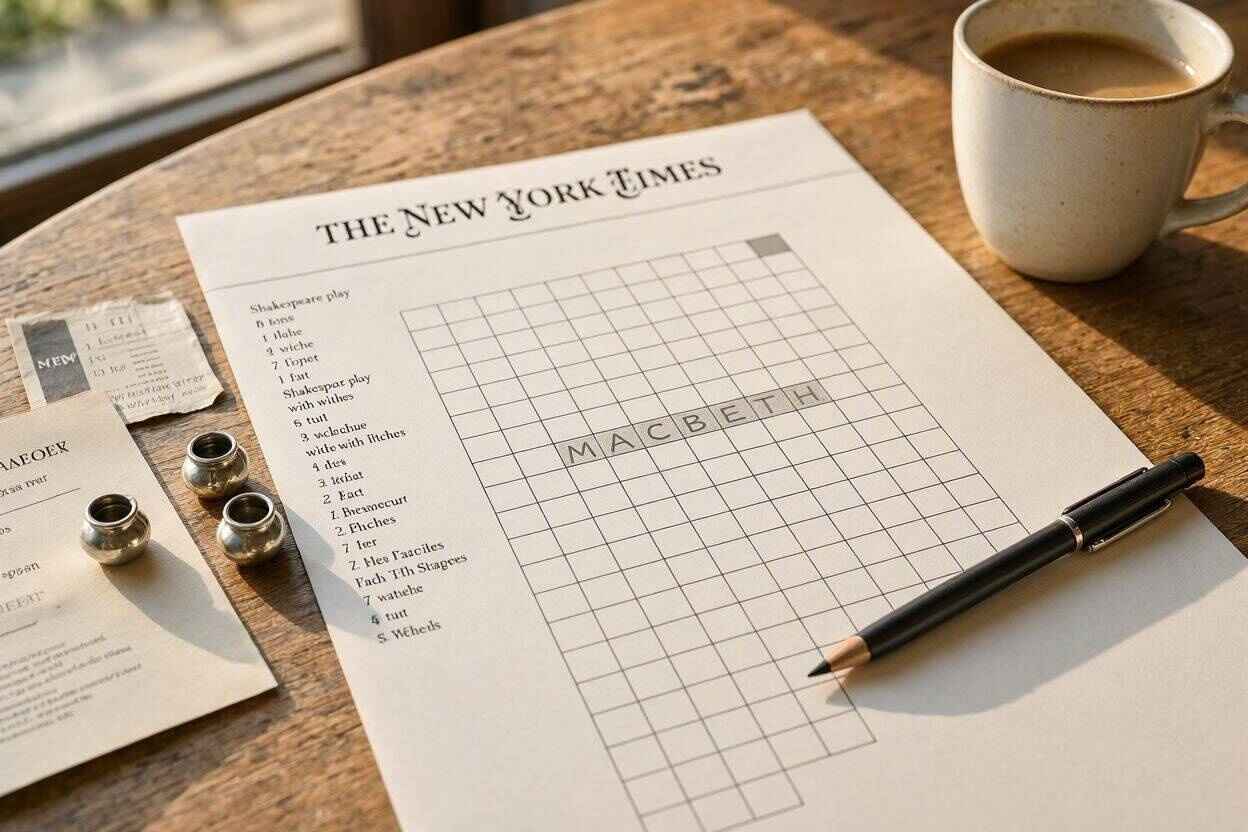
Shakespeare play with witches NYT crossword most commonly refers to Macbeth.
The Shakespeare tragedy famously features the Three Witches, making “Macbeth” the standard answer for crossword clues involving witches, prophecy, or the “Scottish Play” in New York Times crosswords and similar puzzle games.
Understanding the Shakespeare Play With Witches NYT Crossword Clue
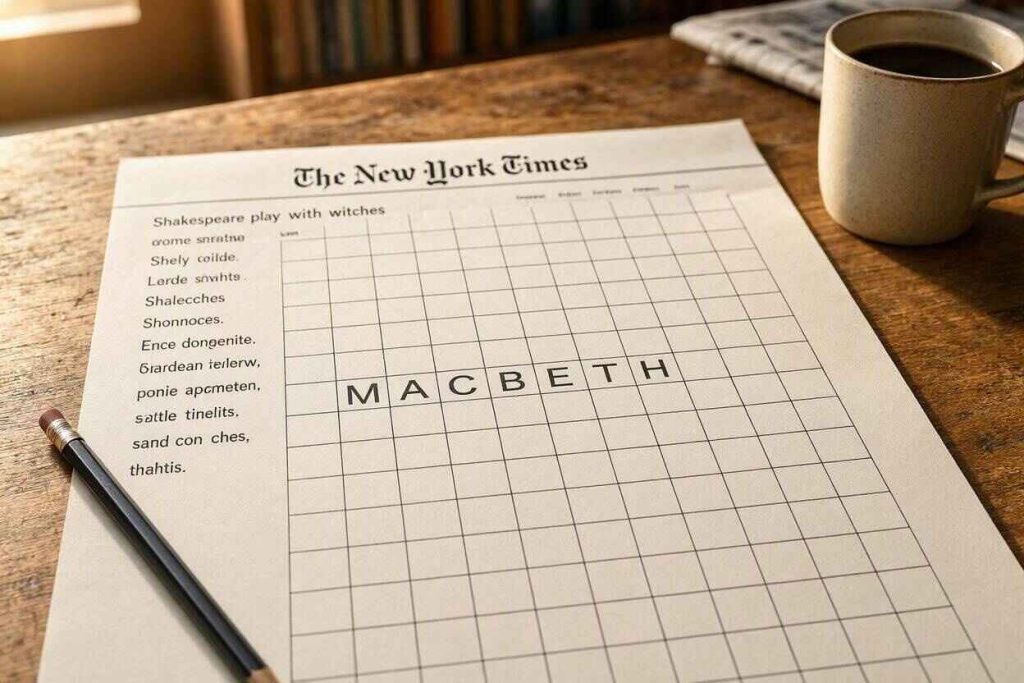
If you’ve searched for Shakespeare play with witches NYT crossword, chances are you were stuck on a puzzle clue and needed a fast answer. You’re definitely not alone. Every day, crossword players search Google trying to solve tricky literary references hidden inside puzzle grids.
The New York Times Crossword is famous for blending history, literature, pop culture, science, and wordplay into one addictive challenge. Some clues feel straightforward. Others feel like miniature riddles wrapped in academic trivia. Shakespeare clues often fall into the second category.
Crossword creators love Shakespeare because his plays are recognizable, culturally important, and packed with memorable characters and themes. Among all Shakespearean works, Macbeth appears especially often because it connects strongly with witches, prophecy, kingship, and supernatural mystery.
Think of Shakespeare clues like recurring characters in a long-running TV series. Once you recognize them, future puzzles become much easier.
Why Shakespeare Is So Common in NYT Crossword Puzzles
The NYT Crossword regularly uses literary clues because they:
- Test cultural knowledge
- Reward educated guessing
- Add intellectual depth
- Fit puzzle structures well
Shakespeare remains one of the most referenced authors in crossword history because many people recognize at least a few of his famous plays.
Here’s why crossword constructors love Shakespeare:
| Reason | Benefit for Crossword Puzzles |
|---|---|
| Famous play titles | Easy recognition |
| Short names | Grid-friendly |
| Unique vocabulary | Interesting letter patterns |
| Historical importance | Educational value |
| Recurring school exposure | Familiar to solvers |
Among these works, Macbeth stands out because of the witches. Very few Shakespeare plays feature supernatural witches so prominently.
Macbeth: The Most Common Crossword Answer
The answer to the Shakespeare play with witches NYT crossword clue is almost always Macbeth.
If your crossword puzzle:
- Needs seven letters
- Mentions witches
- References Scotland
- Mentions prophecy
- Uses “Scottish Play”
then Macbeth becomes the strongest possible answer.
What Is Macbeth About?
Macbeth tells the story of a Scottish nobleman whose ambition destroys him after hearing a prophecy from three mysterious witches.
The witches predict:
- Macbeth will become king
- Banquo’s descendants will rule
- Violence and betrayal will follow
At first, Macbeth hesitates. But ambition slowly takes over. Encouraged by Lady Macbeth, he murders King Duncan and seizes the throne.
That decision triggers fear, paranoia, and bloodshed.
The play becomes a psychological spiral where guilt slowly destroys Macbeth’s mind.
The Role of the Three Witches in Macbeth
The Three Witches are central to the story. Without them, Macbeth might never pursue the throne so aggressively.
They appear mysterious from the very beginning:
- Speaking in riddles
- Predicting the future
- Blurring morality
Their famous opening line remains iconic:
“Fair is foul, and foul is fair.”
This phrase establishes one of Macbeth’s major themes:
Things are not always what they seem.
Why the Witches Matter in Crossword Clues
The witches create a direct identity marker for Macbeth. Crossword constructors love clues with clear associations.
For example:
| Clue | Likely Answer |
|---|---|
| Shakespeare play with witches | Macbeth |
| Scottish play | Macbeth |
| Drama with Weird Sisters | Macbeth |
| Shakespeare tragedy with prophecy | Macbeth |
The witches make Macbeth instantly recognizable.
Why Macbeth Is Called “The Scottish Play”
Many actors avoid saying “Macbeth” inside theaters. Instead, they call it:
- The Scottish Play
- The Scottish Tragedy
This tradition comes from an old theater superstition claiming the play brings bad luck.
The Origins of the Superstition
According to theater legends:
- Productions experienced accidents
- Actors became injured
- Stage disasters occurred
- Fires broke out
Whether these stories are true hardly matters anymore. The myth became part of theater culture itself.
The Macbeth Curse Ritual
Some actors believe saying “Macbeth” backstage invites bad luck. Tradition says the curse can only be removed by:
- Leaving the theater
- Spinning three times
- Spitting over the shoulder
- Quoting Shakespeare
It sounds strange, but many theater professionals still respect the tradition today.
💡 Pro Tip: If you see clues like “Scottish Play” or “play with Weird Sisters,” the crossword answer is usually Macbeth even if the clue never directly says it.
Who Are the Three Witches?
The Three Witches are among Shakespeare’s most famous supernatural characters.
They:
- Predict Macbeth’s future
- Encourage ambition
- Represent chaos and temptation
In many ways, they act like psychological triggers rather than traditional villains.
The Witches’ Famous Quotes
| Quote | Meaning |
|---|---|
| “Fair is foul, and foul is fair” | Appearances deceive |
| “Double, double toil and trouble” | Magical chant |
| “Something wicked this way comes” | Macbeth becomes evil |
These lines remain deeply embedded in modern culture.
Movies, TV shows, books, and political speeches still reference them today.
Fate vs Free Will in Macbeth
One major literary debate asks:
Did fate control Macbeth, or did he destroy himself through choice?
Some readers believe:
- The witches controlled destiny
Others argue:
- Macbeth freely chose violence
This tension between fate and ambition keeps Macbeth fascinating centuries later.
🔑 Key Takeaway: The witches do not physically force Macbeth to act. Instead, they awaken the dangerous ambition already hidden inside him.
Shakespeare Play With Witches NYT Crossword Variations
Crossword creators rarely repeat the same wording. Instead, they create variations designed to challenge solvers.
Common Variations of the Clue
| Crossword Clue Variation | Answer |
|---|---|
| Shakespeare play with witches | Macbeth |
| Scottish play | Macbeth |
| Drama with Weird Sisters | Macbeth |
| Shakespeare tragedy with prophecy | Macbeth |
| Play featuring witches | Macbeth |
Why Constructors Use Variations
Crossword puzzles become more interesting when clues:
- Require indirect thinking
- Use literary references
- Hide obvious answers
This creates the satisfying “aha!” moment solvers love.
Why Crossword Creators Love Using Macbeth
Crossword designers carefully choose answers that fit puzzle grids effectively.
Macbeth works perfectly because:
- It contains seven letters
- The spelling is recognizable
- It crosses well with other words
- Most educated solvers know it
The Crossword Advantage of Macbeth
| Feature | Crossword Benefit |
|---|---|
| Seven letters | Flexible grid placement |
| Distinct spelling | Memorable answer |
| Literary fame | Broad recognition |
| Strong theme association | Easy clue writing |
Short, recognizable words are gold for crossword creators.
Five-Letter and Seven-Letter Grid Strategy
Puzzle constructors constantly balance:
- Difficulty
- Grid structure
- Letter distribution
Macbeth provides:
- Strong consonants
- Common vowels
- Easy crossing combinations
That makes it extremely useful in puzzle design.
Comparison Table of Common Shakespeare Crossword Answers
Most Common Shakespeare Clues and Answers
| Crossword Clue | Answer | Letter Count | Frequency |
|---|---|---|---|
| Shakespeare play with witches | Macbeth | 7 | Very High |
| Danish prince | Hamlet | 6 | Very High |
| Jealous Shakespearean | Othello | 7 | High |
| Star-crossed lover | Romeo | 5 | High |
| Shakespeare king | Lear | 4 | Medium |
| Shakespeare villain | Iago | 4 | Medium |
This table helps identify recurring literary answers commonly used in crossword puzzles.
How to Solve Shakespeare Crossword Clues Faster
Literary crossword clues become much easier once you recognize patterns.
Look at Letter Count First
Letter count immediately narrows possible answers.
| Letter Count | Likely Shakespeare Answer |
|---|---|
| 4 | Lear, Iago |
| 5 | Romeo |
| 6 | Hamlet |
| 7 | Macbeth, Othello |
If your puzzle needs seven letters and references witches, Macbeth becomes obvious.
Use Crossing Clues Strategically
Crossword solving works like detective work. One confirmed letter can eliminate dozens of possibilities.
For example:
M _ C B _ T H
At this point, most experienced solvers instantly recognize Macbeth.
Learn Common Shakespeare Titles
These Shakespeare works appear repeatedly:
- Macbeth
- Hamlet
- Othello
- Lear
- Tempest
Memorizing them dramatically improves crossword-solving speed.
Recognize NYT Crossword Patterns
The NYT Crossword gets harder throughout the week:
| Day | Difficulty |
|---|---|
| Monday | Easy |
| Tuesday | Moderate |
| Wednesday | Medium |
| Thursday | Trickier |
| Friday | Hard |
| Saturday | Very Hard |
| Sunday | Large themed puzzle |
Monday clues tend to be direct:
- “Play with witches”
Saturday clues become indirect:
- “Drama involving Weird Sisters”
That’s where many solvers struggle.
💡 Pro Tip: Solve easy crossing clues first before guessing literary references. Shakespeare answers often reveal themselves naturally after a few confirmed letters.
Shakespeare and Crossword Culture
Crossword puzzles preserve cultural knowledge in fascinating ways.
Many people remember Shakespeare not from school textbooks but from recurring crossword clues.
That’s the hidden beauty of puzzles:
They turn learning into entertainment.
Why Shakespeare Still Dominates Word Games
Shakespeare remains relevant because:
- His stories explore universal emotions
- His characters feel timeless
- His phrases entered everyday English
Words and phrases from Shakespeare still appear constantly:
- Break the ice
- Wild-goose chase
- Heart of gold
Crossword puzzles keep these references alive.
Educational Value of Crossword Puzzles
Studies suggest crossword puzzles improve:
- Memory
- Vocabulary
- Critical thinking
- Pattern recognition
Literary clues add an extra educational layer.
Instead of passively reading about Macbeth, solvers actively recall the information.
That mental effort strengthens memory much more effectively.
🔑 Key Takeaway: Crossword puzzles transform literature into interactive learning experiences, helping players remember Shakespearean works naturally over time.
People Also Ask About Shakespeare Play With Witches NYT Crossword
What is the Shakespeare play with witches crossword answer?
The answer is usually Macbeth because the play prominently features the Three Witches.
Is Macbeth always the correct crossword answer?
Almost always, yes. However, crossword context and letter count still matter.
Why are there witches in Macbeth?
The witches symbolize temptation, fate, chaos, and ambition.
What does the Scottish Play mean?
It refers to Macbeth. Theater professionals avoid saying the title directly due to superstition.
Are Shakespeare clues common in NYT crosswords?
Very common. Shakespeare remains one of the most referenced authors in crossword puzzles.
How can beginners solve literary crossword clues?
Learn common titles, use crossing letters, and focus on letter count patterns.
What are the most common Shakespeare crossword answers?
Macbeth, Hamlet, Othello, Romeo, Lear, and Iago appear frequently.
Common Mistakes When Solving Literary Crossword Clues
Even experienced solvers make mistakes.
Confusing Macbeth With Hamlet
Both are famous tragedies, but only Macbeth features witches.
Ignoring the Puzzle Theme
Some puzzles contain themes influencing clue interpretation.
For example:
- Supernatural theme
- Theater theme
- Literature theme
Themes often point toward Shakespeare answers.
Forgetting Crossword Abbreviations
Crossword clues sometimes:
- Shorten words
- Use abbreviations
- Reference nicknames
“The Scottish Play” is one such nickname clue.
Best Resources for Crossword Enthusiasts
Here are some valuable tools for improving crossword skills.
| Resource | Purpose |
|---|---|
| NYT Crossword App | Daily puzzle solving |
| Shakespeare Study Guides | Literary understanding |
| Crossword Solver Tools | Word pattern assistance |
| Puzzle Forums | Community discussions |
| Literature Websites | Historical context |
👉 Related Reading: Best NYT Crossword Solving Techniques for Beginners
👉 Related Reading: Most Common Literature Clues in Crossword Puzzles
📚 Source: Shakespeare educational archives, Britannica, and NYT Crossword databases
Conclusion
The Shakespeare play with witches NYT crossword clue almost always points toward Macbeth, one of Shakespeare’s darkest and most unforgettable tragedies. Thanks to the famous Three Witches, prophecy themes, and strong cultural recognition, Macbeth became a favorite answer among crossword creators and puzzle enthusiasts alike.
But solving literary crossword clues involves more than memorizing answers. The best solvers learn patterns, understand cultural references, and recognize how crossword constructors think. Once you understand why Macbeth appears so frequently, future Shakespeare clues become much easier to solve.
Crossword puzzles are more than games. They blend language, literature, memory, logic, and history into one engaging mental workout. Every difficult clue solved feels like unlocking a small treasure chest of knowledge.
The next time you see witches, prophecy, Scotland, or Shakespeare appear in a crossword puzzle, you’ll know exactly where to look. And honestly? That tiny moment of recognition is one of the most satisfying parts of puzzle solving.
Frequently Asked Questions
FAQ 1: What is the answer to Shakespeare play with witches NYT crossword?
The answer is usually Macbeth. Shakespeare’s tragedy features the famous Three Witches, making it the standard crossword solution for clues involving witches, prophecy, or the Scottish Play. Most NYT crossword puzzles use Macbeth because it’s recognizable, seven letters long, and fits many puzzle layouts.
FAQ 2: Why is Macbeth connected with witches?
Macbeth begins with the appearance of three mysterious witches who predict Macbeth’s rise to power. Their prophecy sparks the ambition that eventually destroys him. Because the witches play such an important role in the story, crossword clues involving Shakespeare and witches almost always reference Macbeth.
FAQ 3: What are the Three Witches called in Macbeth?
The witches are commonly called the “Weird Sisters.” Shakespeare uses them to symbolize fate, temptation, and supernatural influence. In crossword puzzles, clues mentioning “Weird Sisters” often point directly to Macbeth because few other Shakespeare plays contain such famous witch characters.
FAQ 4: Why do actors call Macbeth the Scottish Play?
Theater tradition claims saying “Macbeth” inside a theater brings bad luck. To avoid the supposed curse, actors refer to it as “The Scottish Play.” Crossword constructors frequently use this nickname because it creates a more challenging clue for experienced puzzle solvers.
FAQ 5: Are Shakespeare clues common in NYT crosswords?
Yes, extremely common. Shakespeare’s plays, characters, and quotes appear regularly because they’re culturally recognizable and crossword-friendly. Titles like Macbeth, Hamlet, and Othello fit puzzle grids well and provide constructors with many creative clue options.
FAQ 6: What is the most common Shakespeare crossword answer?
Macbeth and Hamlet are among the most common Shakespeare crossword answers. Macbeth appears especially often because it connects with multiple clue themes including witches, Scotland, prophecy, tragedy, and kingship.
FAQ 7: How do I solve literary crossword clues faster?
Start by checking the letter count and solving nearby crossing clues first. Memorizing famous Shakespeare plays also helps significantly. Over time, you’ll recognize recurring crossword patterns and identify literary references much faster.
FAQ 8: Are NYT crossword clues intentionally tricky?
Absolutely. The New York Times Crossword is famous for clever wordplay and indirect references. Later-week puzzles especially use misleading or thematic clues designed to challenge experienced solvers.
FAQ 9: Which Shakespeare plays appear most often in crosswords?
Macbeth, Hamlet, Othello, King Lear, and Romeo and Juliet appear frequently. Constructors prefer shorter or highly recognizable titles because they fit puzzle grids more easily.
FAQ 10: Can crossword puzzles improve literature knowledge?
Yes. Crossword puzzles encourage active recall, which strengthens memory and understanding. Many people remember Shakespeare references more clearly after repeatedly encountering them in crossword puzzles and word games.